
Analysis of the Influence of Log Quality and Sawing Techniques on the Yield Efficiency of European Beech (Fagus sylvatica L.): Quantitative, Qualitative and Economic Aspects
doi: https://doi.org/10.5552/crojfe.2027.4822
volume: issue, issue:
pp: 13
- Author(s):
-
- Pervan Pervan
- Greger Krešimir
- Ravnjak Ivan
- Stamenkoska Ana Marija
- Klarić Miljenko
- Ištvanić Josip
- Article category:
- Original scientific paper
- Keywords:
- European beech (Fagus sylvatica L.), live sawing, round sawing, volume (quantitative) yield, qualitative yield, value yield
Abstract
HTML
The paper presents experimental and theoretical research on efficiency indicators in the sawing of European beech logs. Volume (quantitative), qualitative and value yields were researched. Samples of logs classified into 1st, 2nd, and 3rd grades according to standard HRN D.B4.028 were examined using two sawing methods: round sawing and live sawing. The logs were sawn into 50 mm thick sawn timber. For this research, every log was measured and recorded prior to processing. The length and the diameter of logs without bark were measured according to standard HRN EN 1309-2. The logs were sawed with a horizontal log band saw. Circular saws were used for removing edges and cutting sawn timber into default length. Every sawn timber was recorded and measured according to standards HRN EN 1309-1 and HRN EN 1312. Quality was defined into two quality classes: A and B. Quantitative yield of live sawing was between 0.773 and 0.818 for the unedged sawn timber, and between 0.460 and 0.579 for the edged sawn timber. Quantitative yield of round sawing was between 0.696 and 0.704 for the unedged, half-edged and edged sawn timber, and between 0.400 and 0.488 for the edged sawn timber. Qualitative yield of live sawing was between 0.6318 and 0.8269 and between 0.6335 and 0.9601 for the round sawing. Value yield of round sawing ranged between 0.2995 to 0.4052. Value yield of live sawing ranged between 0.3235 to 0.4469. Overall, the results indicate that live sawing consistently outperforms round sawing in terms of volume yield and economic indicators across all log classes, while log quality strongly influences overall yield levels. Furthermore, qualitative yield is more dependent on log class than on sawing method, whereas round sawing exhibits greater result variability and associated industrial risk.
Analysis of the Influence of Log Quality and Sawing Techniques on the Yield Efficiency of European Beech (Fagus sylvatica L.): Quantitative, Qualitative and Economic Aspects
Dario Pervan, Krešimir Greger, Ivan Ravnjak, Ana Marija Stamenkoska, Miljenko Klarić, Josip Ištvanić
https://doi.org/10.5552/crojfe.2027.4822
Abstract
The paper presents experimental and theoretical research on efficiency indicators in the sawing of European beech logs. Volume (quantitative), qualitative and value yields were researched. Samples of logs classified into 1st, 2nd, and 3rd grades according to standard HRN D.B4.028 were examined using two sawing methods: round sawing and live sawing. The logs were sawn into 50 mm thick sawn timber. For this research, every log was measured and recorded prior to processing. The length and the diameter of logs without bark were measured according to standard HRN EN 1309-2. The logs were sawed with a horizontal log band saw. Circular saws were used for removing edges and cutting sawn timber into default length. Every sawn timber was recorded and measured according to standards HRN EN 1309-1 and HRN EN 1312. Quality was defined into two quality classes: A and B. Quantitative yield of live sawing was between 0.773 and 0.818 for the unedged sawn timber, and between 0.460 and 0.579 for the edged sawn timber. Quantitative yield of round sawing was between 0.696 and 0.704 for the unedged, half-edged and edged sawn timber, and between 0.400 and 0.488 for the edged sawn timber. Qualitative yield of live sawing was between 0.6318 and 0.8269 and between 0.6335 and 0.9601 for the round sawing. Value yield of round sawing ranged between 0.2995 to 0.4052. Value yield of live sawing ranged between 0.3235 to 0.4469. Overall, the results indicate that live sawing consistently outperforms round sawing in terms of volume yield and economic indicators across all log classes, while log quality strongly influences overall yield levels. Furthermore, qualitative yield is more dependent on log class than on sawing method, whereas round sawing exhibits greater result variability and associated industrial risk.
Keywords: European beech (Fagus sylvatica L.), live sawing, round sawing, volume (quantitative) yield, qualitative yield, value yield
1. Introduction
European Beech (Fagus sylvatica L.) is a strategically important wood species in the Croatian wood processing sector. This importance arises from the large proportion of beech in Croatian forest stands and the significant number of high quality logs these forests provide. Beech wood is valued for its favourable properties in processing, such as excellent workability and smooth texture. However, it also has some less favourable characteristics that can pose challenges during processing. These include false heartwood, limited natural resilience, and suboptimal dimensional stability, which can lead to cracking during handling and drying (Ištvanić 2003, Emmerich et al. 2019, Pramreiter and Grabner 2023).
In general, beech wood offers satisfactory workability. It can be efficiently processed using both hand tools and industrial machinery (Bartolucci et al. 2020, Ghorbanian Far et al. 2024). It responds well to surface treatments and performs reliably under thermal modification processes. However, due to its high density, tool breakage is relatively frequent, and energy consumption during machining is elevated. On the market today, beech is available, offered as logs, sawn timber in both steamed and unsteamed forms, veneer sheets, and various semi-finished products. Despite its mechanical advantages, unprotected beech is susceptible to fungal and insect attacks, and it is therefore classified as a non durable wood species (Todorović 2023).
Over the past few decades, simulation of sawing techniques have rapidly developed to improve log utilisation and minimise defects. Studies have shown that selecting the most appropriate sawing method for a given log can achieve a 10% increase in value yield utilisation for logs with larger diameters. In case of logs of smaller diameters (<50 cm) that increase is around 5% (Fan et al. 2024). Moreover, hydrothermal treatment methods have proven useful in reducing drying-related defects and improving colour uniformity between sapwood and heartwood (Ali et al. 2021, Dzurenda and Dudiak 2024, Dudiak 2025).
The sawmill can be supplied with beech logs of various specific characteristics, which depend on the method of classification, organisation and technical concept of production, characteristics of forest exploitation, sawn assortments produced, and the method and possibilities of transporting this raw material to the sawmill. According to European standard (HRN EN 1316-1), there are four quality classes of beech logs: F–A, F–B, F–C and F–D, divided into ten diameter classes. F–A and F–B each have two subclasses, F–A red and F–B red, which allow 100% healthy false heartwood (Prka et al. 2009). According to Croatian standard (HRN D.B4.028) derived from JUS (ex–Yugoslav) there are three quality classes of beech sawn logs: 1st, 2nd and 3rd. Sawmills often saw logs of higher quality, intended for the production of rotary cut or sliced veneer, with the intention of supplementing the range of sawn timber of the highest quality with such logs. Sawmills also process beech roundwood for railway sleepers. Thin diameter logs are often sawn, but with the development and expansion of wood processing plants for generating heat and electricity, as well as other alternative uses and processing options, this share is decreasing (Caposciutti et al. 2019).
One of the most comprehensive studies on the yield of beech logs in the sawing process was conducted by Zubčević (1983). His research examined the influence of sawing technology, log diameter, log class, and sawing method on the volume, value, and qualitative yield of logs. Volume yield was, on average, higher when using traditional sawing methods (39.66–47.82%) compared to specialised technologies (38.23–46.53%). Qualitative and value yields were higher when sawing logs using specialised technology (1.412–1.503 and 0.560–0.651) than when using traditional technology (1.025–1.076 and 0.407–0.490). Regarding sawing methods, the volume yield for 1st and 2nd quality class logs was highest when using live sawing (up to 65.76%). For 3rd class logs, the volume yield was higher when round sawing (up to 52.76%). Logs sawn using the round sawing method showed higher value yields for all log classes compared to live sawing.
Škaljić (2002) investigated the influence of the longitudinal distribution of eccentric pith and its significance on the quantitative yield of the torus (the clear sapwood portion) of a log, depending on the method of simulated sawing. In cases where the share of eccentric pith in the cross-section of the log was low, live sawing resulted in the highest yield of the torus. The threshold values of eccentric pith share, for which live sawing produced the greatest yield of unedged sawn timber, ranged from 10% for logs with a diameter of 40 cm to 50% for logs with a diameter of 70 cm. For edged sawn timber, these thresholds ranged from 40% for 40 cm logs to 60% for 70 cm logs. When the proportion of eccentric pith was higher, round sawing proved to be the most efficient method. For unedged sawn timber, the threshold values of eccentric pith share at which round sawing provided the highest yield ranged from 20% for logs of 40 cm in diameter to 60% for logs of 65–70 cm in diameter. In the case of edged sawn timber, the threshold values ranged from 50% for 40 cm logs to 70% for 70 cm logs.
Milinović et al. (1984) found that the volume yield during the processing of small diameter beech logs (21–24 cm in diameter) was 65.42%. In the subsequent processing of the sawn timber obtained, the yield dropped to 50.99%. Based on these findings, the authors questioned the economic viability of converting small-diameter beech logs into solid wood components.
Šoškić and Popadić (2007) investigated the structure of primary and secondary products in the sawmill processing of beech wood. The research was conducted on 45 beech logs, each 4 metres long and with a cross-section of 40 to 49 cm, processed on a log saw. As the quality of roundwood declines, yield decreases and the structure of assortments worsens, with an increased proportion of smaller assortments. The actual volume of the log is 6% greater than the volume calculated according to the standard, and this difference is less pronounced in higher quality logs. As a result, the actual qualitative yield is lower than that obtained by calculation according to the standard, amounting to 59%. By-products account for approximately 31%, while the remaining 10% represent processing losses. The proportions of large and small by-products are approximately equal.
Popadić et al. (2014) analysed the impact of sawing methods on the utilisation of beech logs with red heartwood in their research. Three sawing methods were used: live sawing, cant sawing and round sawing. 45 logs with a diameter of 40 to 49 cm were used in the study. A band saw was used for sawing. The volume yield of logs was highest in the case of round sawing and edge sawing, approximately 60.5%, while the lowest was in live sawing (56.8%). Round sawing proved to be the most successful in terms of value yield (the longest trimmed sawn timber was produced), while the yield values of live sawing were the lowest. Round sawing proved to be an efficient technique for separating the red heartwood during beech sawing.
Although beech wood is widespread in Croatian sawmills, there is no detailed research on the influence of sawing techniques and beech log class on their yield. Most Croatian sawmills rely on traditional knowledge, without systematically evaluating how each parameter affects log utilisation. The aim of this research is to analyse the influence of log quality and sawing methods on the volume, qualitative, and value yields of beech logs (Fagus sylvatica L.). The research results should help Croatian sawmills increase their competitiveness and sawing capacity.
2. Materials and Methods
2.1 Log Measurement
For the research, the logs were delivered to the sawmill by truck, then sorted according to standard HRN D.B4.028 and measured according to standard HRN EN 1309-2. A total of 30 beech logs were sorted and measured, 15 for each sawing method: five 1st class logs, five 2nd class logs, and five 3rd class logs for both sawing methods. All logs were of similar diameter and length.
For all logs used in the study, the following measurements were taken: length, using a tape measure rounded to the nearest whole decimetre, and average cross-sectional diameter, using a calliper to the nearest whole centimetre without bark.
The volume of individual common beech logs was calculated according to Eq. 1.

2.2 Sawn Timber Measurement and Grading
For the purpose of the research, unedged, half-edged and edged sawn timber with nominal thicknesses of 50 mm and 26 mm were produced. However, 26 mm thick sawn timber, which was sawn only when the log was opened, was not considered. This sawn timber was entirely omitted from all calculations due to its very small length, and width and almost insignificant technical utility and value. The research focused solely on sawn timber with a thickness of 50 mm. The actual thickness of this sawn timber, including all oversizes, was 55 mm. For sawn timber lengths from 0.4 to 2 m, the width had to be at least 9 cm, and for lengths of 2.1 m or more, at least 12 cm. Unedged, half-edged, and edged sawn timber produced during the first sawing phase was not graded for quality, nor were calculations regarding quality and value yield performed for it. The unedged and half-edged timber was edged in the second phase, combined with the edged timber produced in the first phase and sorted into two quality grades; A and B. Subsequently, it was included in the calculations of quantity, quality and value yield. The quality criteria for class A were: sawn timber must be sharp-edged, without cracks, bow, crook, cup, twist, knots, or false heartwood. Criteria for class B: sawn timber must be sharp-edged, clean on at least three sides, without cracks, bow, crook, cup and twist. On one wide face, slight false heartwood and sound knots up to 3 cm in diameter are permitted. Edged sawn timber affected by false heartwood on both wide faces and timber that did not meet class A and B criteria were neither measured nor included in calculations of quantity, quality and value yields. The dimensions of the unedged, half-edged and edged sawn timber were measured manually with a tape measure according to standards HRN EN 1309-1 and HRN EN 1312.
The volume of individual sawn timber of common beech was calculated according to Eq. 2.

2.3 Technological Process
Beech logs were delivered to the sawmill by trucks and stored in the auxiliary storage area. Each truck was accompanied by a consignment note on which each log that was delivered to the auxiliary storage area was recorded. After that, if necessary, they were sawn to specific lengths with a chainsaw.
In the first phase, the logs were sawn on a horizontal band saw according to a set program, employing live and round methods of sawing. The live sawing method produced unedged sawn timber, whereas round sawing produced unedged, half-edged, and edged sawn timber.
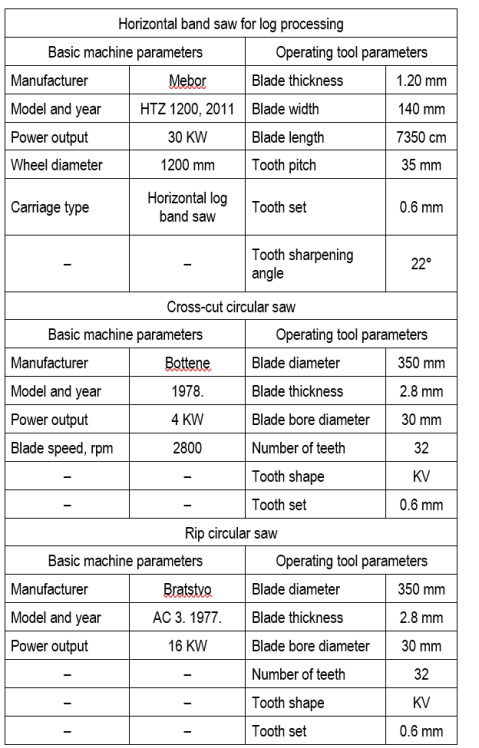
In the second phase, the produced sawn timber was transported via a roller conveyor to a circular cross-cut saw. On this machine, the sawn timber was trimmed to length. Afterward, the unedged and half-edged timber was ripped lengthwise on a single-blade circular saw to determine the width and produce edged sawn timber. The sequence of the technological process can be seen in Fig. 1. The basic parameters of the machines used in the sawmill are listed in Table 1. Depending on the intended use, quality and further processing during normal production, the stacks are further sorted and transported for further processing or immediately prepared for loading and transport to customers.
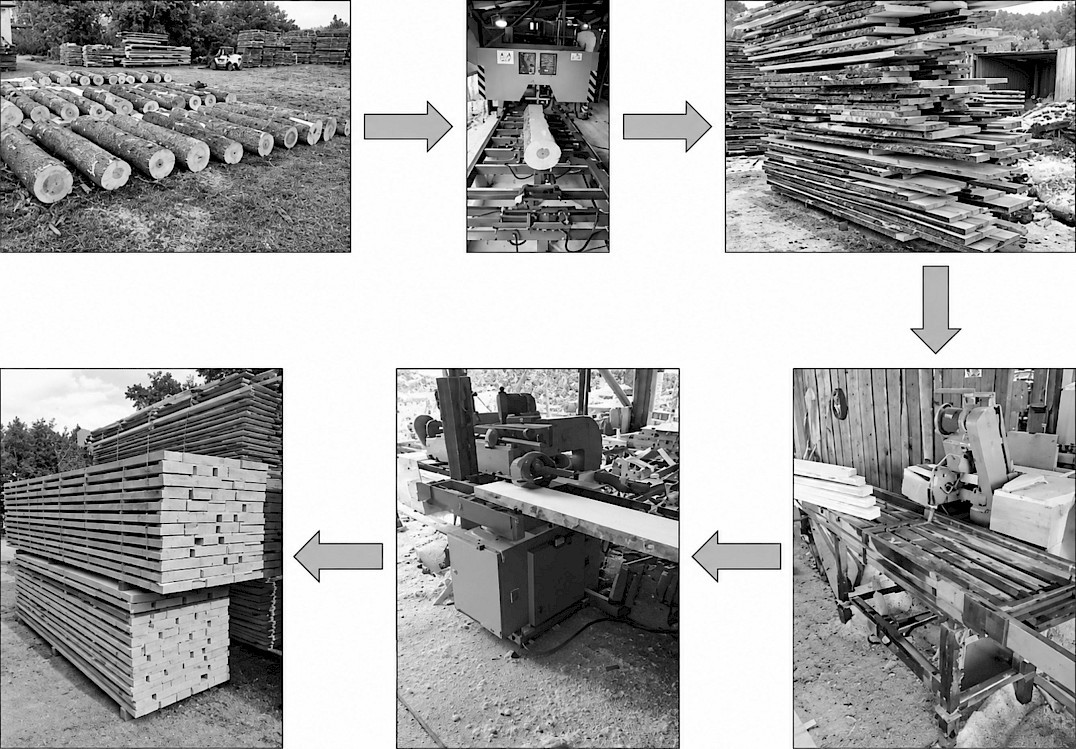
Fig. 1 Sequence of the technological process
Table 1 Technical Specifications of the saws used
2.4 Volume (Quantitative) Yield
Volume (quantitative) yield in primary sawmilling is defined as the ratio of the volume of sawn timber to the volume of common beech logs from which the sawn timber was produced. In this study, the volume yield of logs was monitored separately in first and second phases.
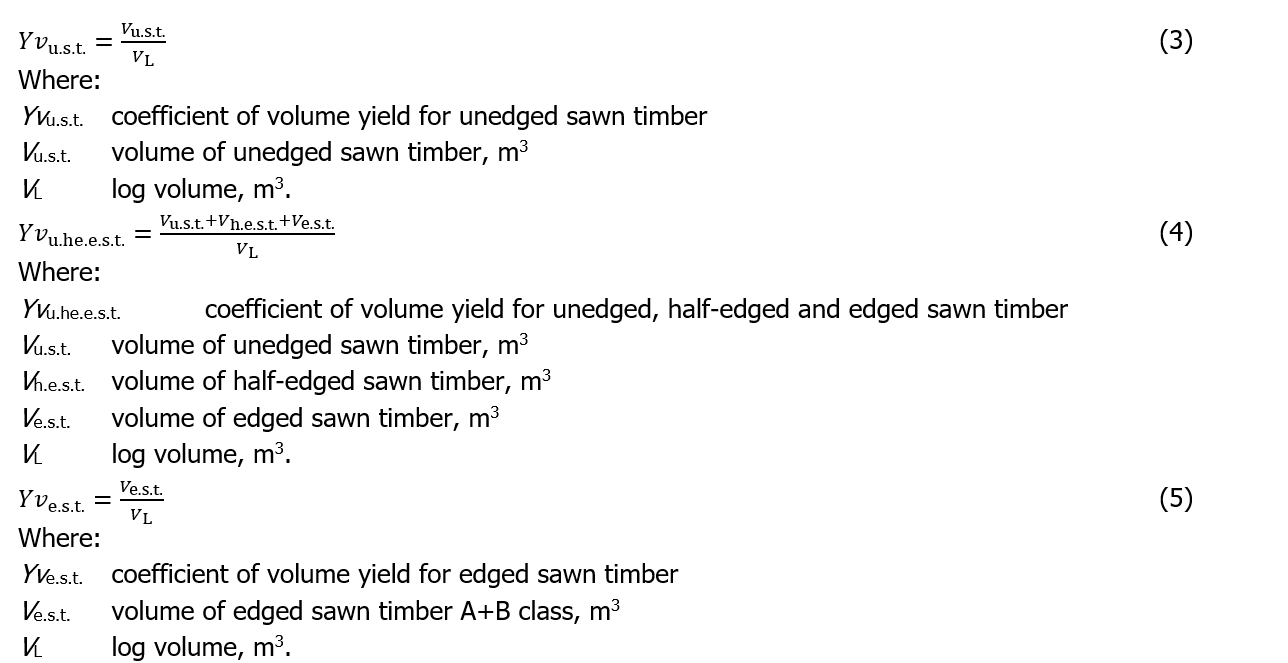
In the first phase, volume yield in the live sawing method is defined as the ratio of the volume of unedged sawn timber to the volume of common beech logs from which the sawn timber was produced according to Eq. 3.
In the first phase, volume yield in the round sawing method is defined as the ratio of the volume of unedged, half-edged and edged sawn timber to the volume of common beech logs from which the sawn timber was produced according to Eq. 4.
In the second phase, volume yield in the live and round sawing method is defined as the ratio of the volume of edged sawn timber class A and B to the volume of common beech logs from which the sawn timber was produced according to Eq. 5.
2.5 Qualitative Yield
The objective of every rational sawmilling process is to achieve not only higher log yield rates but also to produce sawn timber of the best possible quality. The aim should be to saw logs in such a way as to obtain the highest possible volumes of the most valuable log assortments in the best quality grades. The qualitative yield of common beech logs is expressed through the average quality coefficient of all edged sawn timber produced from a log, or from a given quantity of logs, according to Eq. 6.

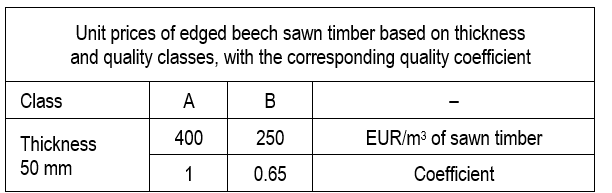
For the coefficient 1.00, sawn timber of the highest quality class was selected, while for sawn timber of lower general quality coefficient of 0.65 was used (Table 2).
Table 2 Assumed prices and quality coefficients of edged beech sawn timber used for the purpose of the research
Multiplying the average quality coefficient by the reference price corresponding to a quality coefficient of 1.00 yields the average monetary value of all common beech sawn timber per unit volume, according to Eq. (7).

2.6 Value Yield
Neither the average quantitative nor the average qualitative yield of logs alone can always provide a reliable indication of the efficiency of a particular sawing method, when viewed from the perspective of sawmill wood processing. This is because the categories of quantitative and qualitative yield are antagonistic.
A metric that simultaneously accounts for both the quantitative and qualitative yield of logs is the value yield coefficient. It can be calculated as the product of the average quantitative and qualitative yield of logs, according to Eq. 8.

If the value yield coefficient is multiplied by the monetary amount corresponding to a quality coefficient of 1, the result is the average value yield of common beech logs, expressed in monetary terms per unit volume of log, according to Eq. 9.

The statistical software SPSS and Microsoft Excel were used for data processing.
3. Results
3.1 Log Dimension
The results of the descriptive statistics for the analyzed three classes of logs sawn using live sawing and round sawing methods are presented in Tables 3 to 8.
Table 3 Descriptive statistical analysis of measured 1st class Logs sawn using live sawing method
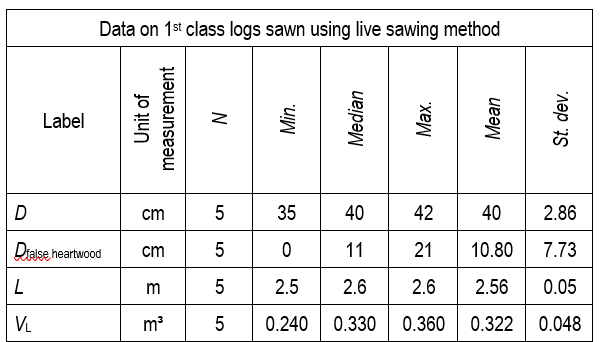
Table 4 Descriptive Statistical Analysis of Measured 2nd class Logs sawn using live sawing method
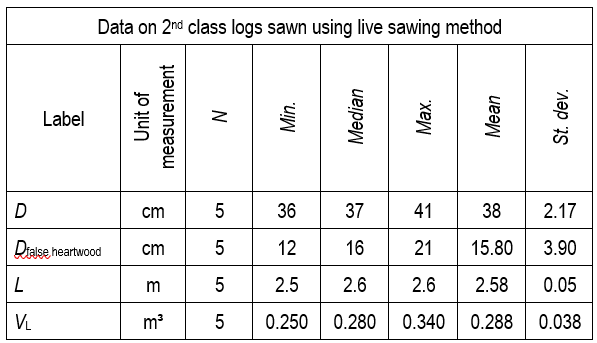
Table 5 Descriptive Statistical Analysis of Measured 3rd class Logs sawn using live sawing method
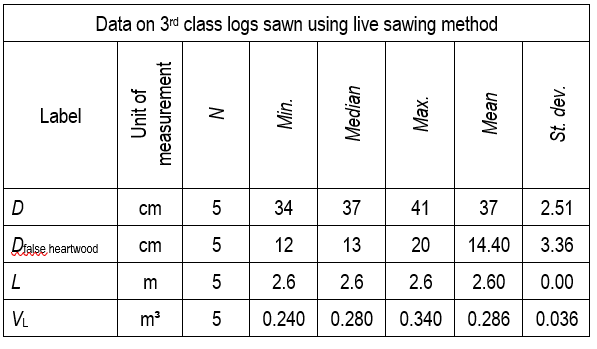
Table 6 Descriptive Statistical Analysis of Measured 1st class Logs sawn using round sawing method
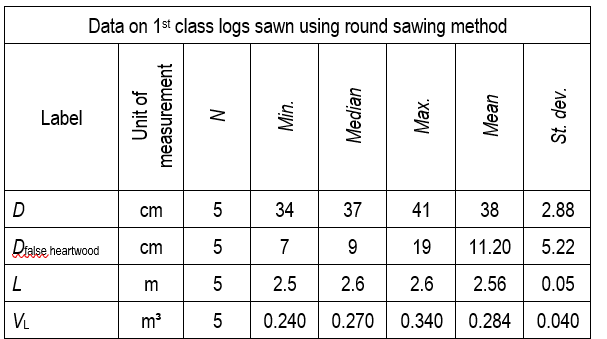
Table 7 Descriptive Statistical Analysis of measured 2nd-class logs sawn using the round sawing method
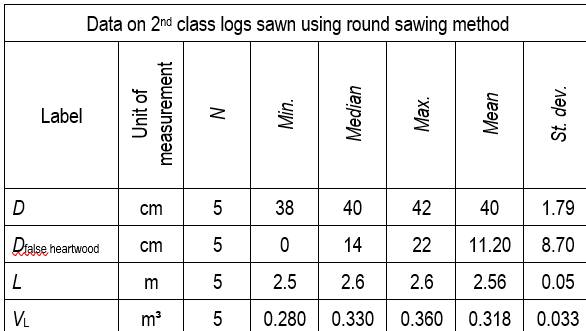
Table 8 Descriptive Statistical Analysis of Measured 3rd class Logs sawn using round sawing method
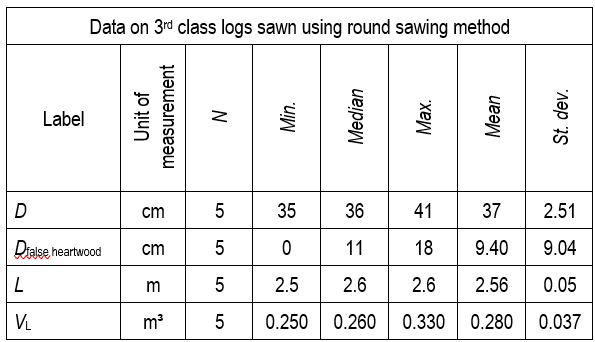
The 1st class logs had on average larger diameters (38–40 cm) compared to the logs of the other two classes (37–38 cm). The diameter of the fault heartwood varied considerably in all log classes, while the largest average diameter of the fault heartwood was recorded within the 2nd class logs (11–16 cm). In the case of logs intended for live sawing, the average log volume also followed its class (the average volume was the largest in case of 1st class logs, then 2nd and 3rd). In the case of round sawing, the average volume of the logs was similar in all classes, while the 2nd class logs showed slightly larger volumes than the average.
3.2 Volume (Quantitative) Yield
Distribution of volume yield per classs and method of sawing is shown in Fig. 2 and 3.
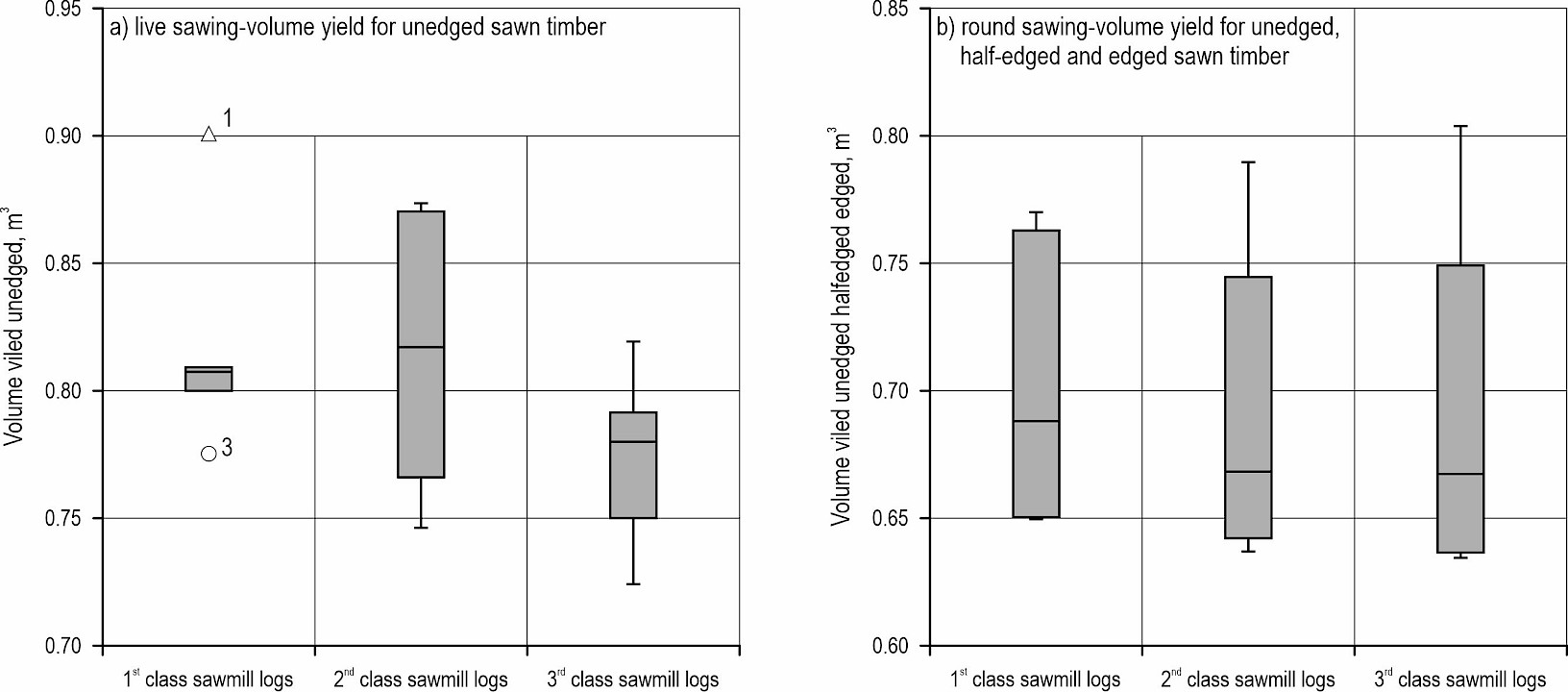
Fig. 2 Distribution of volume yield of sawn timber by log class
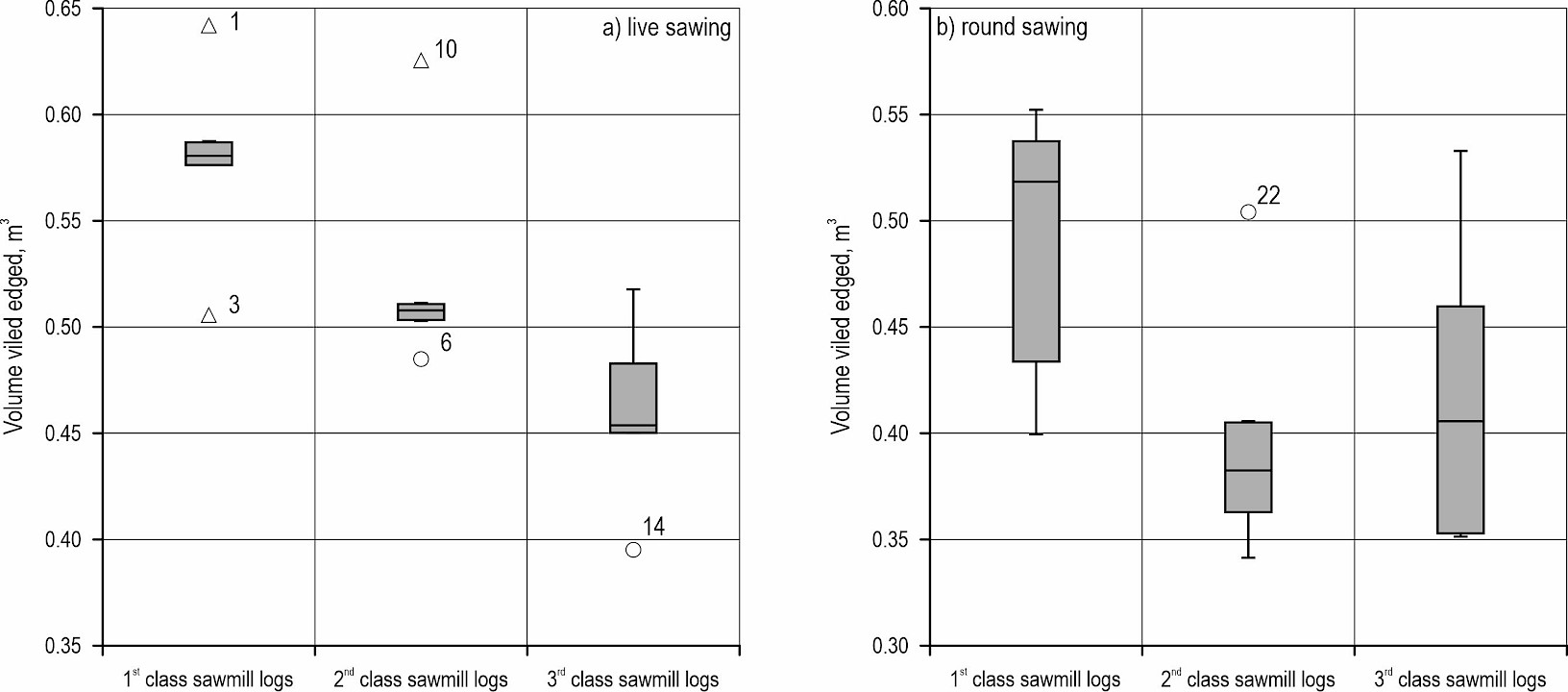
Fig. 3 Distribution of volume yield of edged sawn timber by log class
Across all log classes, live sawing showed higher volume yield values. The highest average volume yield was recorded for 1st class logs sawn using the live sawing method (0.818 for unedged sawn timber and 0.579 for edged sawn timber). In case of round sawing of 1st class logs, the volume yield was 0.704 for unedged, half-edged and edged sawn timber and 0.488 for edged sawn timber. This trend in volume yield is also observed for 2nd class (live sawing: 0.815 for unedged sawn timber and 0.527 for edged sawn timber; round sawing: 0.696 for unedged, half-edged and edged sawn timber and 0.400 for edged sawn timber) and 3rd class logs (live sawing: 0.773 for unedged sawn timber and 0.460 for edged sawn timber; round sawing: 0.698 for unedged, half-edged and edged sawn timber and 0.421 for edged sawn timber). Regarding log class, a decreasing trend in volume yield with decreasing quality class is evident, especially in case of live sawing. A two-way ANOVA was performed to determine whether log class and sawing method have a statistically significant effect on volume yield (Table 9).
Table 9 Two-Way ANOVA results for the effects of log class and sawing method on edged sawn timber quantitative yield
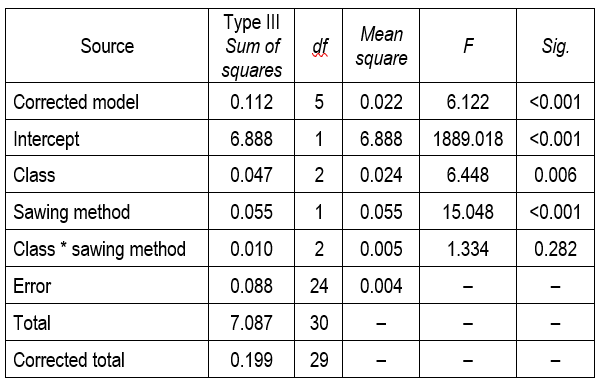
The results of the two-way ANOVA showed that the effects of log class (F=6.448, p=0.006) and sawing method (F=15.048, p<0.001) were statistically significant. However, their interaction was not statistically significant (F=1.334, p=0.282). The model explained 56.1% of the variance in the volume yield of sawn logs, with an adjusted R² of 0.469.
3.3 Qualitative Yield
Fig. 4 shows the distribution of qualitative yield of beech logs by class using live and round sawing.
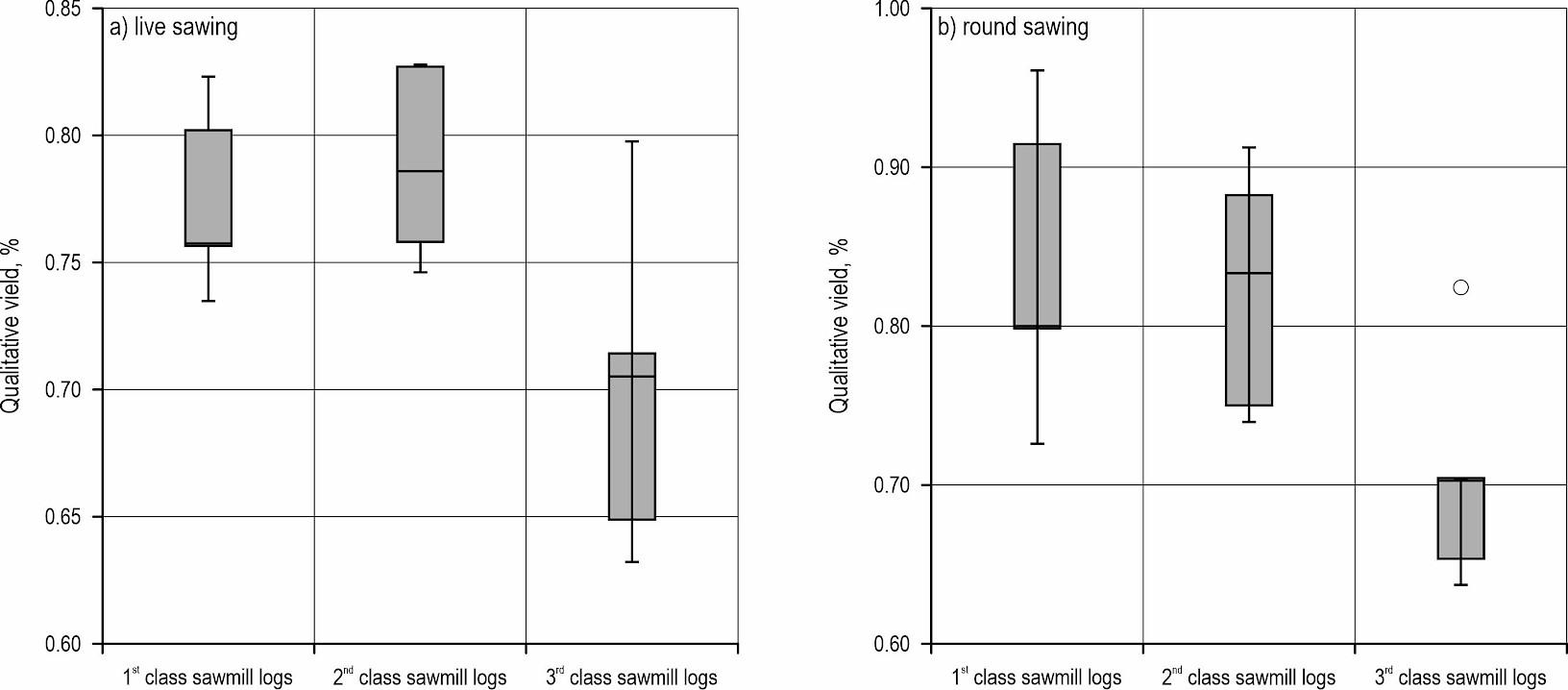
Fig. 4 Distribution of qualitative yield of sawn timber by log class
For all three quality classes of beech logs, round sawing showed higher average values of qualitative yield compared to live sawing. For 1st class logs, the qualitative yield was 0.8393 with round sawing, while with live sawing it was 0.7746. A similar difference in qualitative yield was observed in 2nd class logs (0.8223 for round sawing, 0.7885 for live sawing), while this difference was least pronounced in 3rd class logs (0.7022 for round sawing, 0.6994 for live sawing). Greater variability in qualitative yield results was recorded, especially for logs of 1st and 2nd class.
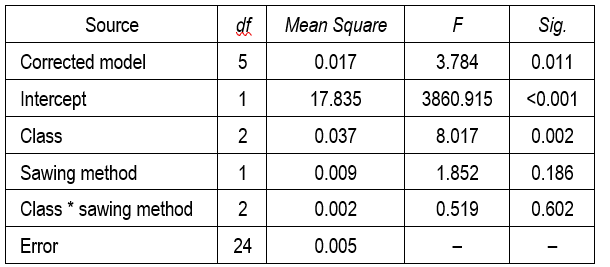
As with volume yield, ANOVA was also conducted for qualitative yield (Table 10). Unlike volume yield, only log quality class was statistically significant for qualitative yield (p=0.002). Sawing method and the interaction between sawing method were not statistically significant (p=0.186, p=0.602). The model explains 44.1% of the variance in qualitative yield.
Table 10 Two-Way ANOVA results for the effects of log class and sawing method on sawn timber qualitative yield
3.4 Value Yield
Figs. 5 and 6 present the value yield of logs and the monetary recovery rate of beech logs.
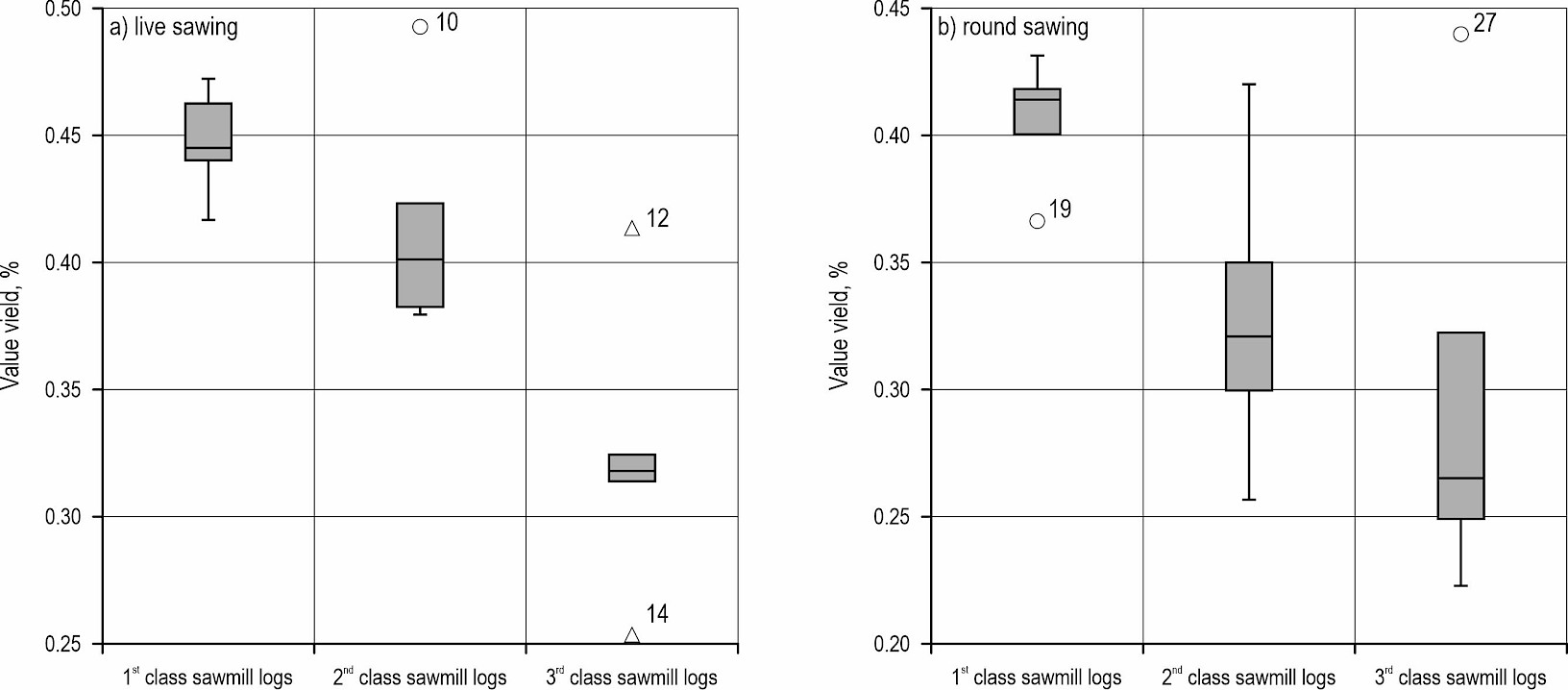
Fig. 5 Distribution of value yield of sawn timber by log class
The average values for value yield and monetary recovery rate were highest for 1st class logs using live sawing (0.447, 178.78 €/m³). For 2nd and 3rd class logs, live sawing also resulted in higher values (0.415, 166.05 €/m³ and 0.324, 129.40 €/m³) compared to the round sawing method (0.329, 131.53 €/m³ and 0.300, 119.80 €/m³). In addition to higher results, live sawing also showed less variability within log classes.
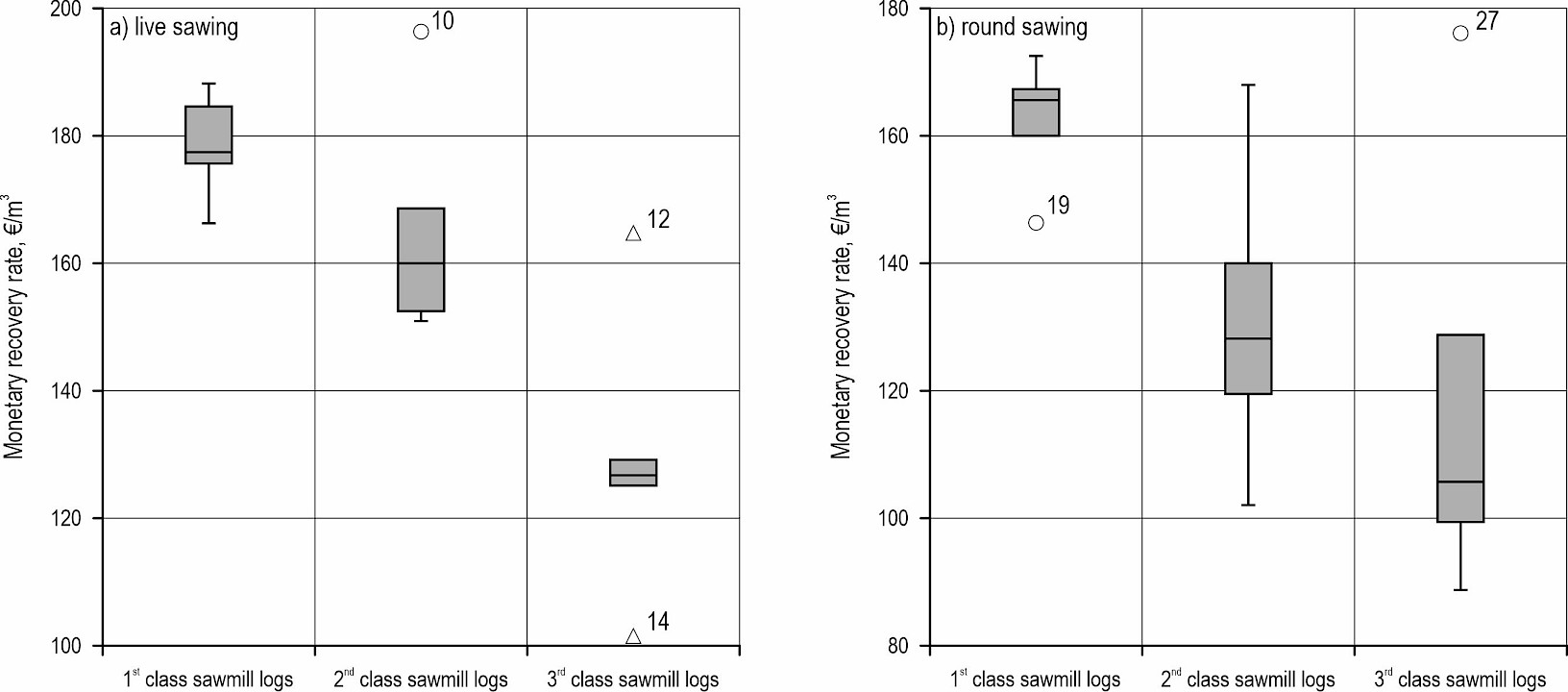
Fig. 6 Results of monetary recovery rate of logs
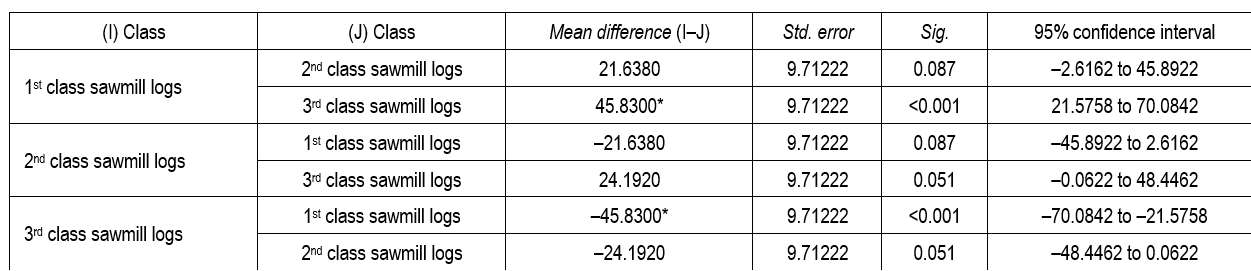
A two-way ANOVA was performed for the log monetary recovery rate (Table 11). The model explained 56% of the variance in the monetary recovery rate (adjusted R²=0.469). Both log quality class and sawing method were statistically significant (p<0.001, p=0.017). Their interaction, as with previous tests, was not statistically significant (p=0.430). A Tukey HSD post hoc test was conducted to determine between which log classes there was a statistically significant difference in the monetary recovery rate (Table 12). The test showed a statistically significant difference between 1st class and 2nd class logs in the monetary recovery rate. The difference between the 2nd and 3rd classes of logs was marginally significant (p=0.051). The only statistically insignificant difference was between the 1st and 2nd class logs (p=0.087).
Table 11 Two-Way ANOVA results for the effects of log class and sawing method on monetary recovery rate of logs
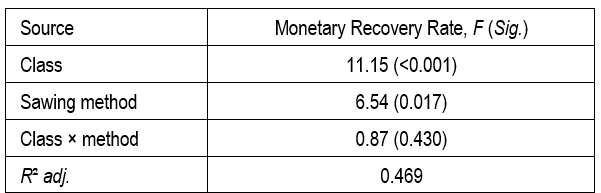
Table 12 Tukey HSD Multiple Comparisons of monetary recovery rate of logs among different classes of Sawmill Logs
4. Discussion
The results of this study showed that both test parameters (beech log class and sawing method) have an impact on the result of yield. Live sawing had, on average, higher volume yield values than round sawing for all log classes, while round sawing had, on average, higher qualitative yield. These results coincide with the findings of Vilkovský et al. (2023) and Popadić et al. (2014), who noted a similar difference between these two sawing methods. The higher volume yield in live sawing is probably due to the simplicity of the method itself. In live sawing, the saw makes fewer passes through the log, resulting in lower sawdust losses. In the case of qualitative yield, round sawing proved to be better on average. This is because the technique produced a higher proportion of sawn timber with tangential texture and less false heartwood.
The consistency of the volume yield results across all sawlog classes during live sawing indicates that volume yield is primarily determined by the sawing method. Regarding qualitative yield, the results were less uniform, suggesting that log quality class played a greater role than it did for volume yield, which is also consistent with previous studies (Nordmark 2005, Tanušev et al. 2009, Klement et al. 2025). The results of round sawing were much more variable for all measured average yield parameters, which would mean that in commercial use of this sawing method the result may be inconsistent even in case of better log quality classes. Live sawing showed much lower variability and consistency of yield with log quality class, which is according to Steele (1984) the best indicator of economic profitability of production.
Regarding the log quality class, as expected, the increase in log quality class roughly correlated with increases in volume, qualitative, and value yield. This was anticipated, as higher quality logs generally have larger diameters and lengths, and a lower proportion of defects, resulting in higher volume yield, and especially higher qualitative and value yield (Knoke et al. 2005, Marenče et al. 2016, Zlateski et al. 2024). The statistical difference is more significant and noticeable between 1st and 3rd class logs than between 1st class and 2nd class logs, due to the more pronounced difference between qualitative properties of the logs.
Although the results of this study are consistent with existing knowledge on sawing techniques, they differ from some previous studies in which certain log geometries achieved higher volume yields under round sawing. These differences can be explained by different kerf widths, log dimensions and the proportion of heartwood within the log, which significantly affect the final yield (Huyler 1974, Maness and Lin 1995).
5. Conclusions
The results of this study showed that both sawing methods have a statistically significant effect on volume yield. Live sawing proved to be superior with respect to volume yield compared to round sawing. Log class was also statistically significant (higher class logs had higher volume yields on average), while the interaction between log class and sawing method was statistically insignificant, indicating that live sawing retains its advantages regardless of log quality. Qualitative yield was on average higher for round sawing, although the variability of results was greater compared to live sawing. In qualitative yield, the quality class of logs had a greater effect on qualitative yield than sawing method (p=0.002 vs. p=0.186). From an economic perspective, live sawing recorded higher results in value yield and monetary recovery rate compared to round sawing. This advantage was most pronounced in higher quality logs, but was also present in other log classes. Round sawing also exhibited greater variability in value recovery and monetary recovery rate, suggesting a potentially higher financial risk when applying this sawing method in an industrial environment
6. References
Ali, M.R., Abdullah, U.H., Ashaari, Z., Hamid, N.H., Hua, L.S., 2021: Hydrothermal modification of wood: a review. Polymers 13(16): 2612. https://doi.org/10.3390/polym13162612
Bartolucci, B., De Rosa, A., Bertolin, C., Berto, F., Penta, F., Siani, A.M., 2020: Mechanical properties of the most common European woods: a literature review. Frattura Integrità Strutturale 14(54): 249–274. https://doi.org/10.3221/IGF-ESIS.54.18
Caposciutti, G., Almuina-Villar, H., Dieguez-Alonso, A., Gruber, T., Kelz, J., Desideri, U., Anca-Couce, A., 2019: Experimental investigation on biomass shrinking and swelling behaviour: particles pyrolysis and wood logs combustion. Biomass Bioenerg. 123: 1–13. https://doi.org/10.1016/j.biombioe.2019.01.044
Dzurenda, L., Dudiak, M., 2024: Homogenization of the color of beech sapwood and false heartwood by the steaming process. Forests 15(6): 1009. https://doi.org/10.3390/f15061009
Dudiak, M., 2025: Evaluation of the process of steaming beech sapwood and false heartwood with saturated water steam in terms of acidity changes and color wood. Forests 16(5): 864. https://doi.org/10.3390/f16050864
Emmerich, L., Wülfing, G., Brischke, C., 2019: The impact of anatomical characteristics on the structural integrity of wood. Forests 10(2): 199. https://doi.org/10.3390/f10020199
Fan, C., Zhuang, Z., Liu, Y., Yang, Y., Zhou, H., Wang, X., 2024: Bilateral defect cutting strategy for sawn timber based on artificial intelligence defect detection model. Sensors 24(20): 6697. https://doi.org/10.3390/s24206697
Ghorbanian Far, M., Najafian Ashrafi, M., Shaabani Asrami, H., Amiri Moghadam, Y., Bari, E., Niemz, P., Ribera, J., 2024: Physical and mechanical properties of different beech wood species grown at various climate conditions: a review. Holzforschung 78(7): 377–386. https://doi.org/10.1515/hf-2023-0117
HRN D.B4.028, 1979: Hrvatske norme proizvoda iskorištavanja šuma. Listopadnih pilanskih trupaca. Državni zavod za Normizaciju i mjeriteljstvo: Zagreb, Croatia, 1995.
HRN EN 1316-1:2012: Hardwood Round Timber-Qualitative Classification-Part 1: Oak and Beech. Croatian Standards Institute: Zagreb, Croatia, 2012.
HRN EN 1309-1:2012: Round and sawn timber-Method of measurement of dimensions-Part 1: Sawn timber. Croatian Standards Institute: Zagreb, Croatia, 2012.
HRN EN 1312-1:2012: Round and sawn timber–Determination of the batch volume of sawn timber. Croatian Standards Institute: Zagreb, Croatia, 2012.
HRN EN 1309-2:2012: Round and sawn timber-Method of measurement of dimensions-Part 1: Round timber-Requirements for measurement and volume calculation rules. Croatian Standards Institute: Zagreb, Croatia, 2012.
Huyler, N.K., 1974: Live-sawing: a way to increase lumber grade yield and mill profits. Forest Service, US Department of Agriculture, Northeastern Forest Experiment Station: vol. 305.
Ištvanić, J., 2003: Beech (Fagus sylvatica L.) sawmill processing in Croatia. Šumar. list 77(7–8): 373–387.
Klement, I., Vilkovská, T., Vilkovský, P., 2025: Effects of beech wood dimensions and quality on edge-glued boards yield. BioResources 20(1): 910. https://doi.org/10.15376/biores.20.1.910-922
Knoke, T., Stang, S., Remler, N., Seifert, T., 2006: Ranking the importance of quality variables for the price of high quality beech timber (Fagus sylvatica L.). Annals of Forest Science 63(4): 399–413. https://doi.org/10.1051/forest:2006020
Maness, T.C., Lin, Y., 1995: The influence of sawkerf and target size reductions on sawmill revenue and volume recovery. Forest Prod. J. 45(11): 43–50.
Marenče, J., Gornik Bučar, D., Šega, B., 2016: Beech wood-correlations between the quality of trees, logs and sawn wood. Acta Silvae et Ligni 111: 35–47.
Milinović, I., Gross, A., Vučinić, M., Božić, M., 1984: Iskorišćenje tanke oblovine bukve namjenskom preradom u elemente za sjedišta stolica. Bilten ZIDI 12(5): 90–107.
Nordmark, U., 2005: Value recovery and production control in bucking, log sorting, and log breakdown. Forest Prod. J. 55(6): 73–79.
Popadić, R., Šoškić, B., Milić, G., Todorović, N., Furtula, M., 2014: Influence of the sawing method on yield of beech logs with red heartwood. Drv. Ind. 65(1): 35–42. https://doi.org/10.5552/drind.2014.1312
Pramreiter, M., Grabner, M., 2023: The utilization of European beech wood (Fagus sylvatica L.) in Europe. Forests 14(7): 1419. https://doi.org/10.3390/f14071419
Prka, M., Zečić, Ž., Krpan, A.P., Vusić, D., 2009: Characteristics and share of European beech false heartwood in felling sites of central Croatia. Croat. J. For. Eng. 30(1): 37–49.
Steele, P.H., 1984: Factors determining lumber recovery in sawmilling. US Department of Agriculture, Forest Service, Forest Products Laboratory: vol. 39.
Škaljić, N., 2002: Simulirano piljenje kvalitetnih bukovih trupaca u zavisnosti od položaja i veličine neprave srži. Doctoral thesis, Faculty of Mechanical Engineering, University of Sarajevo, Sarajevo, Bosnia and Herzegovina.
Šoškić, B., Popadić, R., 2007: Utjecaj kvalitete bukove oblovine na strukturu glavnih i sporednih proizvoda u pilanskoj preradi. Prerada drv. 20(1): 11–17.
Tanušev, V., Ištvanić, J., Moro, M., Butković, J., 2009: Iskorištenje pri izradi grubih drvnih elemenata iz bukovih (Fagus sylvatica L.) trupaca manjih promjera i niže kvalitete. Šumar. List 133(9–10): 483–492.
Todorović, N., 2023: Anatomija drveta. University of Belgrade Faculty of Forestry: Belgrade, Serbia.
Vilkovský, P., Klement, I., Vilkovská, T., 2023: The impact of the log-sawing patterns on the quantitative and qualitative yield of beech timber (Fagus sylvatica L.). Appl. Sci. 13(14): 8262. https://doi.org/10.3390/app13148262
Zlateski, G., Stamenkoska, A.M., Rabadjiski, B., Trposki, Z., Koljozov, V., 2024: Impact of length and diameter variations in beech (Fagus sylvatica L.) sawlogs on the yield and waste. International Journal-Wood, Design & Technology 13(1): 55.
Zubčević, R., 1983: Utjecaj kvalitete i dimenzija bukovih trupaca na iskorištenje. Drv. ind. 34(5–6): 131–136.
© 2026 by the authors. Submitted for possible open access publication under the
terms and conditions of the Creative Commons Attribution (CC BY) license (http://creativecommons.org/licenses/by/4.0/).
Authors’ addresses:
Assoc. prof. Josip Ištvanić, PhD
e-mail: jistvanic@sumfak.unizg.hr
Assist. prof. Miljenko Klarić, PhD
e-mail: mklaric@sumfak.unizg.hr
Assoc. prof. Krešimir Greger, PhD *
e-mail: kgreger@sumfak.unizg.hr
Dario Pervan, MSc
e-mail: dpervan@sumfak.unizg.hr
University of Zagreb
Faculty of forestry and wood technology
Department of Material Technology
Svetošimunska cesta 23
10000 Zagreb
CROATIA
Ana Marija Stamenkoska, MSc
e-mail: stamenkoska@fdtme.ukim.edu.mk
Faculty of Design and Technologies of Furniture and Interior
Department of Production Organisation
16-ta Makedonska brigada 3
1000 Skopje
NORTH MACEDONIA
Ivan Ravnjak, MSc
e-mail: ivan0590@net.hr
Ljubna 32
72230 Žepče
BOSNIA AND HERZEGOVINA
* Corresponding author
Received: January 28, 2026
Accepted: September 03, 2026
Original scientific paper