
Carbon Sequestration of European Beech, Sessile Oak, and Turkey Oak Forests by Management System in Hungary
doi: https://doi.org/10.5552/crojfe.2027.4050
volume: issue, issue:
pp: 15
- Author(s):
-
- Király Éva
- Bidló András
- Csépányi Péter
- Borovics Attila
- Article category:
- Original scientific paper
- Keywords:
- climate change mitigation, carbon sequestration, forest management system, tree biomass, continuous cover forestry
Abstract
HTML
Uneven-aged forest structure is considered a feasible way to obtain multiple benefits from managed forest stands. In the context of the Paris Agreement, the EU climate neutrality target, the LULUCF accounting framework, and the emerging voluntary carbon market under the Carbon Removal and Carbon Farming regulation, forest carbon sink performance has gained increasing relevance. However, stand-level biomass sink estimates must be distinguished from accounting-relevant removals under LULUCF and certified removals under CRCF. In this study, we analysed the impact of forest management system on living tree biomass carbon sequestration in European beech (Fagus sylvatica L.), sessile oak (Quercus petraea (Matt.) Liebl.), and Turkey oak (Quercus cerris L.) stands in Hungary. Four management systems were assessed: rotation forest management, continuous cover forest management, non-production forest management, and transitional forest management. Carbon sequestration comparisons were conducted under ceteris paribus conditions by comparing groups with similar site and stand characteristics. Multiple regression analysis identified forest management system as a significant explanatory factor influencing living biomass carbon sink. The paired-group comparison was used as a descriptive indicator of differences between management systems. Continuous cover and transitional forest management showed mixed patterns compared with paired rotation forest groups, whereas non-production forests showed markedly higher living biomass carbon sink than comparable rotation forests. These findings refer only to stand-level living biomass stock change, not to LULUCF accounting-relevant removals, or CRCF-certified removals. Nevertheless, comparing biomass sink performance across silvicultural systems can support future decision-making and the ongoing development of CRCF methodological guidelines.
Carbon Sequestration of European Beech, Sessile Oak, and Turkey Oak Forests by Management System in Hungary
Éva Király, András Bidló, Péter Csépányi, Attila Borovics
https://doi.org/10.5552/crojfe.2027.4050
Abstract
Uneven-aged forest structure is considered a feasible way to obtain multiple benefits from managed forest stands. In the context of the Paris Agreement, the EU climate neutrality target, the LULUCF accounting framework, and the emerging voluntary carbon market under the Carbon Removal and Carbon Farming regulation, forest carbon sink performance has gained increasing relevance. However, stand-level biomass sink estimates must be distinguished from accounting-relevant removals under LULUCF and certified removals under CRCF. In this study, we analysed the impact of forest management system on living tree biomass carbon sequestration in European beech (Fagus sylvatica L.), sessile oak (Quercus petraea (Matt.) Liebl.), and Turkey oak (Quercus cerris L.) stands in Hungary. Four management systems were assessed: rotation forest management, continuous cover forest management, non-production forest management, and transitional forest management. Carbon sequestration comparisons were conducted under ceteris paribus conditions by comparing groups with similar site and stand characteristics. Multiple regression analysis identified forest management system as a significant explanatory factor influencing living biomass carbon sink. The paired-group comparison was used as a descriptive indicator of differences between management systems. Continuous cover and transitional forest management showed mixed patterns compared with paired rotation forest groups, whereas non-production forests showed markedly higher living biomass carbon sink than comparable rotation forests. These findings refer only to stand-level living biomass stock change, not to LULUCF accounting-relevant removals, or CRCF-certified removals. Nevertheless, comparing biomass sink performance across silvicultural systems can support future decision-making and the ongoing development of CRCF methodological guidelines.
Keywords: climate change mitigation, carbon sequestration, forest management system, tree biomass, continuous cover forestry
1. Introduction
Forest ecosystems are expected to simultaneously fulfill a wide range of economic and ecological functions such as wood production, biodiversity conservation, hydrological and soil protection, carbon sequestration, and recreation (Führer 2000, Bianchi et al. 2018). Many studies have indicated that uneven-aged forest structure is a feasible way to obtain multiple benefits from managed stands (Malcolm et al. 2001, Spiecker 2003, Macpherson et al. 2017). This has led to an increased interest towards finding alternative forest management approaches that can replace rotation forestry (Kuuluvainen et al. 2012, Lundqvist 2017, Csépányi 2017).
In Hungary, four distinct forest management systems are implemented: rotation forest management, continuous cover forest management, non-production forest management, and transitional forest management (Csépányi and Csór 2017, Hungarian Forest Act 2009, Király and Borovics 2024). Rotation forest management is based on the cultivation of nearly even-aged stands, which are felled and regenerated according to a planned temporal and spatial cycle. Continuous cover forest management avoids final cutting that would create a regeneration obligation and aims to maintain continuous forest cover through a diverse age structure and spatial stand structure. Transitional forest management represents an intermediate system aimed at converting rotation forests towards continuous cover forestry by extending regeneration over several spatially and temporally separated phases. In non-production forest management, timber production is not carried out, and logging is allowed only for specific purposes such as forest protection, nature conservation, public welfare, regeneration, research, or other public interest. The latter three, known as alternative forest management systems, are becoming more widespread in our country; however, by 2021, they still accounted for less than 10% of the total forest area (Király and Borovics 2024).
Considering the universal emission reduction commitment of the Paris Agreement and the EU's target of carbon neutrality by 2050, the carbon carrying capacity of forests has grown in significance (Borovics et al. 2024, Keith et al. 2024). Given the characteristics of several industrial and agricultural processes, achieving net-zero emissions is not feasible without implementing carbon capture and storage (Malins et al. 2023). Despite ongoing developments in industrial carbon capture technologies, the most effective method of carbon sequestration continues to be natural: the ability of ecosystems, especially forests, to capture carbon (Verkerk et al. 2022).
Forests are becoming part of increasingly complex governance frameworks, shaped by international climate agreements, EU climate policy, and emerging systems for certifying carbon removals (Štrubelj et al. 2023, Beljan et al. 2025). Under the EU LULUCF compliance framework, forest carbon sinks were accounted for against Forest Reference Levels during the 2021–2025 period, in accordance with Regulation (EU) 2018/841. For the 2026–2030 period, the amended LULUCF Regulation introduces a different compliance architecture, based on national 2030 targets and indicative annual trajectories for Member States towards those targets, as set out in Regulation (EU) 2023/839. These EU-level obligations also contribute to the implementation of the EU and its Member States’ Nationally Determined Contribution (NDC) under the Paris Agreement, which commits the EU to an economy-wide net domestic reduction of at least 55% in greenhouse gas emissions by 2030 compared with 1990 levels. However, the direct economic value of LULUCF removal units within the EU compliance framework remains limited. They are not fungible with EU ETS allowances and therefore cannot be used by regulated ETS operators to meet their surrender obligations. In addition, the amended LULUCF targets are ambitious, meaning that Member States must first use removals to meet their own national targets and indicative trajectories. In the case of Hungary, this makes the availability of surplus LULUCF units for transfer to other Member States unlikely.
Although the role of forests in compliance carbon markets remains relatively limited, voluntary carbon markets offer considerable economic opportunities, especially for nature-based mitigation projects (Beljan et al. 2025). One of the most significant regulatory developments in this area is the EU Carbon Removal Certification Framework (CRCF; EU/2024/3012), which establishes harmonised rules for the quantification, verification and certification of carbon removals across the Union. Under this framework, carbon removals are assessed relative to a predefined baseline representing business-as-usual management. Within this emerging certification system, improved forest management (IFM) represents an important category of carbon farming activity with the potential to generate certifiable carbon dioxide removal credits. IFM interventions are implemented in existing forests, building on their already substantial biomass stocks and ecological functions (Borovics et al. 2026). IFM may include a broad range of silvicultural practices, including changes in silvicultural system, that increase carbon sequestration relative to the baseline.
Despite their large theoretical potential, the design, quantification and verification of IFM projects remain methodologically complex. Key uncertainties relate particularly to baseline determination and additionality, as the Commission delegated act specifying the certification methodology for IFM is not yet available. Baseline definition will strongly influence which types of management change can be incentivised through voluntary carbon markets. Until the final IFM guidelines are adopted, only preliminary assumptions can be made regarding eligible project types and the magnitude of accountable removals. Nevertheless, analysing the relative carbon sink performance of different silvicultural systems remains important for informing future decision-making, contributing to the preparation of robust certification guidelines, and supporting project development.
It is crucial in this context to accurately measure and predict the impact of forest management decisions on the net ecosystem carbon balance at the level of individual forest stands. Different forest management systems might lead to varying climate benefits because of the complex interactions among carbon stored within ecosystems, harvested wood products, and variations in the advantages related to substituting products and energy (Smyth et al. 2014, Lundmark et al. 2016). There has been a discussion for centuries on the comparison of production levels, yield, economic return, and silvicultural measures to be used in rotation forests and alternative forest management systems (Wallmo 1897, Holmgren 1914, Möller 1922, Troup 1928, Lundqvist 1989, Lundmark et al. 2016, Csépányi and Csór 2017). While there is a clear correlation between forest yield and carbon sequestration performance, the impact of alternative management systems on carbon balance remains insufficiently documented, despite indications of positive effects from continuous cover forest management on carbon dynamics (Lindroth et al. 2012, Pukkala 2014). In the context of the carbon market, Assmuth and Tahvonen (2018) used a modelling framework with sound economic basis, and concluded that, in empirically realistic scenarios, carbon pricing prompts a shift from clearcutting to continuous cover management. This suggests that alternative forest management systems could become more significant with the operationalisation of the Carbon Removal Certification Framework and the emergence of voluntary carbon market IFM projects that may incentivise silvicultural system change.
Korosuo et al. (2023) warn that despite significant efforts, forest-related climate change mitigation measures appear insufficient, with the EU forest sink diverging rapidly from climate targets. They highlight that at the EU level, recent decreases in forest growth and increases in harvest and mortality are leading to a sharp decline in the forest sink and continuing current forest management practices is likely to exacerbate this trend (Korosuo et al. 2023). This underscores the urgent need for new forest management approaches and innovative measures to reverse these unfavourable trends. Forest management systems that maintain continuous forest cover, featuring mixed species composition and uneven age structure, could be among the most effective alternative approaches. Therefore, it is more crucial than ever to evaluate the carbon dynamics associated with these management systems.
In our previous study (Király and Borovics 2024), we conducted an analysis similar to a Greenhouse Gas Inventory, assessing the average net annual carbon sink of all Hungarian forests with a breakdown by forest management system. We found that the net forest tree biomass carbon sink was significantly higher under transitional forest management compared to all other management systems (Király and Borovics 2024). However, that study was descriptive and aggregate in nature; it reported sink values by management system but did not further decompose them by age class, tree species group or site productivity. Therefore, it was not possible to determine the relative contribution of these structural factors to the observed differences among management systems. Nevertheless, the comparison was clearly affected by structural differences among management systems. In Hungary, tree species composition, age-class distribution and productivity differ markedly between management systems, with fast-growing species, shorter rotations and higher-yielding stands being overrepresented under rotation forest management (Kottek et al. 2023, Király and Borovics 2024). Consequently, the earlier results should not be interpreted as a direct estimate of the intrinsic carbon sink performance of each management system. Rather, they represent the combined influence of management system, species composition, stand age and productivity structure. This limitation motivated the present analysis, in which management systems are compared within more homogeneous groups to reduce the influence of these structural differences.
In this paper, we aimed to examine the specific impact of forest management systems on the carbon sequestration of living tree biomass in European beech (Fagus sylvatica L.), sessile oak (Quercus petraea (Matt.) Liebl.), and Turkey oak (Quercus cerris L.) stands under ceteris paribus conditions, meaning that forest management systems were compared among stands with comparable site and stand characteristics. Additionally, we sought to identify the main factors influencing carbon sequestration in stands composed of the above-mentioned tree species.
2. Materials and Methods
2.1 Data Source and Sampling
In our study, we used the dataset by Király and Borovics (2024) as the initial database. This dataset is derived from the digital maps of the National Forestry Database (NFD), which is described in detail by Tobisch and Kottek (2013) and Kottek et al. (2023). The dataset from Király and Borovics (2024) comprised a total of 1,993,476 sample points, representing the entire forest area of the country. Each sample point corresponded to one hectare of forest, with categorizing variables such as management system, site characteristics and volume stock information available for two time points: 2010 and 2020. Using the volume stock information, the average annual tree biomass carbon sink for the 2010–2020 period was calculated as described by Király and Borovics (2024).
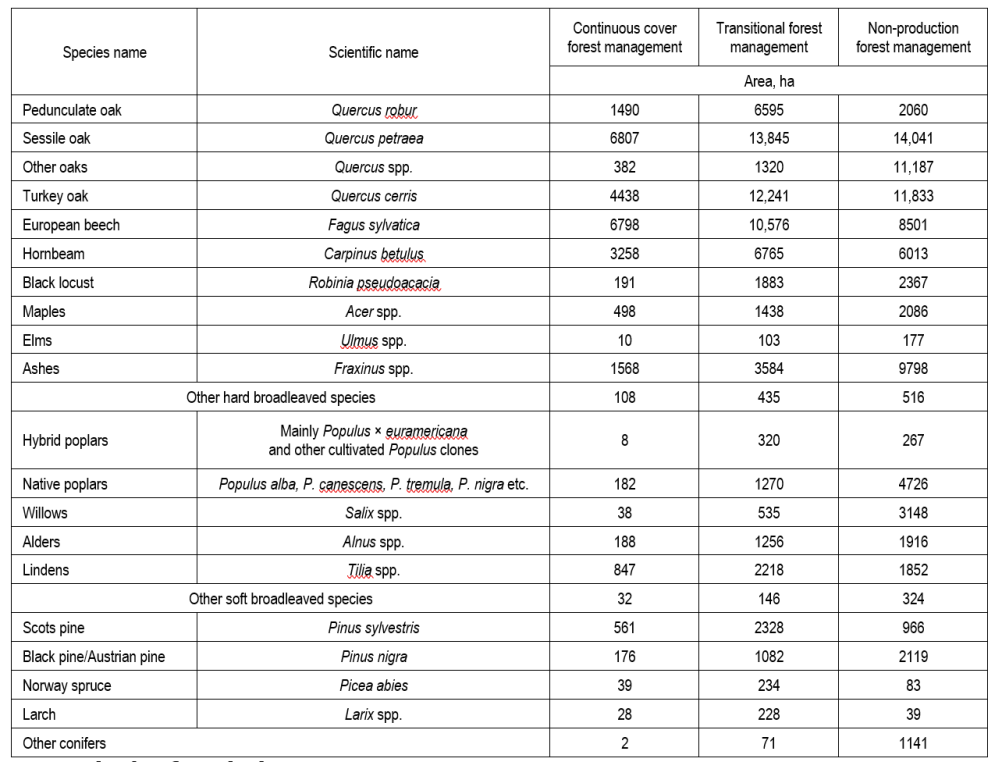
We filtered the initial database to retain only those sampling points where the main tree species was European beech, sessile oak, or Turkey oak. These species were selected because alternative forest management systems are most common and practically most relevant among these species in Hungary. Nevertheless, this selection does not cover the entire area under alternative forest management (Table 1). The selected species accounted for 65.3% of the continuous cover forest management area and 53.5% of the transitional forest management area in the initial dataset. The results should therefore be interpreted as representative of the main beech–oak dominated segment of alternative forest management, rather than of all forests managed under alternative systems.
Table 1 Area of tree species groups under continuous cover, transitional and non-production forest management in the initial dataset. The table shows the full tree-species composition of forests under alternative and non-production management systems, and indicates the share represented by the three species groups selected for further analysis: sessile oak, Turkey oak and European beech
2.2 Methods of Analysis
First, we analyzed the yield class and age class distribution of the sample by management system to understand the characteristics of the assessed forests.
Second, we performed multiple regression analysis to identify variables that significantly affected the tree biomass carbon sink. This analysis was conducted separately for the three examined tree species. The explanatory variables included management system, protection status, age of the first tree species row, yield class, origin (i.e., high forest or coppice), genetic soil type as per the genetic soil type classification specific for Hungary (Stefanovits 1956, Szodfridt 1993, Stefanovits et al. 1999), thickness of the productive soil layer, soil texture, hydrology, and climate. For the analysis, we used the Statistica software (Version 14.0.1.25, Tulsa, OK, USA).
Third, we examined the carbon sink performance of different forest management systems under ceteris paribus conditions. For this purpose, sampling points were grouped according to the variables that had a significant effect on the biomass carbon sink in the multiple regression analysis. Only groups containing at least 30 sampling points were retained for further analysis, meaning that each analysed group represented at least 30 ha of forest land. This threshold was applied to avoid comparisons based on very small groups, where group means would be highly sensitive to individual sample points. However, this filtering also means that rare combinations of site, stand and management characteristics were excluded from the paired comparison; therefore, the results should be interpreted as representative of the more common forest conditions in the dataset, rather than of all possible site types.
Groups were paired when all grouping variables had the same value except for the management system. The carbon sink performance of the paired groups was compared using an index created specially for this purpose and named Carbon Stock Change Index (CSCI). The CSCI was calculated as follows.
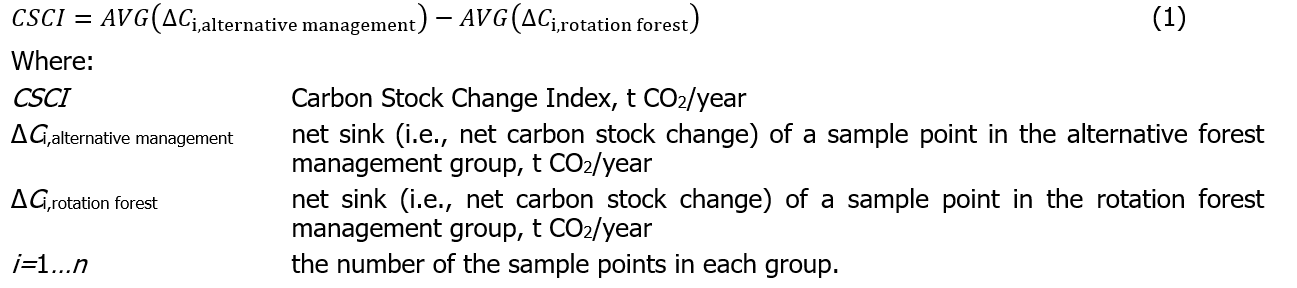
We examined the distribution of CSCI by tree species and management system. According to IPCC (2006, 2019) reporting conventions, carbon sink was expressed in t CO2 with a negative sign, while carbon emissions had a positive sign. Accordingly, negative CSCI values indicate that the alternative forest management group had a higher average biomass carbon sink than the paired rotation forest management group, while positive CSCI values indicate a higher average biomass carbon sink in the rotation forest management group.
The CSCI was used as a descriptive comparative indicator rather than as an inferential test statistic. Therefore, the results are interpreted in terms of the direction and magnitude of differences between paired groups, not as statistically significant differences between management systems. The distribution of CSCI values was evaluated by tree species, alternative management system and protection status, with particular attention to the number of paired groups showing negative, zero or positive CSCI values.
3. Results
Our results show that non-production forests differed markedly from the other forest management systems in terms of both yield class distribution and age class structure (Fig. 1 and Fig. 2). In particular, the least productive yield class and stands older than 120 years were strongly overrepresented under non-production forest management.
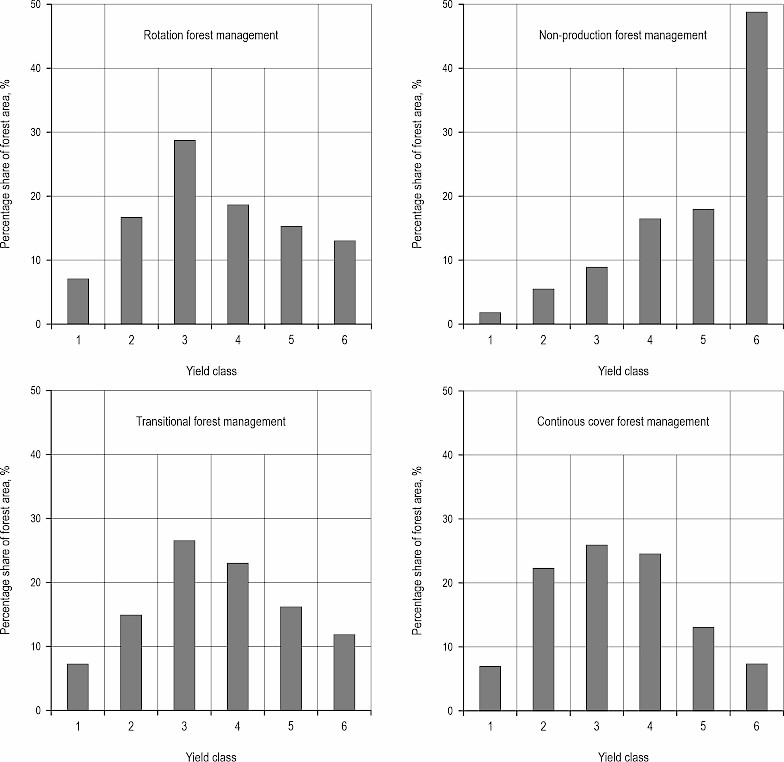
Fig. 1 Relative frequency of yield classes 1–6 across forest management systems in European beech, sessile oak, and Turkey oak forests as of the 2020 state of the NFD. (Yield class 1 meaning the most productive yield class, and yield class 6 meaning the least productive one)
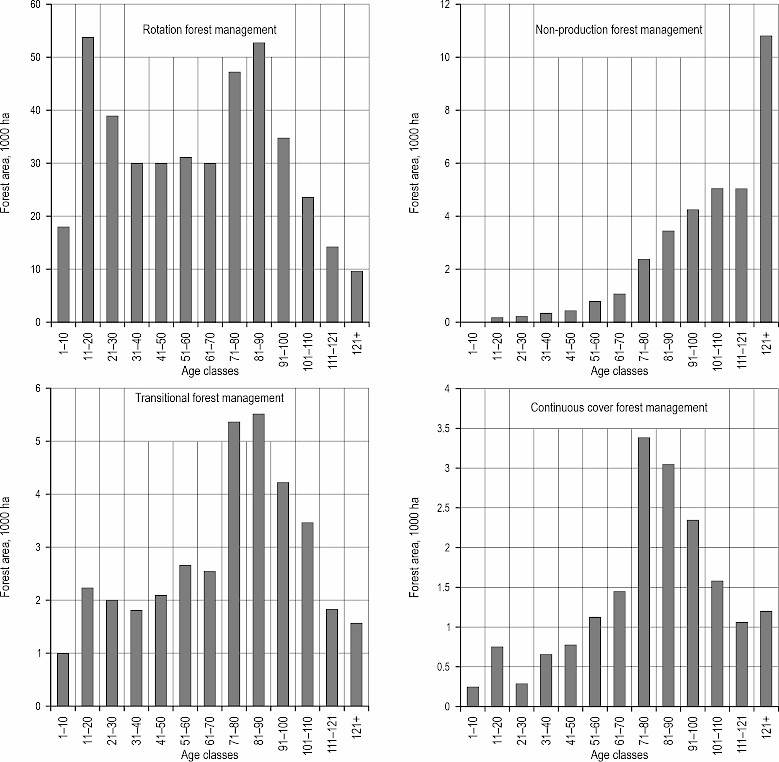
Fig. 2 Age class distribution of European beech, sessile oak, and Turkey oak forests by management system as of the 2020 state of the NFD
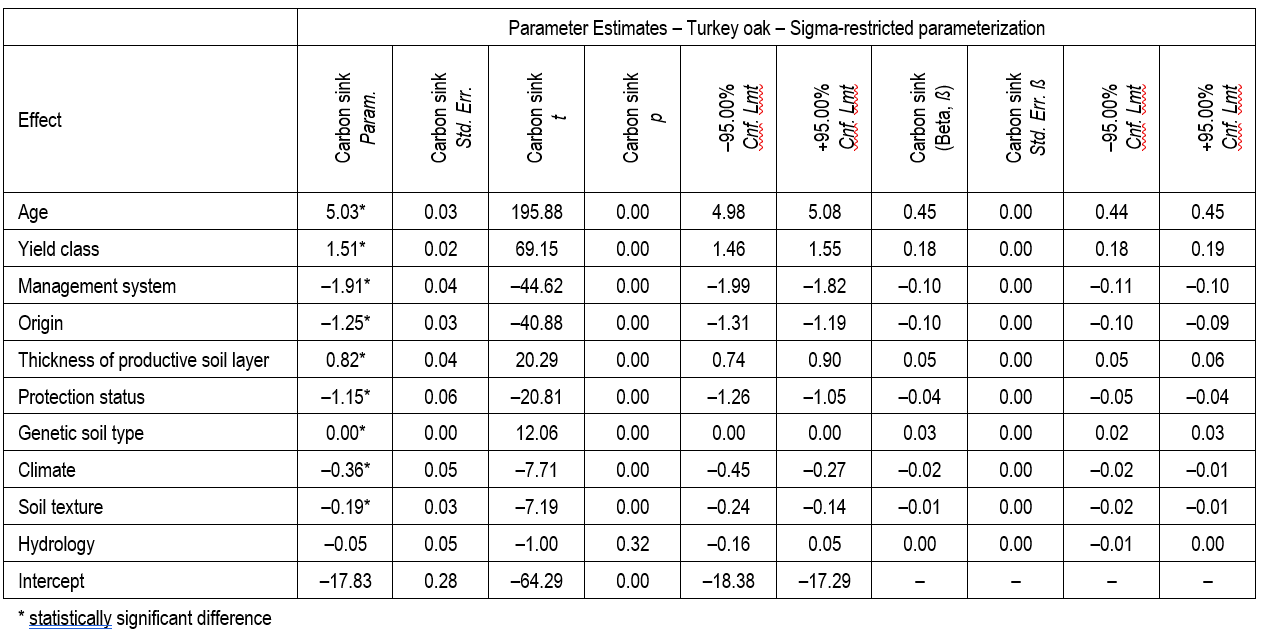
The multiple regression analysis revealed that for European beech stands, age, yield class, thickness of the productive soil layer, and management system were the four variables with the strongest impact on net biomass carbon sink (Table A1). All other variables, except for genetic soil type and hydrology, also had significant effects on the carbon sink. For sessile oak stands, age, yield class, origin, and management system were the most influential factors, with all other examined effects also being significant (Table A2). In the case of Turkey oak forests, age, yield class, management system, and origin had the strongest impact, while the effect of hydrology was not significant (Table A3).
When conducting the analysis under ceteris paribus conditions, 40 pairs of groups were formed for European beech continuous cover forests (Fig. 3). Of these, 20 pairs had negative CSCI, two pairs had zero CSCI, indicating no difference between continuous cover management and rotation forest group average, and 18 pairs had positive CSCI. For European beech transitional forests, 36 pairs of groups were formed: 22 with negative CSCI, 12 with positive CSCI, and two with zero CSCI. In the case of non-production European beech forests, 35 pairs of groups were formed, with 33 showing negative CSCI and two showing positive CSCI.
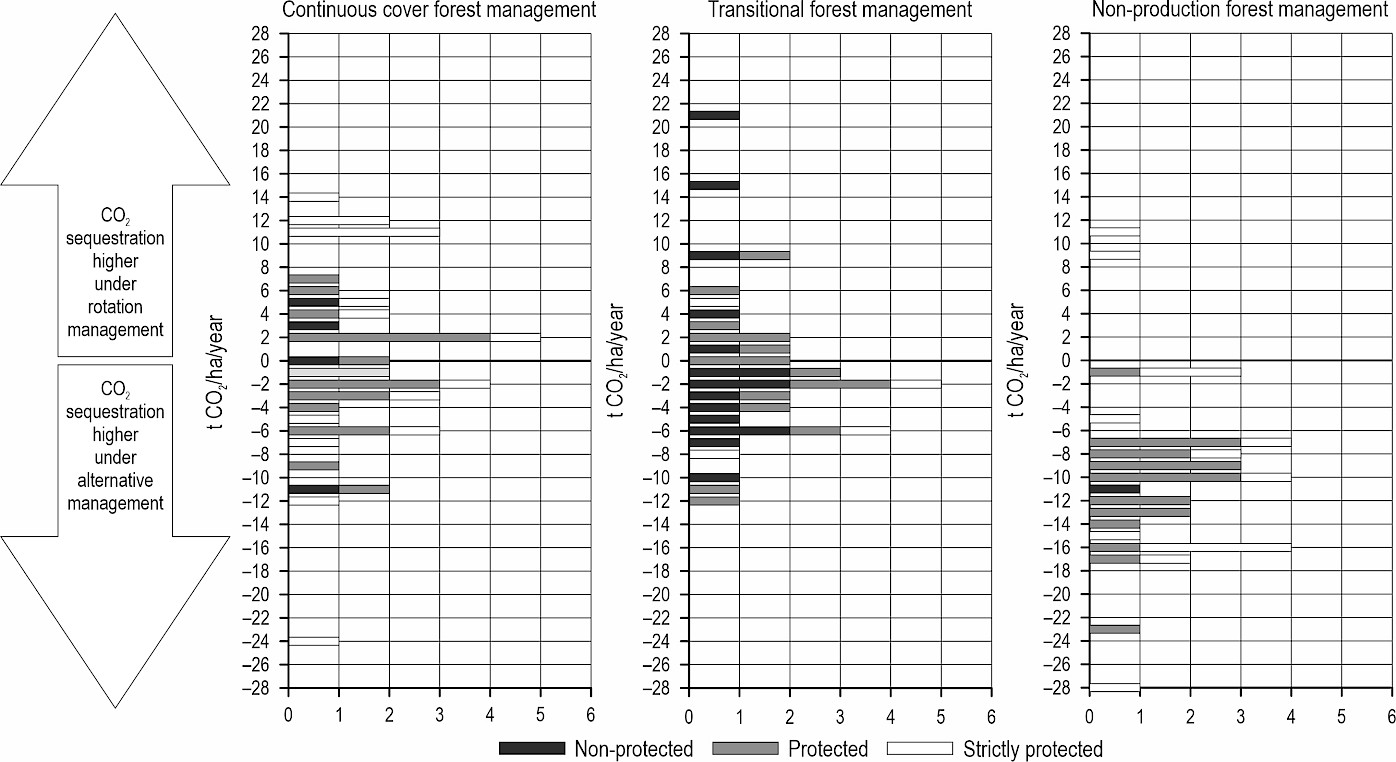
Fig. 3 Distribution of Carbon Stock Change Index (CSCI) values by protection status under different alternative forest management systems in the case of European beech forests. (Protected forests refer to forest stands located within protected natural areas designated under Hungarian nature conservation legislation. Strictly protected forests are a subset of protected natural areas for which conservation can only be ensured through special measures.)
For sessile oak continuous cover forests, 23 pairs of groups were formed (Fig. 4). Of these, 10 pairs, all from protected forests, had negative CSCI. Two pairs had zero CSCI. Among the 11 pairs with positive CSCI, 9 were from non-protected forests. This pattern suggests an association between protection status and the relative carbon sink performance of continuous cover management in sessile oak stands; however, it should be interpreted as correlational rather than causal, because site-selection effects and other unobserved differences between protected and non-protected forests cannot be excluded. For sessile oak transitional forests, 53 pairs of groups were formed: 34 with negative CSCI, 17 with positive CSCI, and two with zero CSCI. In the case of non-production sessile oak forests, 42 pairs of groups were formed, with 36 showing negative CSCI, five showing positive CSCI, and one showing zero CSCI.
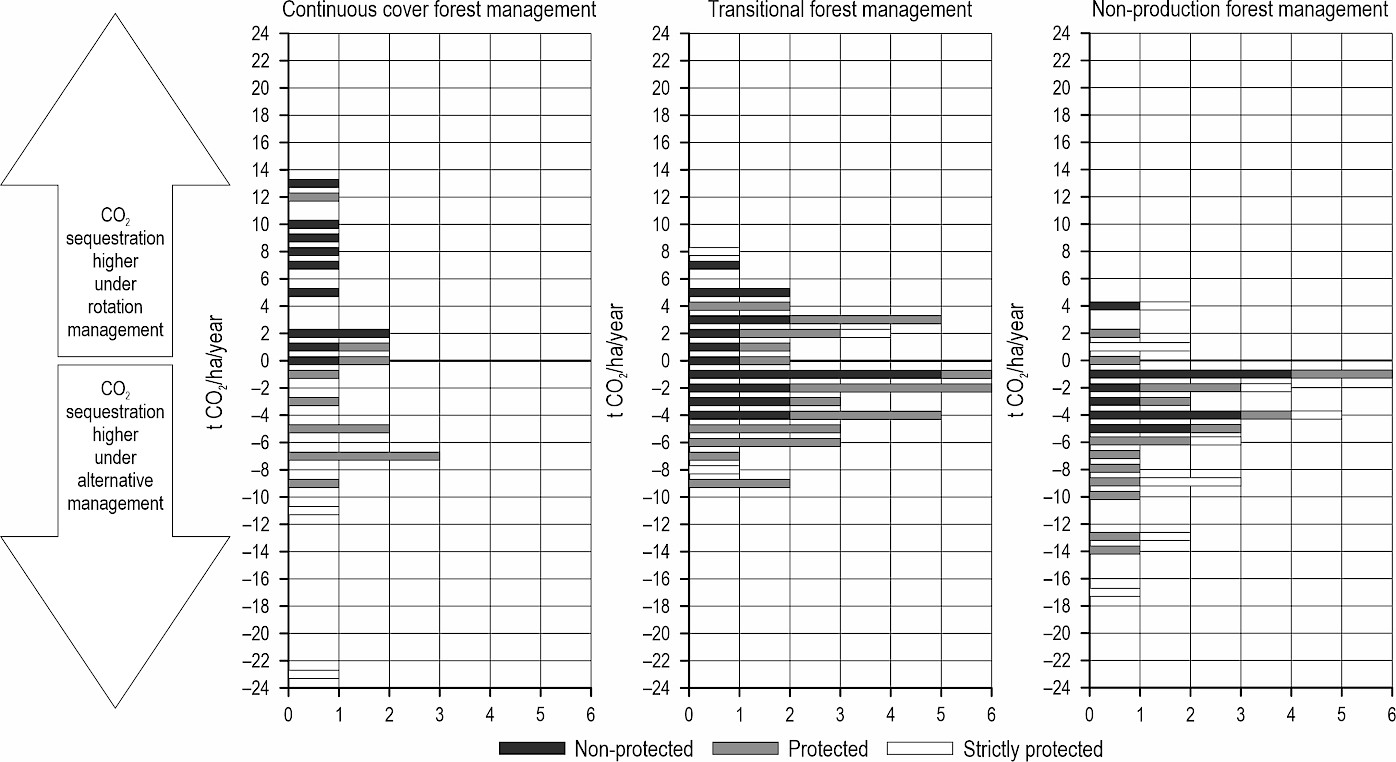
Fig. 4 Distribution of Carbon Stock Change Index (CSCI) values by protection status under different alternative forest management systems in the case of sessile oak forests
For Turkey oak continuous cover forests, 8 pairs of groups were formed (Fig. 5). Of these, 6 pairs had negative CSCI. One pair had zero CSCI, and one pair had positive CSCI. Among Turkey oak transitional forests, 32 pairs of groups were formed: 18 with negative CSCI, 10 with positive CSCI, and 4 with zero CSCI. For non-production Turkey oak forests, 33 pairs of groups were formed, with 16 showing negative CSCI, 11 showing positive CSCI, and 6 showing zero CSCI.
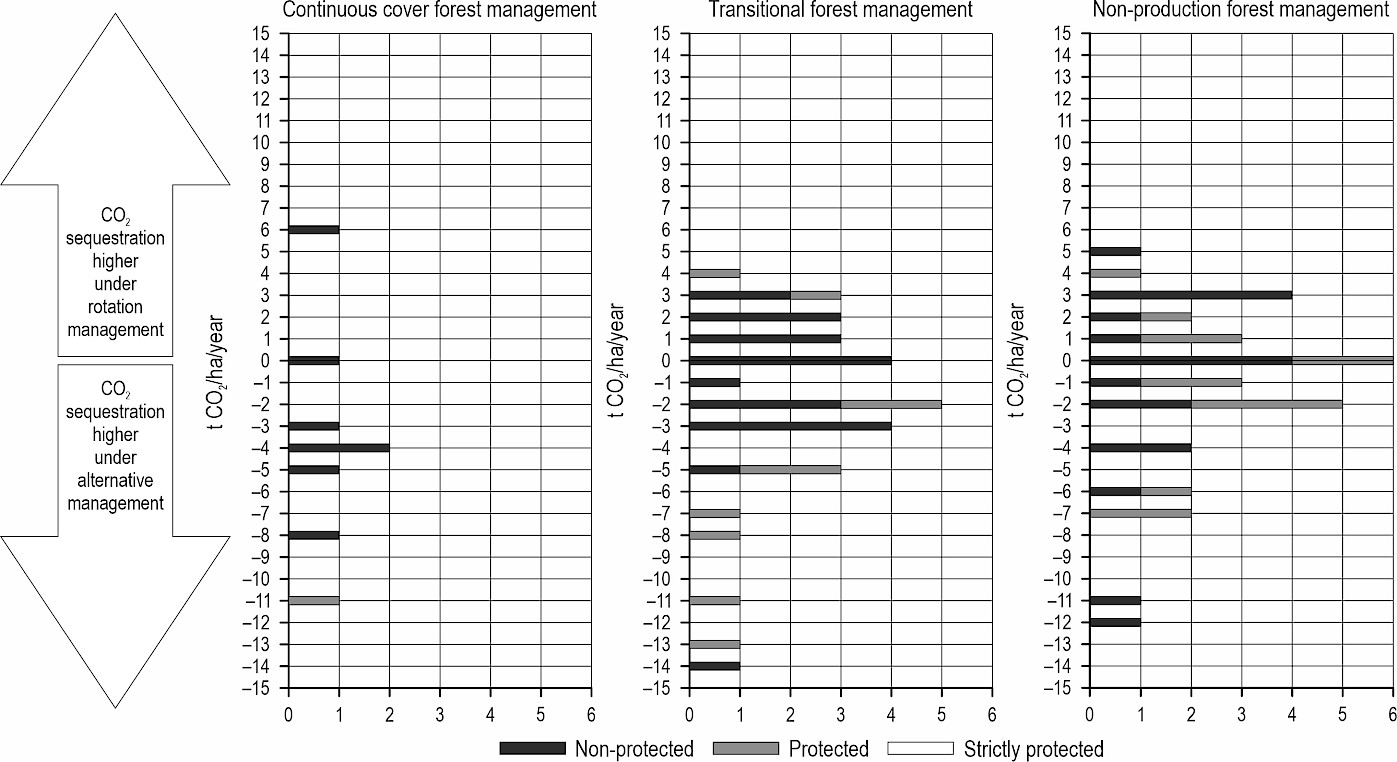
Fig. 5 Distribution of Carbon Stock Change Index (CSCI) values by protection status under different alternative forest management systems in the case of Turkey oak forests
4. Discussion
Based on the multiple regression analysis, forest management system had a statistically significant effect on tree biomass carbon sequestration in European beech, sessile oak and Turkey oak stands. Other variables with strong effects included age, yield class, thickness of the productive soil layer and stand origin, i.e. coppice or high forest. This regression-based finding suggests that management system is an important explanatory factor, although the subsequent CSCI analysis was used only as a descriptive comparison under ceteris paribus conditions and was not interpreted as an inferential test. Our findings therefore partly contrast with those of Lundmark et al. (2016), who concluded that biomass growth and yield were more critical than the choice of silvicultural system. According to their study, when comparing rotation forests and alternative management systems with similar growth, extraction, and product use, only minor differences in long-term climate benefits were observed between the examined silvicultural systems (Lundmark et al. 2016). The discrepancies between our results and theirs can partly be attributed to the fact that our study did not assess harvesting intensity or the wood product carbon storage pool. Considering the carbon storage of wood products and the effects of substituting carbon-intensive products and fossil energy might have resulted in a different overall carbon balance (Király et al. 2022, Király and Borovics 2024).
When comparing the carbon sequestration performance of rotation forest management systems with alternative management systems under ceteris paribus conditions, only non‑production management showed a clearly different overall tree biomass carbon sink pattern. In most groups, non-production forests exhibited a higher biomass carbon sink than rotation forests under the same site conditions. For continuous cover forest management and transitional management, the overall carbon sink performance was balanced between the alternative management groups and their rotation forest counterparts. These findings refine our understanding of carbon sequestration in Hungarian forests under different management systems. In our previous study, we found that transitional forests had significantly higher tree biomass carbon sink values compared to all other management types (Király and Borovics 2024). However, that study did not meet ceteris paribus conditions. The higher sink observed under transitional management could be attributed to differences in age class and tree species distribution in the compared groups (Király and Borovics 2024). This study reveals that under similar site conditions and yield class, only non-production management leads to a clearly higher biomass carbon sink, likely due to the markedly lower logging intensity characteristic of this management system, as timber production is not carried out in non-production forests, and logging is allowed only for specific purposes such as forest protection, nature conservation, public welfare, regeneration, research, or other public interest (Király and Borovics 2024).
The higher living biomass carbon sink observed in non-production forests should also be interpreted in relation to age-related growth dynamics and the broader debate on carbon accumulation in old and late-successional forests. Classical ecosystem theory suggested that late-successional forests tend to approach carbon neutrality as biomass accumulation slows and respiratory losses increasingly balance photosynthetic gains (Odum 1969, Gower et al. 1996, Van Tuyl et al. 2005, Wang et al. 2011). However, a growing body of empirical evidence has shown that some old-growth forests can continue to function as net carbon sinks over long periods, due to their large biomass stocks, long carbon residence times and continued stand-level biomass accumulation (Carey et al. 2001, Luyssaert et al. 2008, Fei et al. 2018, Luyssaert et al. 2021, Keith et al. 2024). Consequently, the carbon balance of old forests remains context dependent, with studies reporting net sink behaviour, near-equilibrium conditions or net carbon source dynamics depending on forest type, disturbance history, observation period and methodological approach (Pregitzer and Euskirchen 2004, Chambers et al. 2013, Gundersen et al. 2021). In the present study, mortality is implicitly reflected in the net change of living biomass, because trees that died between the two inventory dates are no longer included in the living biomass stock. Therefore, the positive sink observed in non-production forests indicates that these stands had not yet reached equilibrium in the living biomass pool during the study period: biomass accumulation still exceeded mortality-related losses from living trees. However, as the dataset provides net stock change rather than separate estimates of gross growth, mortality and ingrowth, the underlying biological mechanisms cannot be disentangled in detail.
For sessile oak continuous cover forests, it is noteworthy that protection status also influenced carbon sink performance. Almost all groups under nature protection had negative CSCI values, whereas most non-protected groups had positive CSCI values. This indicates that continuous cover forest management is more successful in terms of carbon sequestration and storage in living biomass in protected sessile oak stands.
However, it is crucial to emphasize that the NFD records of continuous cover forests might be less accurate than those for rotation forests (Király and Borovics 2024). Continuous cover forests have a more intricate spatial and vertical structure, requiring additional time and extensive fieldwork for thorough documentation (Király and Borovics 2024). Thus, the standard field measurements conducted by the Forest Authority during forest management planning might prove less effective in continuous cover forest stands, which may impose the risk of systematic error, potentially resulting in the under-representation of younger age classes in the NFD records (Király and Borovics 2024). As a result, biomass increments and carbon sink estimates for continuous cover forests may be affected by greater uncertainty than those calculated for rotation forests. Consequently, the finding that continuous cover forests did not show lower average carbon sink performance than comparable rotation forests should be interpreted cautiously, as an indication based on the currently available NFD data rather than as definitive evidence. Nevertheless, if younger cohorts are under-represented in the NFD records, this potential bias would likely result in an underestimation of biomass increment and carbon sink in continuous cover forests. Therefore, the actual performance of continuous cover forests may be closer to, or even higher than, the estimates presented here. To clarify the magnitude and direction of this potential inventory bias, independent validating field measurements will be necessary in the forthcoming phase of our research.
The results of the present study refer only to the living tree biomass carbon sink, and therefore they should not be interpreted as representing the total on-site ecosystem carbon balance of the compared forest management systems. Other on-site carbon pools, especially dead wood, litter, and soil organic carbon, may substantially modify the overall mitigation effect of continuous cover forestry and rotation forestry.
Dead wood plays a vital role in forest ecosystems, contributing to on-site carbon storage and biodiversity conservation. We suggest that dead wood stocks might be greater under continuous cover forest management than under rotation forestry, which could potentially enhance on-site carbon storage. This hypothesis will be further investigated in the next phase of our ongoing research.
Apart from tree biomass, the soil organic carbon pool is the other main driver of on‑site carbon sink and storage. The greenhouse gas balance of forest soils is strongly dependent on management decisions (Jandl et al. 2007, Mayer et al. 2020). The uncertainties in the climate change mitigation potential of European forests are mainly attributable to unknown soil responses to management practices in the current and future climate (Mäkipää et al. 2023). Prescott and Grayston (2023) stress the importance of the role of the soil biota in the formation and retention of soil organic carbon. The continuous maintenance of living roots has fundamental importance in sustaining belowground life and replenishing soil organic carbon (Prescott and Grayston 2023, Hawkins et al. 2023). Results from international literature form a strong argument for continuous cover forest management. However, in Hungary forest soil carbon dynamics are hardly known. Although several case studies have been carried out (Bidló et al. 2014a, Bidló et al. 2014b, Kovács et al. 2018, Végh et al. 2023), no comprehensive country specific estimate is available on soil carbon sink by forest management systems, which is a significant research gap. In the Hungarian Greenhouse Gas Inventory, a 384 kg C/ha/year soil carbon stock increase is estimated for the remaining forest land based on sample points which have not been subject to final cutting yet, meaning that the development of the soil carbon stocks has been uninterrupted (Somogyi et al. 2023). Additional investigations on the soil carbon sequestration performance across different forest management systems will be essential to evaluate their climate change mitigation effects in a comprehensive manner.
The limitation of our current study is the fact that it relies solely on the processing and analysis of NFD data. In the subsequent stage of our research, we intend to validate the findings presented in this paper through paired plot field measurements. Moreover, apart from living tree biomass, we also plan to consider soil, dead wood, litter pools, as well as wood products, and substitution effects. Assmuth et al. (2021) suggest that that carbon pricing favours continuous cover fores management and restricts harvesting to larger trees. They also observe that sawlog and total yields rise with increasing carbon prices. Consequently, it is crucial to assess the assortment composition under different forest management systems, as wood product carbon dynamics and substitution effects heavily rely on the wood assortment structure and the durability of the manufactured wood products (Borovics et al. 2023, Király et al. 2024).
5. Conclusions
In this study, we examined the impact of forest management systems on carbon sequestration in living tree biomass across European beech, sessile oak, and Turkey oak stands under ceteris paribus conditions. We identified forest management system as a significant factor influencing carbon sink. Our key finding was that none of the alternative management systems underperformed rotation forest management in terms of tree biomass carbon sequestration when comparing groups with similar site conditions. Particularly, non-production forests exhibited higher carbon sequestration compared to rotation forests with similar characteristics. However, these conclusions apply only to living tree biomass stock change and should not be interpreted as evidence of the overall on-site ecosystem carbon balance or the overall climate change mitigation performance of the compared forest management systems. To comprehensively assess the overall climate benefits of each management system, it will also be essential to evaluate soil carbon sequestration and wood product carbon dynamics.
Acknowledgments
This article was made with the support of the University Research Fellowship Program (EKÖP). Project no. 2024-2.1.1-EKÖP-2024-00007 has been implemented with the support provided by the Ministry of Culture and Innovation of Hungary from the National Research, Development and Innovation Fund, financed under the EKÖP-24-3-II funding scheme. Scholarship contract ID: EKÖP-24-3-II-SOE-14 (RH-75-1-25/2024).
6. References
Assmuth, A., Tahvonen, O., 2018: Optimal carbon storage in even- and uneven-aged forestry. For. Policy Econ. 87: 93–100. https://doi.org/10.1016/j.forpol.2017.09.004
Assmuth, A., Rämö, J., Tahvonen, O., 2021: Optimal carbon storage in mixed-species size-structured forests. Environ. Resour. Econ. 79(2): 249–275. https://doi.org/10.1007/s10640-021-00559-9
Beljan, K., Pavković, F., Teslak, K., Matošević, M., 2025: Forests and the economics of climate change: A review of knowledge, challenges and future directions. Nova Meh. Šumar. 46(1): 53–62. https://doi.org/10.5552/nms.2025.6
Bianchi, S., Hale, S., Cahalan, C., Arcangeli, C., Gibbons, J., 2018: Light-growth responses of Sitka spruce, Douglas fir and western hemlock regeneration under continuous cover forestry. For. Ecol. Manag. 422: 241–252. https://doi.org/10.1016/j.foreco.2018.04.027
Bidló, A., Bolodár-Varga, B., Horváth, A., Németh, E., Šimková, I., Szűcs, P., 2014a: Talajvizsgálatok dunántúli erdőállományok lékjeiben. Silva Nat. 2(6): 65–85. https://doi.org/10.64609/sn.2014.02evf.06k.04
Bidló, A., Szűcs, P., Horváth, A., Király, É., Németh, E., Somogyi, Z., 2014b: Telepített kocsánytalan tölgy és akác fiatalosok hatása a talaj szénkészletére néhány dunántúli erdőtelepítés példáján. Erdészettud. Közl. 4(2): 121–133.
Borovics, A., Mertl, T., Király, É., Kottek, P., 2023: Estimation of the overmature wood stock and the projection of the maximum wood mobilization potential up to 2100 in Hungary. Forests 14(8): 1516. https://doi.org/10.3390/f14081516
Borovics, A., Király, É., Kottek, P., 2024: Projection of the carbon balance of the Hungarian forestry and wood industry sector using the Forest Industry Carbon Model. Forests 15(4): 600. https://doi.org/10.3390/f15040600
Borovics, Á., Benke, A., Borovics, A., Király, É., Schiberna, E., 2026: Baseline setting and carbon credit quantification in improved forest management: A demonstrative case study. Acta Silv. Lign. Hung. 22(1): 45–61. https://doi.org/10.37045/aslh-2026-0003
Carey, E.V., Sala, A., Keane, R., Callaway, R.M., 2001: Are old forests underestimated as global carbon sinks? Glob. Change Biol. 7(4): 339–344. https://doi.org/10.1046/j.1365-2486.2001.00418.x
Chambers, J.Q., Negron-Juarez, R.I., Marra, D.M., Di Vittorio, A., Tews, J., Roberts, D., Ribeiro, G.H.P.M., Trumbore, S.E., Higuchi, N., 2013: The steady-state mosaic of disturbance and succession across an old-growth Central Amazon forest landscape. Proc. Natl. Acad. Sci. USA 110(10): 3949–3954. https://doi.org/10.1073/pnas.1202894110
Csépányi, P., 2017: Örökerdő-gazdálkodás ökonómiai sajátosságai bükkösökben és cseresekben a Pilisi Parkerdő Zrt.-nél. PhD thesis, University of Sopron, Sopron, Hungary.
Csépányi, P., Csór, A., 2017: Economic assessment of European beech and Turkey oak stands with close-to-nature forest management. Acta Silv. Lign. Hung. 13(1): 9–24. https://doi.org/10.1515/aslh-2017-0001
Fei, X., Song, Q., Zhang, Y., Liu, Y., Sha, L., Yu, G., Zhang, L., Duan, C., Deng, Y., Wu, C., Lu, Z., Luo, K., Chen, A., Xu, K., Liu, W., Huang, H., Jin, Y., Zhou, R., Li, J., Lin, Y., Grace, J., 2018: Carbon exchanges and their responses to temperature and precipitation in forest ecosystems in Yunnan, Southwest China. Sci. Total Environ. 616–617: 824–840. https://doi.org/10.1016/j.scitotenv.2017.10.239
Führer, E., 2000: Forest functions, ecosystem stability and management. For. Ecol. Manag. 132(1): 29–38. https://doi.org/10.1016/S0378-1127(00)00377-7
Gower, S.T., McMurtrie, R.E., Murty, D., 1996: Aboveground net primary production decline with stand age: Potential causes. Trends Ecol. Evol. 11(9): 378–382. https://doi.org/10.1016/0169-5347(96)10042-2
Gundersen, P., Thybring, E.E., Nord-Larsen, T., Vesterdal, L., Nadelhoffer, K.J., Johannsen, V.K., 2021: Old-growth forest carbon sinks overestimated. Nature 591(7851): E21–E23. https://doi.org/10.1038/s41586-021-03266-z
Hawkins, H.-J., Cargill, R.I.M., Van Nuland, M.E., Sheldrake, M., Soudzilovskaia, N.A., Kiers, E.T., 2023: Mycorrhizal mycelium as a global carbon pool. Curr. Biol. 33(11): R560–R573. https://doi.org/10.1016/j.cub.2023.02.027
Holmgren, A., 1914: Blädning och trakthuggning i Norrlandsskogar [Selection cutting and cutting treatments in northern forests; in Swedish]. Norrlands Skogsvårdsförb. Tidskr. 1914: 266–323.
Hungarian Forest Act, 2009: Act XXXVII of 2009 on forests, forest protection and forest management. Available online: https://net.jogtar.hu/jogszabaly?docid=a0900037.tv (Accessed 7 July 2023)
IPCC, 2006: IPCC Guidelines for National Greenhouse Gas Inventories; Eggleston, H.S., Buendia, L., Miwa, K., Ngara, T., Tanabe, K., Eds.; Institute for Global Environmental Strategies: Kanagawa, Japan.
IPCC, 2019: Refinement to the 2006 IPCC Guidelines for National Greenhouse Gas Inventories; Calvo Buendia, E., Tanabe, K., Kranjc, A., Baasansuren, J., Fukuda, M., Ngarize, S., Osako, A., Pyrozhenko, Y., Shermanau, P., Federici, S., Eds.; IPCC: Geneva, Switzerland.
Jandl, R., Lindner, M., Vesterdal, L., Bauwens, B., Baritz, R., Hagedorn, F., Johnson, D.W., Minkkinen, K., Byrne, K.A., 2007: How strongly can forest management influence soil carbon sequestration? Geoderma 137(3–4): 253–268. https://doi.org/10.1016/j.geoderma.2006.09.003
Keith, H., Kun, Z., Hugh, S., Svoboda, M., Mikoláš, M., Adam, D., Bernatski, D., Blujdea, V., Bohn, F., Camarero, J.J., Deneter, L., Di Filippo, A., Dutcă, I., Garbarino, M., Horváth, F., Ivkovich, V., Jansons, Ā., Ķēņina, L., Kral, K., Martin-Benito, D., Molina-Valero, J.A., Motta, R., Nagel, T.A., Panayotov, M., Pérez-Cruzado, C., Piovesan, G., Roibu, C.C., Šamonil, P., Vostarek, O., Yermokhin, M., Zlatanov, T., Mackey, B., 2024: Carbon carrying capacity in primary forests shows potential for mitigation achieving the European Green Deal 2030 target. Commun. Earth Environ. 5(1): 256. https://doi.org/10.1038/s43247-024-01416-5
Király, É., Börcsök, Z., Kocsis, Z., Németh, G., Polgár, A., Borovics, A., 2022: Carbon sequestration in harvested wood products in Hungary: An estimation based on the IPCC 2019 Refinement. Forests 13(11): 1809. https://doi.org/10.3390/f13111809
Király, É., Börcsök, Z., Kocsis, Z., Németh, G., Polgár, A., Borovics, A., 2024: Climate change mitigation through carbon storage and product substitution in the Hungarian wood industry. Wood Res. 69(1): 72–86. https://doi.org/10.37763/wr.1336-4561/69.1.7286
Király, É., Borovics, A., 2024: Carbon sequestration of Hungarian forests by management system and protection status. Trees For. People 15: 100511. https://doi.org/10.1016/j.tfp.2024.100511
Korosuo, A., Pilli, R., Abad Viñas, R., Blujdea, V.N.B., Colditz, R.R., Fiorese, H., Rossi, S., Vizzarri, M., Grassi, G., 2023: The role of forests in EU climate policy: Are we on the right track? Carbon Balance Manag. 18(1): 15. https://doi.org/10.1186/s13021-023-00234-0
Kottek, P., Király, É., Mertl, T., Borovics, A., 2023: Trends of forest harvesting ages by ownership and function and the effects of the recent changes of the forest law in Hungary. Forests 14(4): 679. https://doi.org/10.3390/f14040679
Kovács, B., Tinya, F., Guba, E., Németh, C., Sass, V., Bidló, A., Ódor, P., 2018: The short-term effects of experimental forestry treatments on site conditions in an oak–hornbeam forest. Forests 9(7): 406. https://doi.org/10.3390/f9070406
Kuuluvainen, T., Tahvonen, O., Aakala, T., 2012: Even-aged and uneven-aged forest management in boreal Fennoscandia: A review. Ambio 41(7): 720–737. https://doi.org/10.1007/s13280-012-0289-y
Lindroth, A., Vestin, P., Sundqvist, E., Mölder, M., Bath, A., Hellström, M., Weslien, P., 2012: Clear-cutting is causing large emissions of greenhouse gases—are there other harvest options that can avoid these emissions? In Geophysical Research Abstracts, Proceedings of the EGU General Assembly 2012, Vienna, Austria, 22–27 April; Volume 14, Abstract EGU2012-7578.
Lundmark, T., Bergh, J., Nordin, A., Fahlvik, N., Poudel, B.C., 2016: Comparison of carbon balances between continuous-cover and clear-cut forestry in Sweden. Ambio 45(Suppl. 2): 203–213. https://doi.org/10.1007/s13280-015-0756-3
Lundqvist, L., 1989: Blädning i granskog—strukturförändringar, volymtillväxt, inväxning och föryngring på försöksytor skötta med stamvis blädning [Selection cutting in spruce—structural changes, volume growth, ingrowth and regeneration in experimental plots managed using single-tree selection]. Doctoral thesis, Swedish University of Agricultural Sciences, Umeå, Sweden.
Lundqvist, L., 2017: Tamm review: Selection system reduces long-term volume growth in Fennoscandic uneven-aged Norway spruce forests. For. Ecol. Manag. 391: 362–375. https://doi.org/10.1016/j.foreco.2017.02.011
Luyssaert, S., Schulze, E.-D., Boerner, A., Knohl, A., Hessenmoeller, D., Law, B.E., Ciais, P., Grace, J., 2008: Old-growth forests as global carbon sinks. Nature 455(7210): 213–215. https://doi.org/10.1038/nature07276
Luyssaert, S., Schulze, E.-D., Knohl, A., Law, B.E., Ciais, P., Grace, J., 2021: Reply to: Old-growth forest carbon sinks overestimated. Nature 591(7851): E24–E25. https://doi.org/10.1038/s41586-021-03267-y
Macpherson, M.F., Kleczkowski, A., Healey, J.R., Quine, C.P., Hanley, N., 2017: The effects of invasive pests and pathogens on strategies for forest diversification. Ecol. Model. 350: 87–99. https://doi.org/10.1016/j.ecolmodel.2017.02.003
Mäkipää, R., Abramoff, R., Adamczyk, B., Baldy, V., Biryol, C., Bosela, M., Casals, P., Curiel Yuste, J., Dondini, M., Filipek, S., Garcia-Pausas, J., Gros, R., Gömöryová, E., Hashimoto, S., Hassegawa, M., Immonen, P., Laiho, R., Li, H., Li, Q., Luyssaert, S., Ménival, C., Mori, T., Naudts, K., Santonja, M., Smolander, A., Toriyama, J., Tupek, B., Ubeda, X., Verkerk, P.J., Lehtonen, A., 2023: How does management affect soil C sequestration and greenhouse gas fluxes in boreal and temperate forests? A review. For. Ecol. Manag. 529: 120637. https://doi.org/10.1016/j.foreco.2022.120637
Malcolm, D.C., Mason, W.L., Clarke, G.C., 2001: The transformation of conifer forests in Britain–regeneration, gap size and silvicultural systems. For. Ecol. Manag. 151(1–3): 7–23. https://doi.org/10.1016/S0378-1127(00)00692-7
Malins, C., Pereira, L., Popstoyanova, Z., Riemer, M., 2023: Support to the development of methodologies for the certification of industrial carbon removals with permanent storage: Review of certification methodologies and relevant EU legislation. ICF S.A., Cerulogy and Fraunhofer ISI. Available online: https://climate.ec.europa.eu/document/download/28698b02-7624-4709-9aec-379b26273bc0_en?filename=policy_carbon_expert_carbon_removals_with_permanent_storage_en.pdf (Accessed 20 June 2024)
Mayer, M., Prescott, C.E., Abaker, W.E.A., Augusto, L., Cécillon, L., Ferreira, G.W.D., James, J., Jandl, R., Katzensteiner, K., Laclau, J.-P., Laganière, J., Nouvellon, Y., Paré, D., Stanturf, J.A., Vanguelova, E.I., Vesterdal, L., 2020: Tamm review: Influence of forest management activities on soil organic carbon stocks: A knowledge synthesis. For. Ecol. Manag. 466: 118127. https://doi.org/10.1016/j.foreco.2020.118127
Möller, A., 1922: Wie der Dauerwaldgedanke entstand. In Der Dauerwaldgedanke; Springer: Berlin, Germany, 5–18 p.
Odum, E.P., 1969: The strategy of ecosystem development. Science 164(3877): 262–270. https://doi.org/10.1126/science.164.3877.262
Pregitzer, K.S., Euskirchen, E.S., 2004: Carbon cycling and storage in world forests: Biome patterns related to forest age. Glob. Change Biol. 10(12): 2052–2077. https://doi.org/10.1111/j.1365-2486.2004.00866.x
Prescott, C.E., Grayston, S.J., 2023: Tamm review: Continuous root forestry–living roots sustain the belowground ecosystem and soil carbon in managed forests. For. Ecol. Manag. 532: 120848. https://doi.org/10.1016/j.foreco.2023.120848
Pukkala, T., 2014: Does biofuel harvesting and continuous cover management increase carbon sequestration? For. Policy Econ. 43: 41–50. https://doi.org/10.1016/j.forpol.2014.03.004
Regulation (EU) 2018/841 of the European Parliament and of the Council of 30 May 2018 on the inclusion of greenhouse gas emissions and removals from land use, land use change and forestry in the 2030 climate and energy framework, and amending Regulation (EU) No. 525/2013 and Decision No. 529/2013/EU. Available online: https://eur-lex.europa.eu/eli/reg/2018/841/oj/eng (Accessed 20 July 2026)
Regulation (EU) 2023/839 of the European Parliament and of the Council of 19 April 2023 amending Regulation (EU) 2018/841 as regards the scope, simplifying the reporting and compliance rules, and setting out the targets of the Member States for 2030, and Regulation (EU) 2018/1999 as regards improvement in monitoring, reporting, tracking of progress and review. Available online: https://eur-lex.europa.eu/eli/reg/2023/839/oj/eng (Accessed 20 July 2026)
Regulation (EU) 2024/3012 of the European Parliament and of the Council of 27 November 2024 establishing a Union certification framework for permanent carbon removals, carbon farming and carbon storage in products. Available online: https://eur-lex.europa.eu/eli/reg/2024/3012/oj/eng (Accessed 20 July 2026)
Smyth, C.E., Stinson, G., Neilson, E., Lemprière, T.C., Hafer, M., Rampley, G.J., Kurz, W.A., 2014: Quantifying the biophysical climate-change mitigation potential of Canada’s forest sector. Biogeosciences 11(13): 3515–3529. https://doi.org/10.5194/bg-11-3515-2014
Somogyi, Z., Tobisch, T., Király, É., 2023: Land use, land-use change and forestry. In National Inventory Report for 1985–2021: Hungary; Hungarian Meteorological Service: Budapest, Hungary.
Spiecker, H., 2003: Silvicultural management in maintaining biodiversity and resistance of forests in Europe—temperate zone. J. Environ. Manag. 67(1): 55–65. https://doi.org/10.1016/S0301-4797(02)00188-3
Stefanovits, P., 1956: Magyarország talajai; Akadémiai Kiadó: Budapest, Hungary, 252 p.
Stefanovits, P., Filep, Gy., Füleky, Gy., 1999: Talajtan; Mezőgazda Kiadó: Budapest, Hungary, 471 p.
Štrubelj, L., Smith, S.M., House, J.I., Rodway-Dyer, S., Lynch, J., Bogojević, S., Macinante, J.D., Mac Dowell, N., 2023: The new EU carbon removal certification: Landmark legislation or an empty promise? One Earth 6(9): 1093–1097. https://doi.org/10.1016/j.oneear.2023.08.020
Szodfridt, I., 1993: Erdészeti termőhelyismerettan; Mezőgazda Kiadó: Budapest, Hungary, 317 p.
Tobisch, T., Kottek, P., 2013: Forestry-related databases of the Hungarian Forestry Directorate, Version 1.1; NFCSO: Budapest, Hungary.
Troup, R.S., 1928: Silvicultural Systems; Oxford University Press: Oxford, UK.
Van Tuyl, S., Law, B.E., Turner, D.P., Gitelman, A.I., 2005: Variability in net primary production and carbon storage in biomass across Oregon forests – an assessment integrating data from forest inventories, intensive sites, and remote sensing. For. Ecol. Manag. 209(3): 273–291. https://doi.org/10.1016/j.foreco.2005.02.002
Végh, P., Balázs, P., Horváth, A., Bidló, A., 2023: Kőrös-Maros-közi erdők talajának szénkészlete. In Alföldi Erdőkért Egyesület Kutatói Nap: Tudományos Eredmények a Gyakorlatban, Proceedings of the Alföldi Erdőkért Egyesület Kutatói Nap, Kecskemét, Hungary; Csiha, I., Eds.; Alföldi Erdőkért Egyesület: Kecskemét, Hungary.
Verkerk, V., Delacote, P., Hurmekoski, E., Kunttu, J., Matthews, R., Mäkipää, R., Mosley, F., Perugini, L., Reyer, C.P.O., Roe, S., Trømborg, E., 2022: Forest-Based Climate Change Mitigation and Adaptation in Europe. From Science to Policy 14; European Forest Institute: Joensuu, Finland, 75 p.
Wallmo, U., 1897: Rationell skogsafverkning: Praktiska råd till såväl större som mindre enskilde skogsägare samt svar på en fråga för dagen [Rational forest felling: Practical advice for both larger and smaller individual forest owners and a response to a question of the day]; Stockholm, Sweden.
Wang, S., Zhou, L., Chen, J., Ju, W., Feng, X., Wu, W., 2011: Relationships between net primary productivity and stand age for several forest types and their influence on China’s carbon balance. J. Environ. Manag. 92(6): 1651–1662. https://doi.org/10.1016/j.jenvman.2011.01.024
Appendix
Table A1 Results of multiple regression analysis in the case of European beech forests
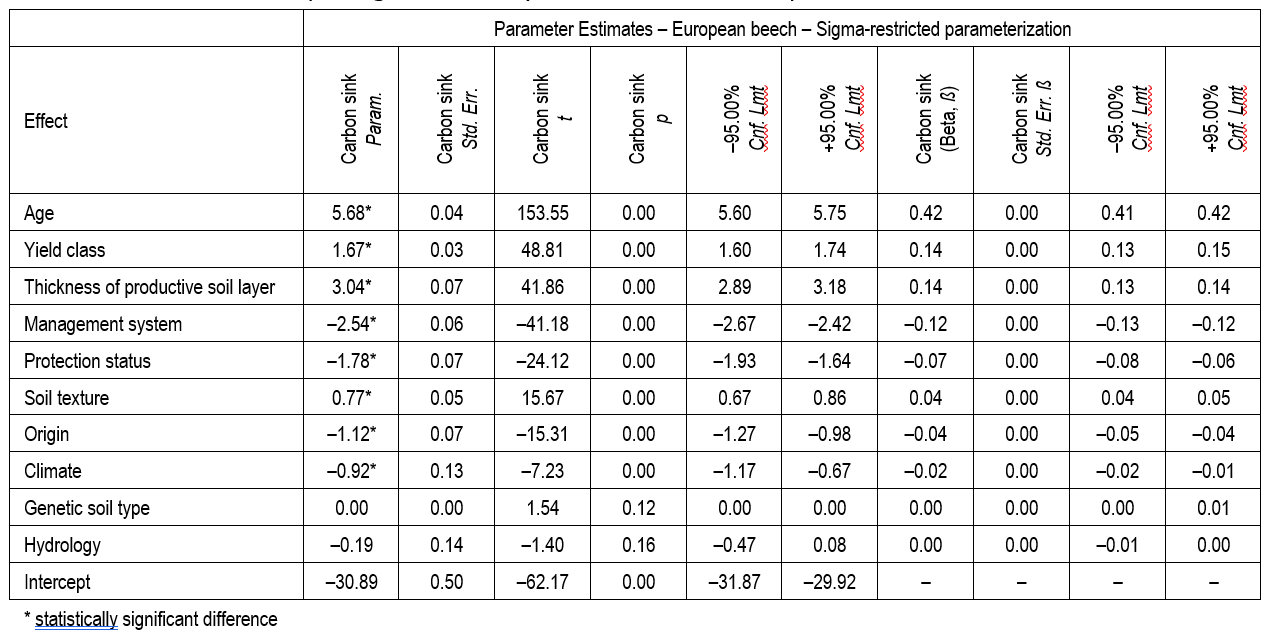
Table A2 Results of multiple regression analysis in the case of sessile oak forests
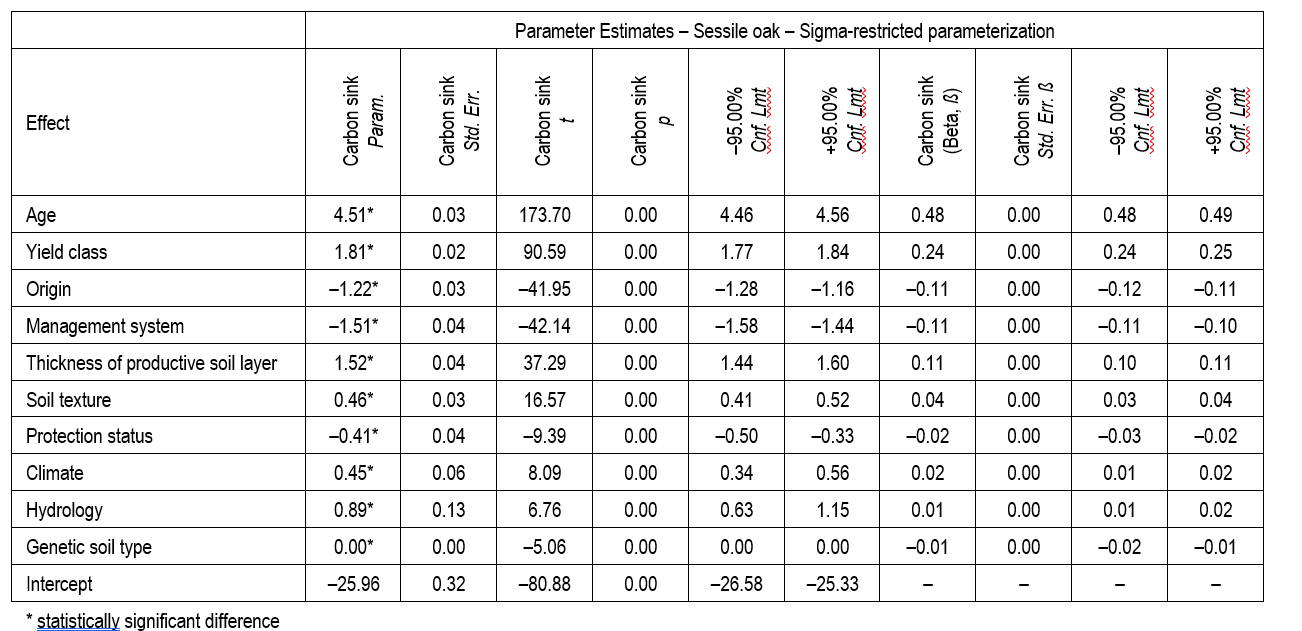
Table A3 Results of multiple regression analysis in the case of Turkey oak forests
© 2026 by the authors. Submitted for possible open access publication under the
terms and conditions of the Creative Commons Attribution (CC BY) license (http://creativecommons.org/licenses/by/4.0/).
Authors’ addresses:
Éva Király, MSc *
e-mail: kiraly.eva.ilona@uni-sopron.hu
University of Sopron
Forest Research Institute
Department of Economy
Várkerület 30/A
H-9600, Sárvár
HUNGARY
Prof. András Bidló, PhD
e-mail: bidlo.andras@uni-sopron.hu
University of Sopron
Faculty of Forestry
Institute of Environmental Protection and Natural Conservation
Bajcsy-Zsilinszky u. 4
H-9400, Sopron
HUNGARY
Péter Csépányi, PhD
e-mail: csepanyi.peter@pprt.hu
Pilis Park Forestry Company
Mátyás k. u. 6
H-2025, Visegrád
HUNGARY
Attila Borovics, PhD
e-mail: borovics.attila@uni-sopron.hu
University of Sopron
Forest Research Institute
Department of Tree Breeding
Várkerület 30/A
H-9600, Sárvár
HUNGARY
* Corresponding author
Received: February 07, 2025
Accepted: July 06, 2026
Original scientific paper