
Impact of Using the Axe in Motor-Manual Felling on Hand-Arm Vibrations
doi: https://doi.org/10.5552/crojfe.2027.4506
volume: issue, issue:
pp: 14
- Author(s):
-
- Poje Anton
- Pajek Luka
- Article category:
- Original scientific paper
- Keywords:
- safety, felling, HAV exposure, shocks, vibration mitigation
Abstract
HTML
Although the axe is the feller's main tool alongside the chainsaw, it has been neglected in previous studies from the point of view of occupational health and safety. The aim of the study was therefore to determine the share of axe use in the productive time of motor-manual felling and the contribution of the axe to the overall exposure of the feller to hand-arm vibration (HAV). The study was conducted during the felling of 43 spruce and fir trees with a diameter at breast height (DBH) of 11 to 90 cm using a Stihl 361 C BQ chainsaw and a conventional felling axe. The results showed that the proportion of productive time spent in axe-based operations (wedging and debarking the stump) was between 5 and 13% for spruce trees and between 2 and 7% for fir trees. The measured weighted HAV value (RMS VTV) for wedging was 6.99 m/s2 and 5.49 m/s2 for debarking the stump, which was 1.2 to 1.7 times higher than during chain-saw based operations. The contribution of the axe in the total HAV load was between 13% and 23% for spruce trees and between 6% and 18% for fir trees. The research results show that axe use contributes significantly to a feller's overall exposure to HAV, which means that the axe should be replaced by other tools or methods when felling, and research should be extended to different types of felling axes and alternatives.
Impact of Using the Axe in Motor-Manual Felling on Hand-Arm Vibrations
Anton Poje, Luka Pajek
https://doi.org/10.5552/crojfe.2027.4506
Abstract
Although the axe is the feller's main tool alongside the chainsaw, it has been neglected in previous studies from the point of view of occupational health and safety. The aim of the study was therefore to determine the share of axe use in the productive time of motor-manual felling and the contribution of the axe to the overall exposure of the feller to hand-arm vibration (HAV). The study was conducted during the felling of 43 spruce and fir trees with a diameter at breast height (DBH) of 11 to 90 cm using a Stihl 361 C BQ chainsaw and a conventional felling axe. The results showed that the proportion of productive time spent in axe-based operations (wedging and debarking the stump) was between 5 and 13% for spruce trees and between 2 and 7% for fir trees. The measured weighted HAV value (RMS VTV) for wedging was 6.99 m/s2 and 5.49 m/s2 for debarking the stump, which was 1.2 to 1.7 times higher than during chain-saw based operations. The contribution of the axe in the total HAV load was between 13% and 23% for spruce trees and between 6% and 18% for fir trees. The research results show that axe use contributes significantly to a feller's overall exposure to HAV, which means that the axe should be replaced by other tools or methods when felling, and research should be extended to different types of felling axes and alternatives.
Keywords: safety, felling, HAV exposure, shocks, vibration mitigation
1. Introduction
Motor-manual timber harvesting, a combination of chainsaw felling and tractor extraction, is still the most important forest production technology in Slovenia, with a share of around 80%, while fully or partially mechanised timber harvesting accounts for only 20% (Jakše 2013). In contrast, this ratio is reversed in the Scandinavian countries, where mechanised harvesting dominates with a share of almost 100% (Asikainen et al. 2009). Two important factors influencing the choice of harvesting technique are the adaptability of the wood processing industry and the tradition of forest management in a particular country or region (Lahtinen et al. 2021). In mixed forests with a higher proportion of large deciduous trees, a combined mechanised technology is often used due to the technical limitations of harvester heads. This system requires pre-felling with the chainsaw (and axe), where the worker only fells the large trees, removes the thicker branches and saws the trunks into logs until the trunk diameter is manageable with the harvester head (Černe 2016).
Chainsaw harvesting has been described as physically demanding (Melemez and Tunay 2010, Halilović et al. 2021, Masci et al. 2022, Poje et al. 2024,) and categorised as very hard work (Zakon … 2012). Grzywiński (2004) reports that the energy expenditure of a chainsaw operator during work operations such as chainsaw cutting, tree felling, chainsaw debranching, and stump barking with an axe range from 20.0 to 27.7 kJ/min, which amounts to an average of 8500 to 8700 kJ during an 8-hour workday. Energy expenditure is higher in winter than in summer (Grzywiński et al. 2022). According to the classification, the forest worker's job falls into the category of moderately heavy physical occupations. In addition to the strenuous work (Melemez and Tunay 2010), chainsaw operators are also exposed to noise (Poje et al. 2024) and vibrations (Matache et al. 2020, Feyzi et al. 2023). These exposures often exceed the limits specified in European Directives (Directive 2003/10/CE, Directive 2002/44/EC). In a study in which hand-arm vibrations (HAV) were analysed during thinning work with various hand tools, the highest vibrations were found when using machetes (16.6 m/s²), followed by billhooks (9.3 m/s²), petrol-powered chainsaws (3.1–3.2 m/s²), electric chainsaws (1.9–2.0 m/s²), while the lowest vibrations occurred with battery-powered pruning shears (0.7–0.8 m/s²) (Bačić et al. 2023a). Chainsaw type (power and size) is an important factor influencing daily exposure to HAV, while the age or wear of the chainsaw has no effect on HAV (Landekić et al. 2020).
The long-term work of a chainsaw operator carries a high risk of serious and fatal accidents, and the daily use of chainsaws (and axes) exposes workers to a variety of health risks, including musculoskeletal disorders (MSDs), which manifest as overload or fatigue in specific parts of the body, most notably as pain in the lumbar region and the wrists and hands (Staněk et al. 2023, Staněk and Mergl 2024), swelling of fingers, peripheral nerve damage, poor circulation and white finger disease (WFD) (Neri et al. 2018). The risk of long-term effects of vibration is influenced by several factors, including vibration intensity, duration of exposure and vibration frequency (Welcome et al. 2015). It has been shown that the use of frequency spectrum weightings according to ISO standard 5349-1:2001 (ISO 2001) often underestimates or overestimates the incidence of WFD (Brubaker et al. 1983). The incidence of WFD is underestimated, particularly in workers who use high frequency vibration tools (Bovenzi 2012), while it is overestimated in workers who use low-frequency vibration tools (Kocijančič 2018). Most vibration related studies focus on the use of chainsaws and neglect the axe – an important tool for felling trees. It is used for wedging the tree, debarking the stump, checking the direction of the notch, removing the notch, cleaning the base of the tree and occasionally for delimbing. From the point of view of static and dynamic postural stress, working with lighter, more manoeuvrable tools is more favourable than with heavier tools such as chainsaws (Landekić et al. 2020).
Efficient and safe tree felling requires the use of wedges and an axe to prevent the tree from falling in an undesirable direction. Incorrect assessment of the tree's centre of gravity, failure to use wedges and windy conditions can lead to chainsaw bar compression when undercutting and the tree falling in an unforeseen direction, which in the worst case can result in serious injury to the worker or a colleague on site. By driving the wedges with an axe, we have tried to ensure a controlled and directed fall of the tree in the direction determined by the notch cut (Landekić et al. 2020). According to the Slovenian Regulation on Occupational Safety in Forestry (Pravilnik … 1979), this is one of the prescribed working procedures when felling trees. It has been found that the proportion of wedging time accounts for 3% of the total working time (Poje et al. 2024). Despite the relatively short duration of wedging, hitting a wedge with an axe can significantly increase the total exposure to HAV during working hours. The axe is therefore a non-mechanised hand tool that is a source of isolated vibration shocks (Pitts et al. 2015, Kocijančič 2018).
The vibration intensity and frequency changes as the vibration passes through the body due to damping. The transmission of vibrations through the hands decreases with increasing distance from the palm and varies depending on the direction of the vibration source. The transmission of vibration through the fingers of the hand is highest at frequencies of about 100 Hz in the X and Y directions, while it is highest at 200 Hz in the Z direction. The transmission of vibrations through the palm and wrist is highest in the range between 30 and 40 Hz, and at frequencies above 50 Hz it is limited to the palm and fingers. The forearm transmits the most vibrations between 16 and 30 Hz, while the upper arm and shoulders transmit almost no vibrations in the frequency range above 50 Hz (ISO 2001). The force with which the tool is held also affects the transmission of vibration. Studies show that experienced workers hold the chainsaw handle with an average of 5 N less force than beginners, and the holding force also depends on the weight of the chainsaw and is higher with smaller saws. A lower holding force of the tool improves blood circulation in the fingers, and the vibration load is also lower (Malinowska-Borowska and Zieliński 2013). This is in contrast to the results of a study on the effects of incorrect working techniques on vibration exposure, which found that vibration exposure is lower when the chainsaw handle is held more firmly (Šilc 2011).
On the basis of the research overview, we concluded that the axe as an obligatory piece of equipment of a feller in motor-manual harvesting has been neglected in previous research from the point of view of occupational safety. As this harvesting technology is still relevant in many countries around the world, neglecting the effects of the axe may lead to false conclusions regarding the harmfulness of chainsaw work. The aim of the study is therefore to determine:
- the duration and proportion of axe-based tasks in the productive time of motor-manual felling as a function of the tree diameter at breast height (DBH)
- the contribution of axe-based tasks in the total HAV exposure in the productive time as a function of the tree DBH.
2. Materials and Methods
2.1 Study Area
The field measurements were carried out in the southern part of Slovenia, in the compartment 08082B (45° 52' 55.9", 14° 48' 40.6"). The compartment is located in the area of the high Karst, in the immediate vicinity of the protected area of the Prelesnik Collapse Valley (Prelesnikova koliševka). The estimated timber stock in the compartment, which covers a total area of 26.03 ha, is 288 m³/ha, of which 160 m³/ha are conifers and 128 m³/ha are deciduous trees. The predominant tree species in the timber stock are beech (Fagus sylvatica L.) with 36%, silver fir (Abies alba M.) with 31% and spruce (Picea abies L.) with 25%, with the remaining species being other deciduous tree species. According to its phytosociological composition, the compartment belongs to the forest community Abieti-Fagetum dinaricum clematidetosum (Pregledovalnik …). In the part of the compartment where the study was conducted, trees selected for harvesting had been marked before felling with a red dot by district forester.
In the first part of the study, which focused on determining the composition of the exposure time, a total of 39 spruce and fir trees with a total volume of 181.4 m³ and a diameter at breast height (DBH) between 11 and 90 cm were felled over five working days. In the second part of the study, which focused on exposure to hand-arm vibrations (HAV), two spruce trees with DBH of 23 and 65 cm and a volume of 0.5 and 5.9 m³, and two fir trees with DBH of 27 and 85 cm and a volume of 0.6 and 8.6 m³, were felled. All felled trees were healthy and undamaged. The measurements were conducted during the summer period under dry and hot weather conditions. The average air temperature in the forest was 19 °C, with a relative air humidity of 77% and a wind speed of 0.6 m/s.
2.2 Worker Characteristics and Work Equipment
All measurements were performed on a single worker, which reduced the variability of the data due to differences in the worker's performance and felling technique. The subject was 32 years old, had a normal body weight (body mass index, BMI = 25) and had six years of work experience. He worked primarily as a feller in a team of two fellers and a tractor operator. During all recordings, the feller wore the full personal protective equipment required for logging work. The subject has voluntarily agreed to participate in the study.
The tools used included a Stihl 361 C BQ chainsaw, which is standard for felling work in the study area. The six-month-old chainsaw (with approx. 460 machine hours) had a relatively low power (3.4 kW) considering the size of the trees in the study and was equipped with a bar recommended for this type of saw (40 cm, Stihl Rollomatic E). The nominal sound pressure level (SPL) of the chainsaw is 101 dB(A) with the nominal sound power level (Lwa) of 113 dB(A). In addition to its low vibration values (2.9 m/s² at the front handle and 3.6 m/s² at the rear handle), the chainsaw is characterised by a tool-free quick chain tensioning system and a secondary brake system on the front handle (Stihl 2008). According to the manufacturer, the chain produced by Oregon Super 70 Chisel 3/8'' (M73 LPX), reduces the vibration intensity by 25% or more (Oregon). To wedge the trees and remove the bark from the stumps, the worker used a 60 cm long standard tree felling axe with a straight wooden handle and axe head weighing 1.6 kg. In addition to the axe, an aluminium wedge was used for the primary wedging and a secondary plastic wedge.
2.3 Working Procedure, Instruments, Sensors and Data Processing
To prepare the time study, we used the continuous timing method, in which the time limits between the individual work tasks are recorded. The durations of the tasks were measured with a stopwatch (Pesotec) accurate to one second. The times, corresponding tasks and the comments were recorded on observation sheets. In addition to the time study, the observation sheets also contained the diameter at breast height (DBH) of the felled trees, which were measured to the nearest centimetre using forest callipers.
Time study was prepared for all working time operations. However, in the following analyses, we have only used the operations of productive time. Productive time was divided into eight work operations, which were categorised into three groups depending on the tool used and the purpose of the task. The first group, in which the chainsaw was used most of the time, included the following operations: notch-cutting with selection and control of felling direction, back-cutting and butt-trimming, delimbing and crosscutting, and bucking. The second group, in which an axe was used, included the operations of wedging and debarking of the stump. The last group involved work in which the logger moved between the trees, cleaned the area around the trees or manually cut the branches in accordance with the prescribed forestry regulations (Pravilnik …, 1979). During these work operations, the chainsaw could be idling or used to cut or remove branches. The operations in which the logger moved between the trees, cleared the area around the trees and stacked the branches were categorised as auxiliary work operations.
By calculating the duration of individual productive work operations for each felled tree, we have developed a model of exposure time based on the diameter at breast height (DBH) for spruce (Picea abies L.) and silver fir (Abies alba M.).
The measurement of hand-arm vibration (HAV) exposure in the chainsaw operator's hands was performed with the Brüel & Kjær LAN-XI data acquisition system and the Brüel & Kjær 4520 accelerometer. For the HAV assessment, a customised T-shaped accelerometer adapter was used, which, according to the tests by the company IMS Merilni sistemi d.o.o., complied with the relevant standards for measuring HAV when using chainsaws. The mount’s natural frequencies were in a spectral range that is considered negligible for the operator's exposure when working with the chainsaw. The accelerometer adapter was worn between the operator’s index and middle finger of the right hand over two gloves (a textile glove and a cycling glove) (Fig. 1) and under a modified leather glove. This setup reduced the pressure of the sensor mount on the finger joints and knuckles. The orientation of the accelerometer relative to the mount was kept constant during all measurements. The vibrations were measured on the right hand only, as according to the manufacturer, the vibration levels on the rear handle are higher than on the front handle. The data acquisition module was carried by the worker in a backpack and was connected to the accelerometer via a cable mounted under the worker’s jacket.
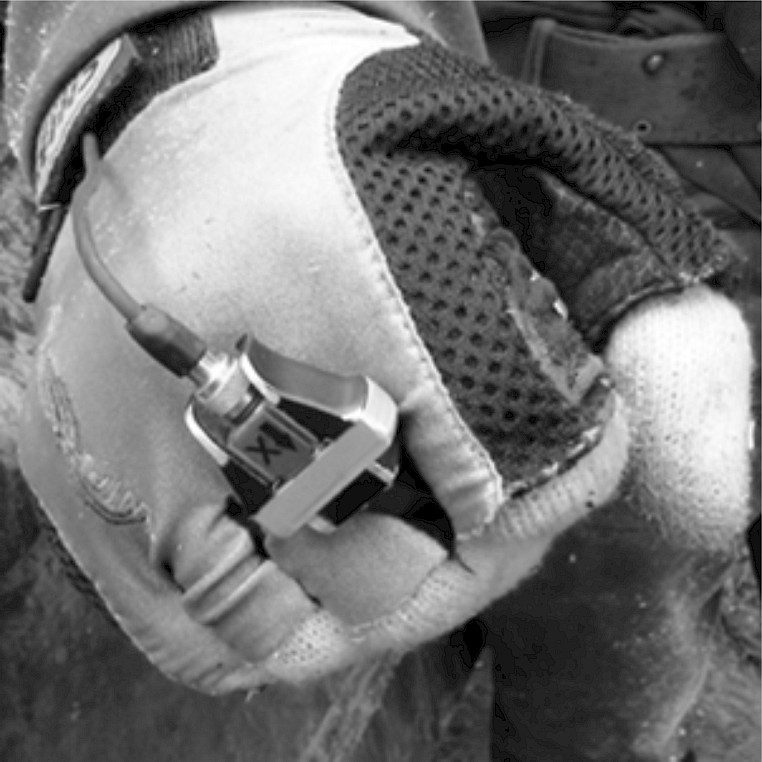
Fig. 1 Installation of the custom T-shaped accelerometer adapter on the right hand
The recorded vibration signal was processed using Brüel & Kjær Pulse Time 7789 software, which allows the extraction of unweighted RMS values of vibration over one-third octave frequency bands and one-second time intervals in all three orthogonal axes (X, Y and Z). The data were exported to MS Excel® (v16.0, Microsoft, Redmond, WA, USA) and synchronised with the time study.
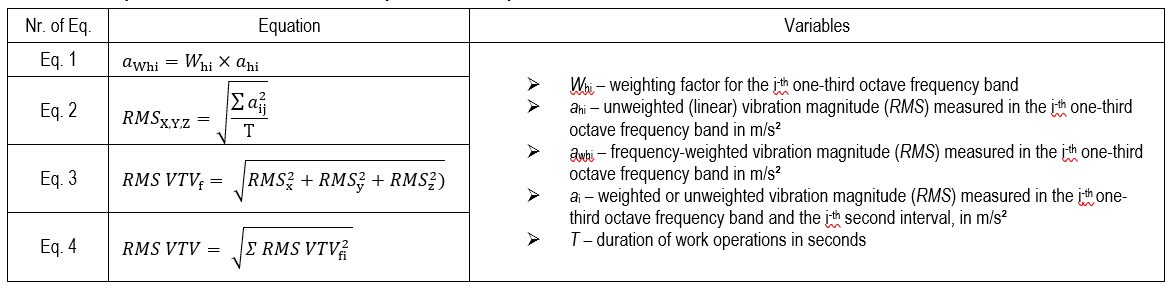
To calculate the frequency-weighted RMS vibration values by individual frequency bands and all three directional axes, Eq. 1 was applied (Table 1), considering weighting factors according to ISO 5349-1:2011 (ISO 2001). To calculate both the weighted and unweighted RMS values of HAV across one-third octave frequency bands and individual work operations, Eq. 2 was applied (Table 1). In order to calculate the weighted and unweighted values of the total vector magnitude (root mean square of the vibration total value – RMS VTV) of vibration from all three axes across individual one-third octave frequency bands and work operations Eq. 3 was used (Table 1). Using Eq. 4, we calculated the total RMS VTV for each work operation from the RMS VTV values across the one-third octave frequency bands.
Table 1 Equations used in the analysis with explanation of variables
3. Results
The dependence of operation duration on DBH varies across the three groups of operations defined in the »Methods« section. For chainsaw-based operations, exposure time increases rapidly and exponentially with DBH, which corresponds to the increase in the cross-sectional surface area of the stem and branches. The highest increase in exposure time occurs during delimbing and reaches about 14.5 minutes per tree with a DBH of 90 cm, while the exposure time for other chainsaw-based operations with the same DBH is at least three times shorter (3.7 to 5.0 minutes per tree). For auxiliary work operations, the increase in exposure time with the DBH is less clearly exponential and approaches a linear relationship. The dependence of the exposure time on the DBH is weaker for these operations, which is reflected in the lower values of the coefficients of determination. Operations using only axe were mainly observed on larger trees with a DBH of more than 50 cm and were relatively rare. Tree wedging was carried out only on 14 of the 39 felled trees (36%). Considering all wedging data, the exposure time appeared to decrease with increasing DBH, which is illogical as the tree mass increases with DBH, and wedging usually requires the use of multiple wedges. Stump debarking was carried out on an even smaller number of trees (8), exclusively on spruce trees for which stump treatment is prescribed as a forest protection measure against bark beetle infestation. Similar to the auxiliary work operations, the increase in exposure time with the DBH follows a linear rather than exponential trend when working with the axe (Fig. 2).
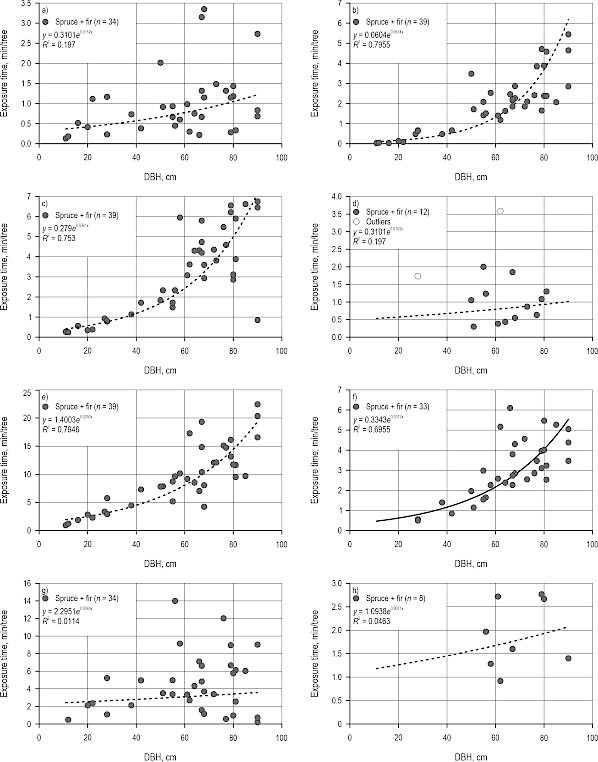
Fig. 2 Exposure time as a function of the diameter at breast height (DBH) and productive time operations (a – moving between trees and clearing area around the trees, b – notch-cutting with selection and control of the felling direction, c – back-cutting and butt-trimming, d – wedging, e – delimbing, f – cross-cutting and bucking, g – piling branches, h – stump debarking)
The differences between the groups of work operations are reflected in the modelled composition of the exposure time when felling trees with different DBH. Depending on the DBH of the tree, the relative proportion of certain operations remains more or less constant. In spruce felling, for example, the proportion of delimbing varies by only 6% between DBH classes, while the proportion of notch cutting and back-cutting changes by 11% and 12%, respectively. However, the proportion of branch stacking varies considerably, by up to 37%. The proportion of exposure time spent using an axe decreases as the DBH of the trees increases. The proportion of tree wedging decreases from 7% at a DBH of 27.5 cm to 2% in the largest DBH class, with an average proportion of 4.4% of productive time. The proportion of stump debarking decreases from 9% at a DBH of 57.5 cm to 5% in the highest DBH class, with an average proportion of 6.6 % of productive time over the specified DBH ranges (Fig. 3). The same trend can be observed for felling silver fir (Abies alba) (Fig. 4), with the only notable difference being that the average proportion of tree wedging (4.6%) is slightly higher due to the lack of stump debarking.
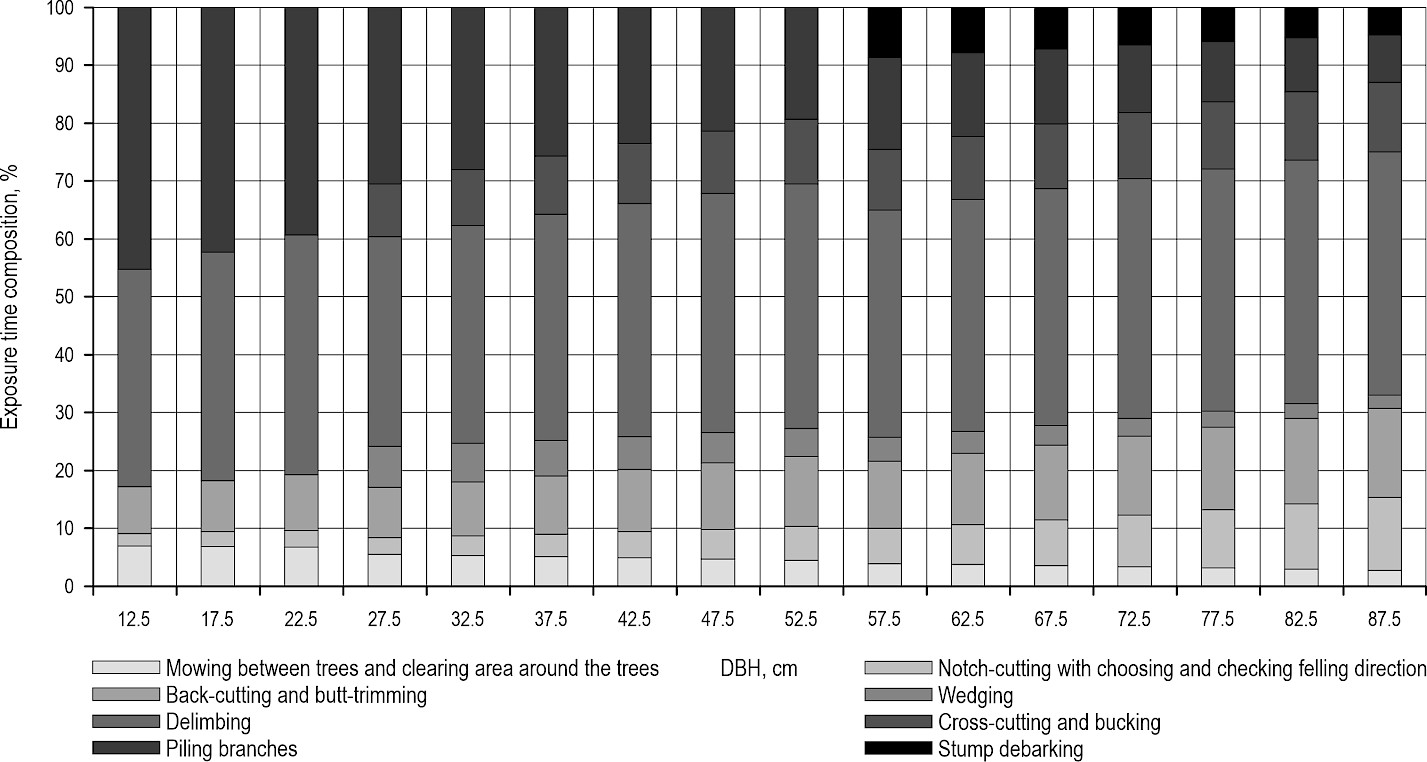
Fig. 3 Modelled composition of exposure time as a function of the diameter at breast height (DBH) for spruce trees (Picea abies L.)
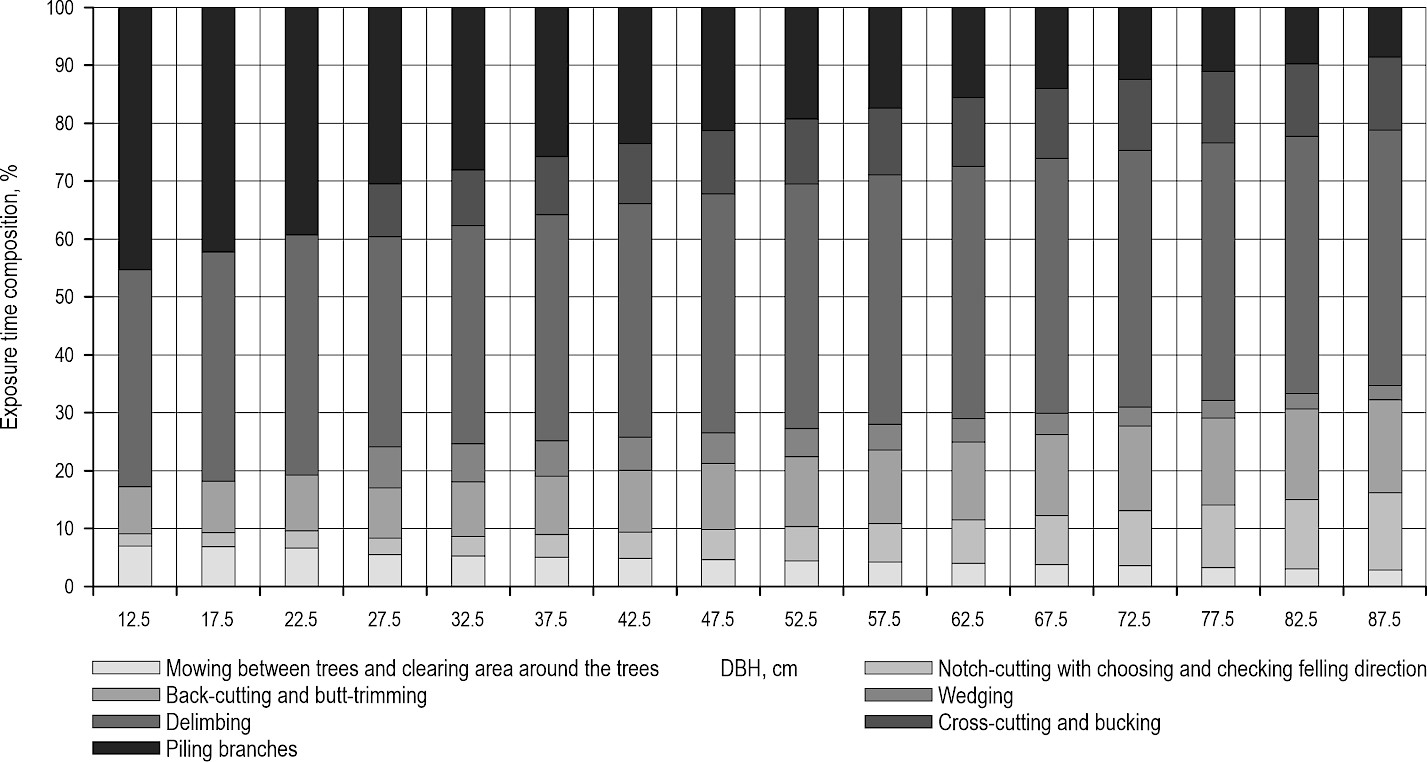
Fig. 4 Modelled composition of exposure time as a function of the diameter at breast height (DBH) for fir trees (Abies alba M.)
Fig. 5 shows the frequency spectra of the weighted and unweighted vibration magnitudes across productive work operations. The weighted RMS values represent the worker’s exposure in terms of potential harm, while the unweighted RMS values reflect the actual intensity of the vibrations regardless of their health effects. The vibration frequency spectra are presented in one-third octave bands in the frequency range from 6.3 to 1600 Hz, which corresponds to the frequency sensitivity range of the human hand-arm system as defined in the international standard ISO 5349-1:2001.
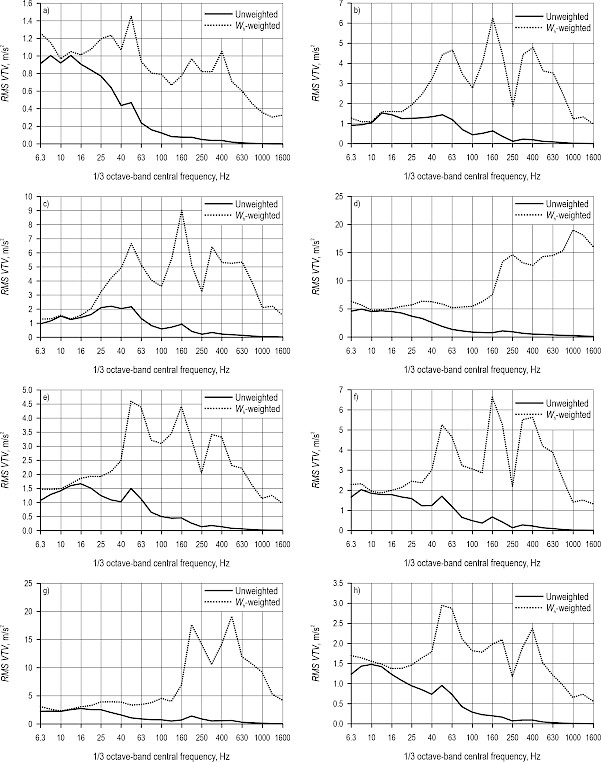
Fig. 5 One-third octave-band Wh-weighted and unweighted spectra of hand-arm vibrations by productive time operations (a – moving between trees and clearing area around the trees, b – notch-cutting with selection and control of the felling direction, c – back-cutting and butt-trimming, d – wedging, e – delimbing, f – cross-cutting and bucking, g – piling branches, h – stump debarking)
The analysis of the unweighted frequency spectra of the HAV revealed several important findings. When working with the chainsaw (Fig. 5b, c, e, f), three characteristic vibration peaks were observed at 50, 160 and 315 Hz. The first two peaks result from operating the chainsaw at idle speed and full throttle, respectively, while the third peak represents the first harmonic of the second peak. During delimbing, when the chainsaw operates at full throttle for only a short time and the branch diameters are smaller, the first two peaks are approximately the same (4.62 and 4.44 m/s²). In contrast, the second peak is significantly higher (6.30–9.05 m/s²) than the first for the other three chainsaw operations. When working with the axe, particularly when debarking tree stumps (Fig. 5h), the highest vibration levels occurred at 200 Hz (17.73 m/s²) and 500 Hz (19.33 m/s²). During tree wedging, the highest peaks were observed at 250 Hz (14.77 m/s²) and 1000 Hz (19.18 m/s²). Compared to debarking the tree stump, wedging generated higher vibration magnitudes below 160 Hz. A comparison of the frequency spectra between chainsaw and axe-based work operations shows that the vibration levels for axe operations are generally higher and predominate in frequency ranges above 200 Hz. The spectra for auxiliary operations (Fig. 5a, g) are characterised by a clear peak at 50 Hz, which indicates that the chainsaw is held idle, and by increased vibration levels at lower frequencies, which can be attributed to whole body and hand movements during locomotion and manual handling.
All frequency spectra of the weighted vibration levels generally show a right skewed distribution, which is primarily due to the frequency weighting filter, i.e., the rapid decrease in human sensitivity to HAV above 20 Hz. A comparison of chainsaw and axe-based operations shows that the vibration levels are highest in the frequency range between 8 and 50 Hz for all operations, but they differ mainly in the levels at higher frequencies, with axe-based operations showing higher values at 200 Hz and chainsaw operations at 160 Hz. For chainsaw-based operations (Fig. 5b, c, e, f), we find that operations with more frequent dynamic arm movements (e.g., cross-cutting and bucking) result in higher vibration amplitudes in the 8–16 Hz range. In contrast, tasks with minimal upper limb movements (e.g., back-cutting and butt-trimming) are characterised by peak vibrations in the range of 31.5 to 50 Hz. The frequency spectra of auxiliary operations, where vibration exposure from powered tools is less frequent, are even more clearly right-skewed, reflecting minimal high frequency content and dominant exposure in lower frequency bands.
The differences mentioned above also influence the proportion of certain frequency ranges in the total weighted HAV exposure. In the frequency range from 6.3 to 25 Hz, the contribution of auxiliary and axe-based operations is 74% to 86% of the total vibration exposure. For cross-cutting and delimbing operations, the contribution ranges between 67% and 71%, while for notch-cutting and back-cutting, it is significantly lower ranging from 45% to 55% (Fig. 6).
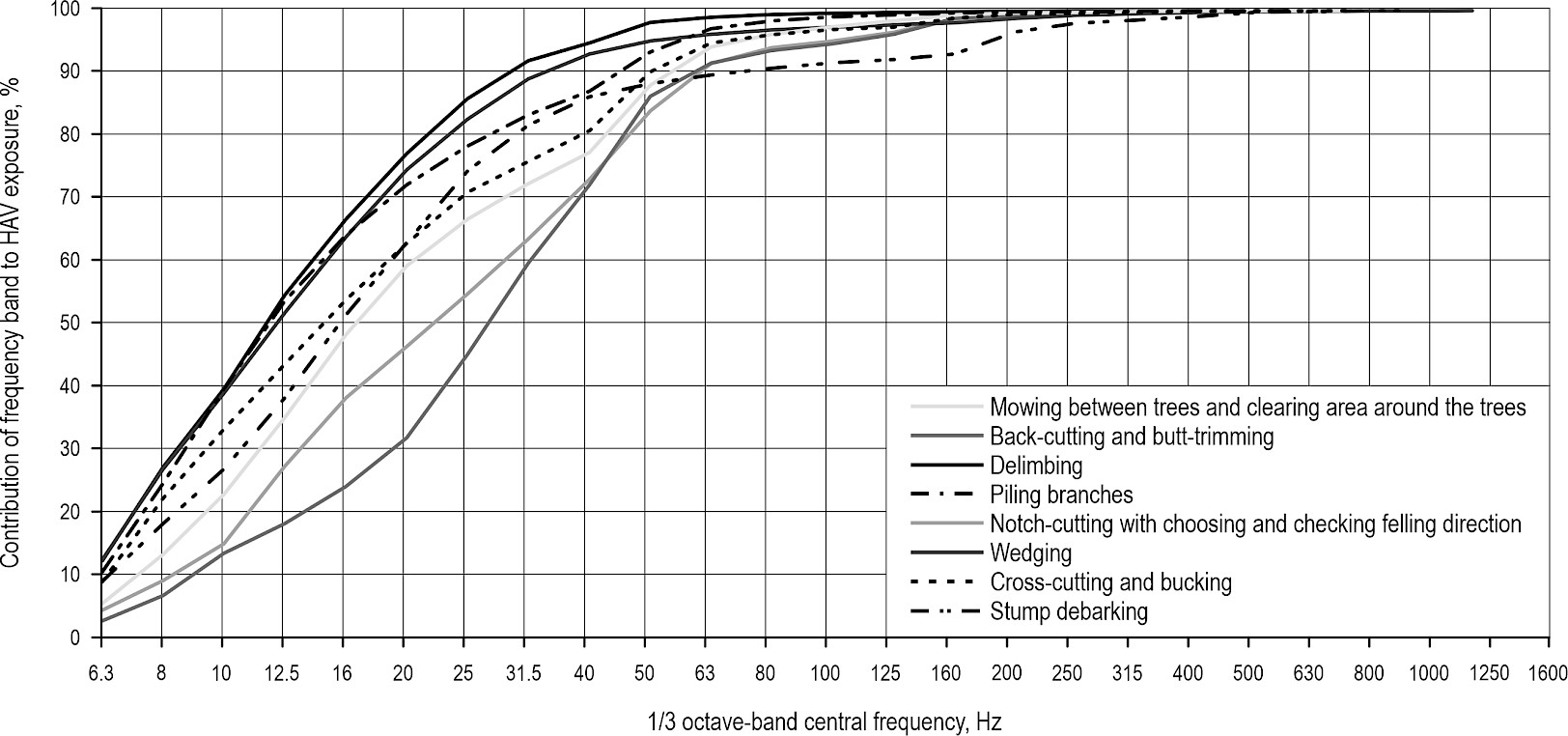
Fig. 6 Contribution of frequency band Wh-weighted vibration levels to the total HAV exposure during productive time operations
The mean unweighted and frequency-weighted RMS VTV values, calculated from the one-third octave band spectra (Eq. 4) were highest for axe-based operations, lowest for chainsaw-based operations and lowest during auxiliary operations (Fig. 5). The un-weighted and weighted mean values for axe-based operations were 1.3 to 1.9 times and 1.2 to 1.7 times higher than the values for chainsaw-based operations, respectively, and 2.0 to 3.2 times and 1.5 to 2.3 times higher than those for auxiliary operations.
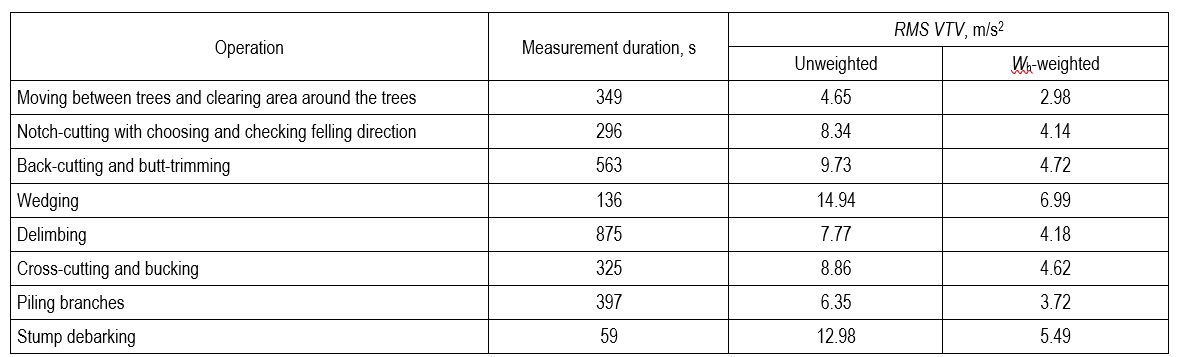
The modelled exposure time (Fig. 3 and 4) and the measured HAV levels during individual work operations (Table 2) were used to calculate the total HAV exposure and the relative contribution of each operation to the total exposure as a function of DBH (Fig. 7 and 8).
Table 2 Exposure to HAV during productive time operations
In spruce, HAV exposure increased from 3.95 m/s² to 4.35 m/s² with increasing DBH from 10 to 55 cm, peaked at 4.46 m/s² in the 55–60 cm DBH class and then decreased slightly to 4.41 m/s² up to 90 cm DBH. In silver fir, the exposure increased from 3.95 m/s² to 4.35 m/s² up to a DBH of 35 cm and then remained relatively constant at higher DBH classes. When felling spruce and fir, the contribution of chainsaw-based operations to the total HAV exposure increases with the DBH, while the contribution of the other two operation groups (axe-based and auxiliary operations) decreases. In spruce, the relative share of chainsaw-based operations ranges from 56% to 80%, the share of axe-based operations from 13% to 23% with the highest share occurring in trees with a DBH of more than 55 cm, where both wedging and stump debarking are performed, and the share of auxiliary operations ranges between 7% and 44% (Fig. 7). In fir trees, the contribution of chainsaw-based operations to total HAV exposure is 56% to 86%, axe-based operations from 6% to 18%, and auxiliary operations from 8% to 44% (Fig. 8).
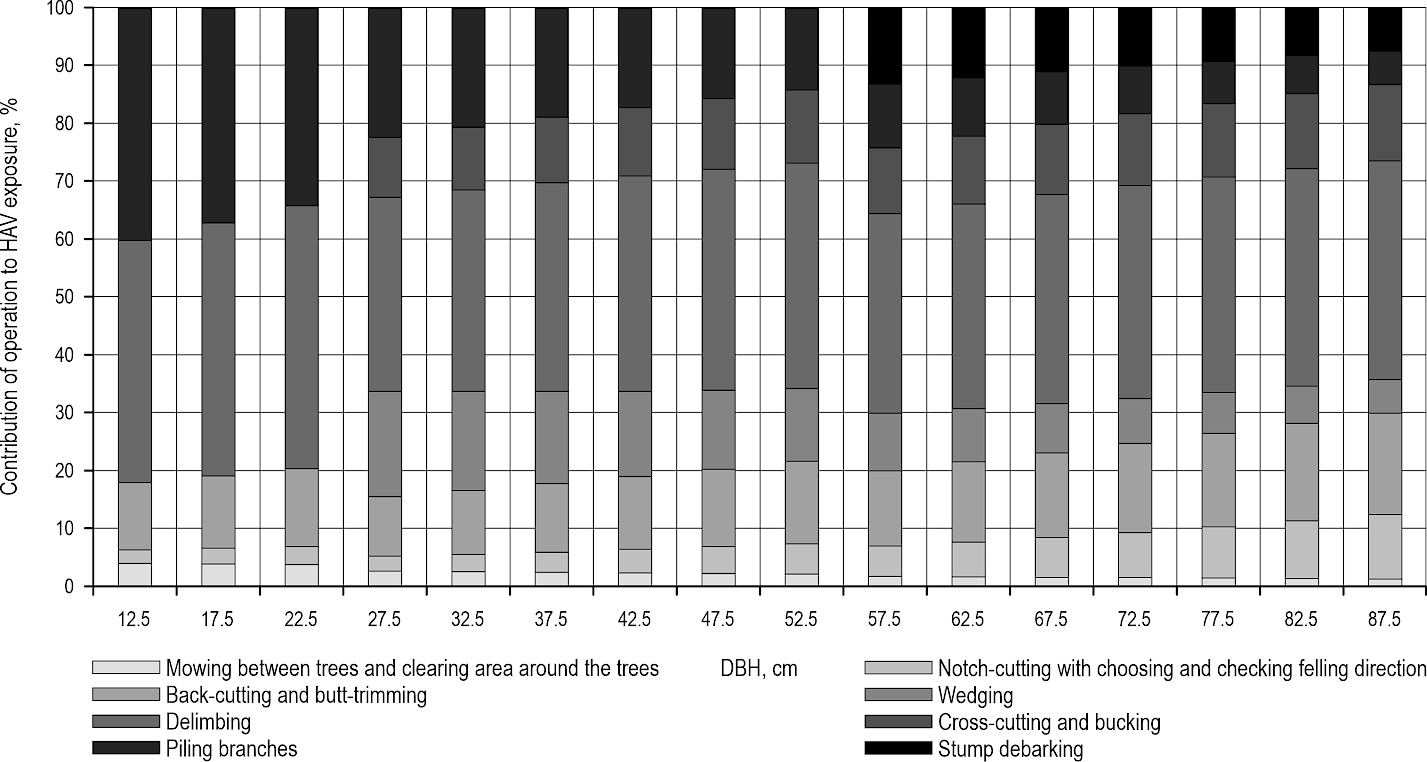
Fig. 7 Contribution of work operations to the total HAV exposure as a function of the diameter at breast height (DBH) for spruce trees
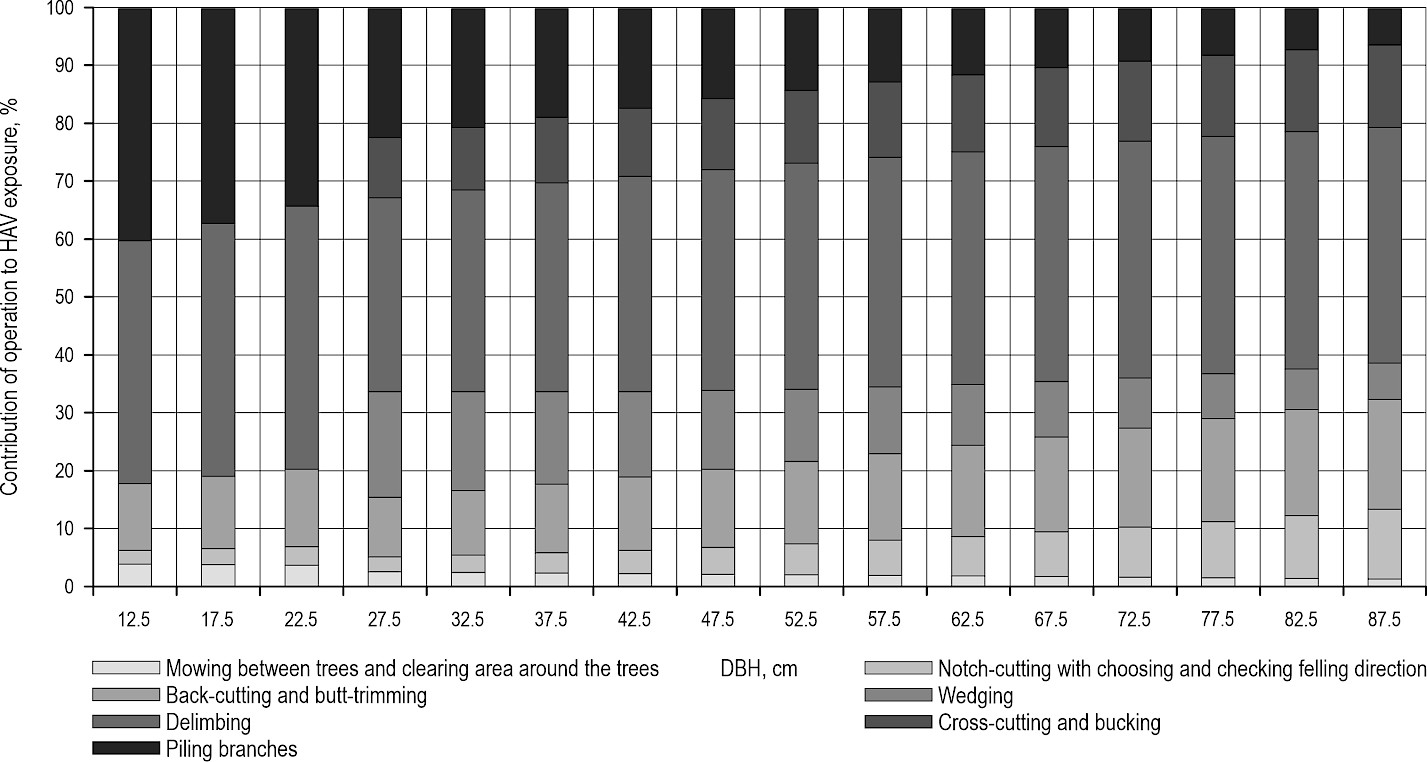
Fig. 8 Contribution of work operations to the total HAV exposure as a function of the diameter at breast height (DBH) for silver fir trees
4. Discussion
In European forestry, the felling of trees with chainsaws still remains a common practice (Grzywinski et al. 2022). However, due to the nature of the work and the combined use of mechanised and non-mechanised tools, forestry workers are often exposed to excessive hand arm vibrations (HAV). Such overexposure has been linked to the development of hand-arm vibration syndrome (HAVS), which includes white finger disease (WFD), muscle and nerve damages, and bone and joint pain. In addition, the effects of vibration on the human body are increased under low ambient temperatures (Kovač et al. 2015). To date, the majority of HAV research has focused exclusively on chainsaws and various factors affecting exposure, such as the type of saw and its wear (Landekić et al. 2020), tree species (Matache et al. 2020) and gripping forces depending on the morphology of the saw (Malinowska-Borowska 2014). However, to our knowledge, no study has investigated the effects of axes, although they are an indispensable part of a feller’s equipment, especially when it comes to ensuring safe, directional felling of trees (Kolich et al. 2023).
The lack of research on the impact of axe use on HAV exposure may be due to the fact that axes, unlike chainsaws, are not classified as mechanised tools and their contribution to vibration exposure has therefore probably been underestimated. This is also reflected in occupational health practice, where forestry workers diagnosed with white finger disease are often employed in workplaces where they work with non-mechanised hand tools such as machetes and billhooks (Bačić et al. 2023b). A second reason lies in the technical challenges associated with measurement. The use of axes generates transient vibrations characterised by peaks or shocks which, if the wrong type of accelerometer is chosen, can either damage the sensor or, more commonly, cause sudden random shifts in the output signal (Mansfield 2005). This can result in overestimation of vibration levels, especially at low frequencies. To avoid inaccurate results when using piezoelectric accelerometers, researchers often supplement data validation with laser vibrometer (Dong et al. 2004). However, this method is not practical when measuring axe use, as the tool is constantly in motion during operation.
Our study shows that the composition of productive time and consequently the duration of exposure to specific operations and tools depends on both DBH and tree species. Work with the axe was mainly carried out on trees with a DBH of more than 50 cm. This is understandable in the case of debarking stumps, as only stumps with a diameter of more than 15 cm are debarked. However, the lack of felling assistance (i.e., tree wedging) on smaller trees suggests an underestimation of the risk involved in felling and a violation of safety regulations (Pravilnik … 1979). During spruce felling, where both operations (debarking and wedging) were carried out, the exposure time with the axe peaked at DBH between 55 and 75 cm, ranging from 13% to 10% of the productive time. During fir felling, where debarking of the stump is not required, the time spent using the axe decreased continuously from 7% at 25 cm DBH to 2% at 90 cm DBH. Conversely, the exposure time with using chainsaw increased steadily with increasing DBH. A worker’s exposure time to particular tools is therefore directly influenced by the stand structure – similar to how the exposure of a tractor driver is influenced by the density of the forest road network (Poje et al. 2016). However, in addition to the DBH, other factors can also influence the exposure time, such as the distances between the trees and the slope of the terrain, which primarily affect the duration of tool idling.
A comparison of the unweighted HAV frequency spectra between chainsaw and axe-based operations revealed that the vibration levels are generally higher when axes are used and occur predominantly in the frequency range above 200 Hz. In contrast, the spectra of chainsaw operations show clear peaks corresponding to the engine idling (50 Hz) and full throttle phase (160 Hz), which is consistent with the results for other engine driven hand tools (Griffin 1997). Since the measurements were performed with an accelerometer adapter placed between the fingers and under a leather glove, the differences in the frequency spectra may also be influenced by the working technique or the grip strength on the tool handle. Pyykkö et al. (1976) found that firmer grips increase the vibration transmission through the hand. In addition, younger and less experienced chainsaw operators generally apply less gripping force than older and more experienced workers. Grip force is also influenced by the mass of the chainsaw (Malinowska-Borowska and Zieliński 2013, Malinowska-Borowska 2014). Although gloves can affect the transmission of HAV from the tool handle to the hand, this is likely to be minimal in our case as the operator was using leather gloves which, according to previous studies, do not significantly affect vibration transmission (Dong et al. 2014).
The analysis of the Wh-weighted HAV frequency spectra according to ISO 5349-1:2001 (ISO 2001) showed that all spectra exhibit right skewness, with the highest exposure occurring across all operations in the frequency range between 8 and 50 Hz. This is primarily due to the rapid decrease in human sensitivity to HAV at frequencies above 20 Hz and is probably also influenced by the dynamic movements of the hands and tools during task performance. As there are significant differences between weighted and unweighted values particularly for tools that generate vibrations at higher frequencies (e.g., axes) and as the manifestation of white finger disease (WFD) does not always correspond to Wh-weighted vibration levels (Griffin 1997), questions have been raised regarding the correctness of the Wh frequency weighting curve. Therefore, new weighting curves have been proposed that better match the actual incidence of vibration-induced white finger disease (VWF) (Brammer and Pitts 2012). These studies also highlight that bias can arise from uncertainties in the estimation of tool-related vibration exposure, especially for tools that are underrepresented in previous research, such as axes in forestry. In addition, the current standard does not define the duration between individual repeated shocks during HAV measurements, which would be necessary to differentiate between impact type vibrations and assess their specific effects. It also does not address the impact of such short-term shocks on the pathophysiological and epidemiological consequences for workers. It has also been reported that the current ISO frequency weighting underestimates the risks of nerve damage, adipocyte disorders and thermal hypersensitivity associated with impact tools like pneumatic hammers (Pitts et al. 2015). Consequently, future research should place greater emphasis on investigating the health effects of high intensity, short duration impacts phenomena that are also relevant for forestry workers using axes.
The average Wh-weighted root mean square (RMS) vibration values were highest for axe-based operations, reaching 6.99 m/s² during wedging and 5.49 m/s² for debarking the stump. Although these values are higher than those recorded for the operations performed with the selected chainsaw, they are comparable to or even lower than the values measured for older chainsaws (Neitzel and Yost 2001) or for machetes and billhooks (Bačić et al. 2023a). In addition, the values determined are significantly lower than those reported for the locksmith’s hammer (67 m/s²), where the vibration measurements were taken directly at the handle. The locksmith’s hammer remains the only non-mechanised impulsive tool for which comparable vibration data is currently available (Malinowska-Borowska and Zieliński 2013). Given the practical experience with the use of axes and the fact that peak accelerations measured at the handle of impact tools can exceed 10,000 m/s² (Pitts et al. 2015), the measured values for axes appear lower than expected. However, considering that the unweighted HAV values for axe use peak in the frequency range above 200 Hz, such results are plausible.
A reduction in peak acceleration does not necessarily correspond to a reduction in Wh-weighted vibration values. This was demonstrated in the case of an impact wrench, where a reduction in peak acceleration from 7000 to 800 m/s² had no effect on the Wh-weighted vibration value, which remained constant at 4.5 m/s² (Pitts et al. 2015). Nevertheless, the discrepancy between the HAV values of the locksmith’s hammer and those measured when using the axe suggests that the measured values of the axe may be underestimated. This could be due to the measurement location and methodology, in particular the use of adapters and the variability of grip force, both of which can influence the results (Dong et al. 2021). Exposure to HAV is also influenced by the experience of the workers and the choice of tools and equipment. By choosing the correct order in which trees are felled, workers can influence the exposure time, and by determining the centre of gravity of the tree and the direction of felling, the level of HAV can be influenced. Exposure to HAV can also be influenced by the characteristics of the axe, especially the mass and the length and type of handle, and by the characteristics of the wedge, especially the material.
The differences in measured Wh-weighted HAV between work operations, combined with variations in exposure time, influenced the total HAV exposure in relation to the DBH of the trees. The results showed that HAV exposure generally increased with tree DBH, which can be attributed to a steady increase in the proportion of time spent on chainsaw-based operations due to additional tasks and the fact that axe-based operations only occurred when felling larger trees. This shows how important it is to determine the exposure time under different working conditions. In addition, it must be considered that the contribution of individual operations to the total HAV exposure is also affected by differences in HAV levels associated with specific tools.
Based on a review of previous studies, this research represents the first attempt at a holistic assessment of hand-arm vibration exposure in chainsaw operators, in which, in addition to the influence of the chainsaw, the impact of the axe was also considered. Due to the technical complexity of the measurements, the experiment was conducted on a relatively small sample of trees (four trees) belonging to two tree species with the largest diameter at breast height that are typical of partially preserved fir-beech forests of Central, Eastern, and Southern Europe, particularly in the mountainous regions of the Alps, the Dinarides, the Carpathians, and the Apennines (Mauri et al. 2016). Furthermore, in order to control the influence of work technique and equipment, the measurements were carried out with only one worker, one type of chainsaw, one axe, and one type of driving wedge. Consequently, the results do not allow for the presentation of variability in HAV exposure across operations arising from the aforementioned factors; however, they do open up opportunities for numerous further studies.
Acknowledgments
This research was funded by ARIS (Slovenian Research and Innovation Agency) by the programme funding, The Forest-Wood Chain and Climate Changes: transition to a circular bioeconomy (P4-0430), and University of Ljubljana, Biotechnical faculty. Research was also supported by Pahernik Foundation in implementing the research and publishing the results.
Conflicts of Interest
The authors declare no conflicts of interest. The funders had no role in the design of the study, in the collection, analysis, interpretation of data, in the writing of the manuscript and in the decision to publish the results.
5. References
Asikainen, A.; Leskinen, L.A.; Pasanen, K.; Väätäinen, K.; Anttila, P.; Tahvanainen, T.,2009: Metsäkonesektorin nykytila ja tulevaisuus. Finnish Forest Research Institute.
Bačić, M., Landekić, M., Šušnjar, M., Šporčić, M., Pandur, Z., 2023a: Vibration levels and daily vibration exposure while using different tools in a forest cleaning. Central European Forestry Journal 69(1): 49–58. https://doi.org/10.2478/forj-2022-0015
Bačić, M., Pandur, Z., Šušnjar, M., Šporčić, M., Landekić, M., 2023b: Daily vibration exposure in the context of state and european legislature: a case study among chainsaw operators in Croatia. Forests 14(5): 929. https://doi.org/10.3390/f14050929
Bovenzi, M., 2012: Epidemiological evidence for new frequency weightings of hand-transmitted vibration. Ind Health 50(5): 377–387. https://doi.org/10.2486/indhealth.MS1382
Brammer, A.J., Pitts, P.M., 2012: Frequency weighting for vibration-induced white finger compatible with exposure-response models. Ind Health 50(5): 397–411. https://doi.org/10.2486/indhealth.MS1383
Brubaker, R.L., Mackenzie, C.J.G., Eng, P.R., Bates, D.V., 1983: Vibration white finger disease among tree fellers in British Columbia. Journal of Occupational Medicine 25(5): 403–408.
Černe, M., 2016: Primernost dveh tehnologij sečnje in spravila v pomlajenih sestojih jelovo – bukovih rastišč na visokem krasu. Univerza v Ljubljani, Biotehniška fakulteta. Master thesis. Available online: https://repozitorij.uni-lj.si/Dokument.php?id=128107&lang=slv (Accessed on 15 May 2025)
Dong, R., McDowell, T., Welcome, D., Warren, C., Schopper, A., 2004: An evaluation of the standardized chipping hammer test specified in ISO 8662-2. The Annals of occupational hygiene 48(1): 39–49. https://doi.org/10.1093/annhyg/meg077
Dong, R.G., Welcome, D.E., Peterson, D.R., Xu, X.S., McDowell, T.W., Warren, C., Asaki, T., Kudernatsch, S., Brammer, A., 2014: Tool-specific performance of vibration-reducing gloves for attenuating palm-transmitted vibrations in three orthogonal directions. International Journal of Industrial Ergonomics 44(6): 827–839. https://doi.org/10.1016/j.ergon.2014.09.007
Dong, R.G., Wu, J.Z., Xu, X.S., Welcome, D.E., Krajnak, K., 2021: A review of hand–arm vibration studies conducted by us niosh since 2000. Vibration 4(2): 482–528. https://doi.org/10.3390/vibration4020030
EU 2002: Directive 2002/44/EC of the European parliament and of the council of 25 June 2002 on the minimum health and safety requirements regarding the exposure of workers to the risks arising from physical agents (vibration). Official Journal of the European Communities, Brussels, Belgium.
EU 2003: Directive 2003/10/EC of the European parliament and of the council of 6 February 2003 on the minimum health and 899 safety requirements regarding the exposure of workers to the risks arising from physical agents (noise). Official Journal of the 900 European Communities, Brussels, Belgium.
Feyzi, M., Jafari, A., Ahmadi, H., 2023: The effect of wood species on chainsaw vibrations during bucking operations. International Journal of Forest Engineering 34(3): 417–425. https://doi.org/10.1080/14942119.2023.2189872
Griffin, M.J., 1997: Methodology: measurement, evaluation, and assessment of occupational exposures to hand-transmitted vibration. Occupational and Environmental Medicine 54(2): 73–89. https://doi.org/10.1136/oem.54.2.73
Grzywiński, W., 2004: Energy load of workers employed at timber harvesting. Electronic journal of Polish agricultural universities 7(2): Available online: http://www.ejpau.media.pl/volume7/issue2/forestry/art-06.html (Accessed on 9 April 2026)
Grzywiński, W., Turowski, R., Jelonek, T., Tomczak, A., 2022. Physiological workload of workers employed during motor-manual timber harvesting in young alder stands in different seasons. International Journal of Occupational Medicine and Environmental Health 35(4): 437–447. https://doi.org/10.13075/ijomeh.1896.01862
Halilović, V., Music, J., Knezevic, J., 2021: Physiological workload of chainsaw felling and processing workers in uneven-aged mixed stands. Radovi Šumarskog fakulteta Univerziteta u Sarajevu 51: 26–34. https://doi.org/10.54652/rsf.2021.v51.i2.357
ISO 5349-1:2001 Mechanical Vibration – Measurement and Evaluation of Human Exposure to Hand-Transmitted vibration – Part 1: General Requirements.
Jakše, A., 2013: Primernost strojne sečnje v slovenskih gozdovih. Revija za univerzalno odličnost 2(1): 10–18.
Kocijančič, L., 2018: Izbira sekaške sekire glede na jakost tresenja in obremenitve ledvenega dela. Univerza v Ljubljani, Biotehniška fakulteta. Diplomska naloga. Available online: https://repozitorij.uni-lj.si/Dokument.php?id=113625&lang=slv (Accessed on 25 April 2025)
Kolich, H.N., Bauske, E.M., Kelley, P., Orellana, O., Martinez-Espinosa, A., 2023: Chainsaw safety: the five step tree felling plan. Available online: https://secure.caes.uga.edu/extension/publications/files/pdf/C%201220_2.PDF (Accessed on 10 May 2025)
Kováč, J., Krilek, J., Dado, M., Beno, P., 2015: Investigating the influence of design factors on noise and vibrations in the case of chainsaws for forestry work. FME Transactions 46(4): 513. https://doi.org/10.5937/fmet1804513K
Lahtinen, M., 2021: The Global challenges of harvesting and how the CTL method can respond to them. Mikkeli University of Life Science. Available online: https://www.theseus.fi/bitstream/handle/10024/26405/Oppari_Matti_Lahtinen.pdf?sequence=1 (Accessed on 14 May 2025)
Landekić, M., Bačić, M., Pandur, Z., Šušnjar, M., 2020: Vibration levels of used chainsaws. Forests 11(2): 249. https://doi.org/10.3390/f11020249
Malinowska-Borowska, J., 2014: Coupling forces resulting from the type of chain saw used. Annals of Agricultural and Environmental Medicine 21(1): 174–178.
Malinowska-Borowska, J., Zieliński, G., 2013: Coupling forces exerted on chain saws by inexperienced tree fellers. International Journal of Industrial Ergonomics 43(4): 283–287. https://doi.org/10.1016/j.ergon.2013.04.006
Mansfield, N.J., 2005: Human response to vibration, CRC Press: Boca Raton, FL.
Masci, F., Spatari, G., Bortolotti, S., Giorgianni, C.M., Antonangeli, L.M., Rosecrance, J., Colosio, C., 2022: Assessing the impact of work activities on the physiological load in a sample of loggers in Sicily (Italy). International Journal of Environmental Research and Public Health 19(13): 7695. https://doi.org/10.3390/ijerph19137695
Matache, M., Munteanu, M., Dragos-Nicolae, D., Epure, M., 2020: Evaluation of hand transmitted chainsaw vibrations during wood cutting. E3S Web of Conferences 180: 03013. https://doi.org/10.1051/e3sconf/202018003013
Mauri, A., de Rigo, D., Caudullo, G., 2016. Abies alba in Europe: distribution, habitat, usage and threats. In: San-Miguel-Ayanz, J., de Rigo, D., Caudullo, G., Houston Durrant, T., Mauri, A. (Eds.), European Atlas of Forest Tree Species. Publ. Off. EU, Luxembourg, pp.e01493b+ Available online: https://forest.jrc.ec.europa.eu/media/atlas/Abies_alba.pdf (Accessed on 28 May 2026)
Melemez, K., Tunay, M., 2010: Determining physical workload of chainsaw operators working in forest harvesting. Technology 13(4): 237–304.
Neitzel, R., Yost, M., 2001: Tasked-based assessment of occupational vibration and noise exposures in forestry workers. The International Mountain Logging and 11th Pacific Northwest Skyline Symposium, conference was held in Seattle, Washington on December 10–12th.
Neri, F., Laschi, A., Foderi, C., Fabiano, F., Bertuzzi, L., Marchi, E., 2018: Determining noise and vibration exposure in conifer cross-cutting operations by using li-ion batteries and electric chainsaws. Forests 9(8): 501. https://doi.org/10.3390/f9080501
Oregon. Chain, 3/8 Series, Super 70 Chisel | Oregon Products Available online: https://www.oregonproducts.com/en_gb/chain%2C-3-8-series%2C-super-70-chisel/p/73lpx060e (Accessed on 17 June 2025)
Pitts, P., Kaulbars, U., Lindell, H., Gretarsson, L.S., Machels, M., Brammer, A.J., Schenk, T., Haas, F., 2015: Hand-Arm vibration: exposure to isolated and repeated shock vibrations – review of the international expert workshop 2015 in Beijing. Deutsche Gesetzliche Unfallversicherung e.V.
Poje, A., Lipužič, B., Bilobrk, I., Pandur, Z., 2024: Time composition, efficiency, workload, and noise exposure during tree felling and processing with petrol and battery-powered chainsaws in mixed high forest stands. Forests 15(5): 798. https://doi.org/10.3390/f15050798
Poje, A., Potočnik, I., Danilović, M., Antonić, S., 2016: A case study of the impact of skidding distance on tractor operator exposure to noise. Baltic forestry 22(2): 357–364.
Pravilnik o Varstvu Pri Delu v Gozdarstvu (PISRS), 1979: Uradni list SRS, št. 15/79, Uradni list RS, št. 56/99 – ZVZD in 43/11 – ZVZD-1. Available online: https://pisrs.si/pregledPredpisa?id=PRAV49 (Accessed on 17 June 2025)
Pyykkö, I., Farkkila, M., Toivanen, J., Korhonen, O., Hyvarinen, J., 1976: Transmission of vibration in the hand arm system with special reference to changes in compression force and acceleration. Scand. J. Work. Environ. Health 2(2): 87–95. https://doi.org/10.5271/sjweh.2820
Šilc, M., 2011: Vpliv tehnike dela na obremenitev sekača s tresenjem. Univerza v Ljubljani, Biotehniška fakulteta. Bachelor thesis. Available online: http://www.digitalna-knjiznica.bf.uni-lj.si/vs1_silc_matej.pdf (Accessed on 14 April 2025)
Staněk, L., Mergl, V., 2024. Effect of the body mass index and length of work on the stress of individual body parts of chainsaw operators. Journal of Forest Science 70(8): 436–445. https://doi.org/10.17221/26/2024-JFS
Staněk, L., Neruda, J., Nevrkla, P., 2023: The Magnitude of Fatigue Recorded in Individual Body Parts of Chainsaw Operators after Work. Forests 14(10): 2023. https://doi.org/10.3390/f14102023
Stihl, Stihl MS 361 C-BQ. Available online: https://cdnassets.stihlusa.com/1625860669-ms361cmanual.pdf (Accessed on 19 June 2025)
Welcome, D.E., Dong, R.G., Xu, X.S., Warren, C., McDowell, T.W., Wu, J.Z., 2015: An examination of the vibration transmissibility of the hand-arm system in three orthogonal directions. International Journal of Industrial Ergonomics 45: 21–34. https://doi.org/10.1016/j.ergon.2014.11.001
Zakon o pokojninskem in invalidskem zavarovanju (ZPIZ-2), 2012: Uradni list RS, št. 48/22. Available online: https://pisrs.si/pregledPredpisa?id=ZAKO6280 (Accessed on 29 April 2025)
Zavod za gozdove Slovenije. Pregledovalnik Podatkov o Gozdovih. Available online: https://prostor.zgs.gov.si/pregledovalnik/ (Accessed on 25 April 2025)
© 2026 by the authors. Submitted for possible open access publication under the
terms and conditions of the Creative Commons Attribution (CC BY) license (http://creativecommons.org/licenses/by/4.0/).
Authors’ addresses:
Assist. prof. Anton Poje PhD
e-mail: anton.poje@bf.uni-lj.si
Luka Pajek mag. ing. *
e-mail: luka.pajek@bf.uni-lj.si
University of Ljubljana
Biotechnical Faculty
Department of Forestry and Renewable Forest Resources
Večna pot 83
1000, Ljubljana
SLOVENIA
* Corresponding author
Received: August 13, 2025
Accepted: May 12, 2026
Original scientific paper