
Rolling Resistance of Radial Tyres During Repeated Passes Over the Same Track in a Soil Test Channel
doi: https://doi.org/10.5552/crojfe.2027.4618
volume: issue, issue:
pp: 12
- Author(s):
-
- Helexa Milan
- Krilek Jozef
- Kováč Ján
- Kuvik Tomáš
- Mancel Vladimír
- Šušnjar Marijan
- Findura Pavol
- Lavrík Erik
- Article category:
- Original scientific paper
- Keywords:
- mobile machinery, wheel undercarriage, rolling resistance, tyre, tyre testing
Abstract
HTML
Driving over the same spot multiple times is often unavoidable in agriculture and forestry, yet leaving the same ruts in the soil leads to challenging outcomes. While soil compaction causes excessive damage, it simultaneously enhances vehicle trafficability and reduces resistance forces acting on both wheeled and tracked vehicles. In this study, the rolling resistance was measured during repeated passes of a BKT 280/70 R18 Agrimax RT 765 radial tyre with directional tread over loamy sand with a 30% moisture content. Results showed a nonlinear dependence of the rolling resistance on the number of passes made. The greatest reduction occurred after the first pass, up to 54% at an inflation pressure of 100 kPa. Subsequent passes caused smaller decreases in the tyre rolling resistance until stabilisation during the seventh and eighth passes. These findings provide practical guidance for optimising mechanised vehicle operations to mitigate soil compaction and environmental impact. In addition, they can provide practical solutions for optimal vehicle management, and for reducing environmental impacts and soil compaction. To reduce the harmful impact of, for example, heavy forestry machinery, such as forwarders or harvesters, on forest soil, it is further recommended to optimise operational planning according to weather and forest soil conditions. If it is necessary to eliminate soil damage and ensure specific values of rolling resistance of mechanised means, it is possible to recommend movement on frozen soils, soils less saturated with water, the use of wider tyres, bearing in mind that in this case the choice of tyre inflation pressure is not negligible, or ensure a lower load on these mechanisms. From this point of view, logistical and organizational measures are not negligible, both in mining and agrotechnical activities.
Rolling Resistance of Radial Tyres During Repeated Passes Over the Same Track in a Soil Test Channel
Milan Helexa, Jozef Krilek, Ján Kováč, Tomáš Kuvik, Vladimír Mancel, Marijan Šušnjar, Pavol Findura, Erik Lavrík
https://doi.org/10.5552/crojfe.2027.4618
Abstract
Driving over the same spot multiple times is often unavoidable in agriculture and forestry, yet leaving the same ruts in the soil leads to challenging outcomes. While soil compaction causes excessive damage, it simultaneously enhances vehicle trafficability and reduces resistance forces acting on both wheeled and tracked vehicles. In this study, the rolling resistance was measured during repeated passes of a BKT 280/70 R18 Agrimax RT 765 radial tyre with directional tread over loamy sand with a 30% moisture content. Results showed a nonlinear dependence of the rolling resistance on the number of passes made. The greatest reduction occurred after the first pass, up to 54% at an inflation pressure of 100 kPa. Subsequent passes caused smaller decreases in the tyre rolling resistance until stabilisation during the seventh and eighth passes. These findings provide practical guidance for optimising mechanised vehicle operations to mitigate soil compaction and environmental impact. In addition, they can provide practical solutions for optimal vehicle management, and for reducing environmental impacts and soil compaction. To reduce the harmful impact of, for example, heavy forestry machinery, such as forwarders or harvesters, on forest soil, it is further recommended to optimise operational planning according to weather and forest soil conditions. If it is necessary to eliminate soil damage and ensure specific values of rolling resistance of mechanised means, it is possible to recommend movement on frozen soils, soils less saturated with water, the use of wider tyres, bearing in mind that in this case the choice of tyre inflation pressure is not negligible, or ensure a lower load on these mechanisms. From this point of view, logistical and organizational measures are not negligible, both in mining and agrotechnical activities.
Keywords: mobile machinery, wheel undercarriage, rolling resistance, tyre, tyre testing
1. Introduction
Since mobile work machines operate more often off-road than on paved carriageways, the rolling resistance of their wheels plays a more significant role in energy consumption. The resistance of a tyre rolling on a flexible surface comprises two components. The first is the so-called »internal rolling resistance« from the deformation of the outer tyre itself. It is the dominant type of resistance encountered when driving on paved carriageways or roads. The other component is external rolling resistance associated with the deformation of the carriageway when driving over unpaved roads or over earthen paths. Ptak et al. (2023) and Zemánek and Neruda (2021) both note that the magnitude of resistance strongly depends on soil properties, and particularly on its instantaneous moisture content.
Mobile work machine tyres employ radial designs to eliminate rolling resistance and enhance handling (Grečenko 1995). Radial tyres are characterised by carcass cords oriented at zero degrees and a rigid belt layer that runs circumferentially, giving these tyres specific properties. A general advantage of radial tyres is their longer service life compared to diagonal tyres, along with better off-road driving characteristics, lower rolling resistance, and marginally improved suspension (Kane et al. 2021). However, the chief disadvantages include lower lateral stability and less shock absorption.
A tyre rolling on a yielding surface will cause deformation and, depending on moisture content and soil type, it will sink, leading to certain undesirable effects from soil compaction damage. Mechanical soil compaction is primarily caused by internal stresses transmitted within the soil mass when mobile machinery tyres pass over it (Hamza and Anderson 2005, Nawaz et al. 2013). Due to the rapid intensification of agriculture and forestry (Keller et al. 2019), soil compaction caused by machinery has become a global environmental issue, impairing the soil physical and chemical properties (Orzech and Załuski 2020, Šimečková et al. 2021), such as aeration, water permeability, and nutrient retention, and adversely affecting crop growth and soil ecology over the long term (Zhang et al. 2024). Rolling tyres displace and rearrange soil particles due to stress transfer in the soil (Feng and Fang 2015), which increases its bulk density, reduces porosity and water permeability, and ultimately leaves the compacted soil unsuitable for plant root growth (Yu et al. 2024). Furthermore, the tyres of agricultural and forestry machinery inevitably deform the soil, exacerbating soil compaction (Villa-Henriksen et al. 2021).
While the previous paragraph outlines the undesirable effects on soil caused by mobile machinery tyres, compaction nonetheless reduces rolling resistance when driven over the same path multiple times due to the compression of the soil and an increase in its compactness and bulk density, which in turn raises the soil load-bearing capacity and makes it less flexible (Majdoubi et al. 2024). In forestry and agriculture, multiple passes over the same rut are frequently unavoidable. These repeated passes compact the soil structure even more at these locations, although wheel traction improves (Senatore et al. 2011). Finding a compromise between the number of passes over the same route or location and reducing the rolling resistance of mobile work machines becomes a matter of effective technological planning of a harvest, either in a forest or a farmed field (Ampoorter et al. 2012).
This article specifically focuses on changes in the rolling resistance of selected radial tyres on chosen forest soil. Specifications for evaluating the level of soil damage and compaction were not monitored. An experiment was carried out in a soil test channel that the Department of Environmental and Forestry Machinery at the Technical University of Zvolen had previously constructed. The detailed technical specifications and construction can be found at Helexa et al. (2022). The measurement was performed at a single value of normal wheel load and a single value of soil moisture.
2. Materials and Methods
BKT 280/70 R18 Agrimax RT 765 radial tyres with directional tread were selected for testing. Table 1 and Table 2 show the key technical specifications for this tyre.
Table 1 Key technical specifications of the tested tyre
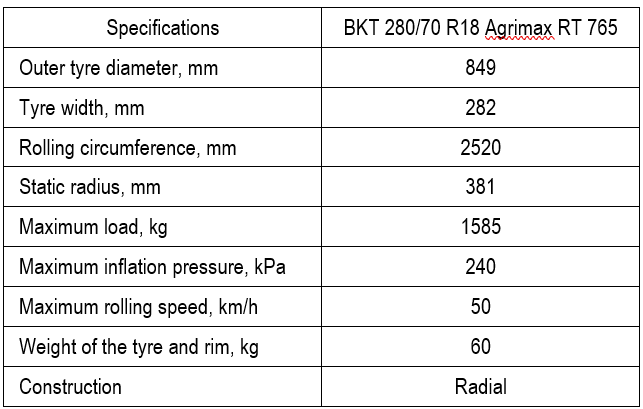
Table 2 Key technical specifications of the tested tyre

The tyre was tested under laboratory conditions in a soil test channel. A more detailed look at its design and construction can be found in Fig. 1 below.
The University Forest Enterprise, a natural laboratory at the Technical University in Zvolen, provided the soil used in the test channel, which was sourced from a beach stand in a forest compartment near Turová. It was classified by laboratory grain-size analysis as loamy sand. Table 3 below lists the key mechanical properties of the soil obtained from samples taken from the upper soil layer (0–15 cm) after they were moistened with water to a content of 30%. On average, the moisture value was maintained throughout the entyre measurement. The characteristic soil values were derived from laboratory analysis of samples collected by the Faculty of Civil Engineering, University of Žilina (whom we would like to thank for their cooperation and assistance).
Table 3 Key specifications of the soil
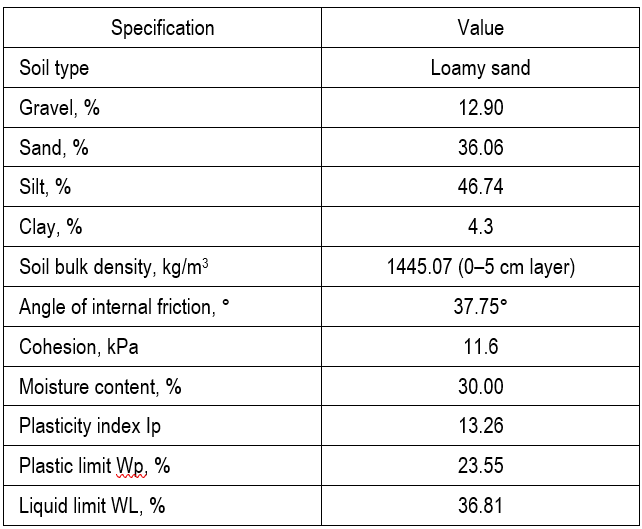
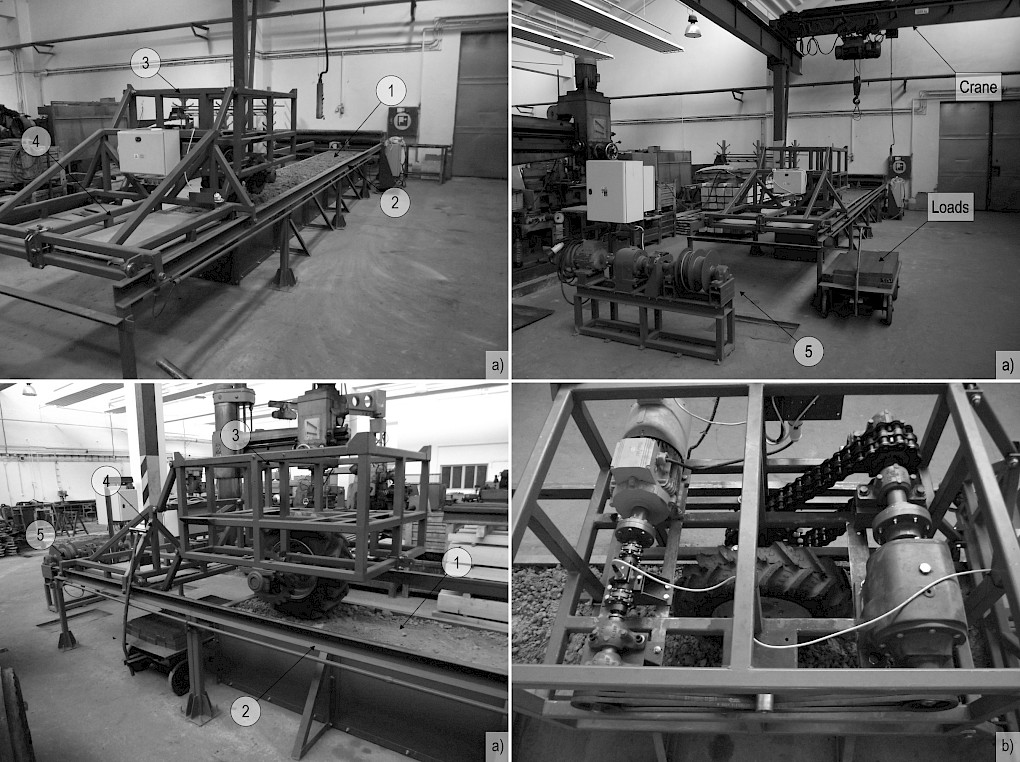
Fig. 1 Soil test channel: a) Workplace layout, b) Wheel drive unit layout, Soil channel with packed soil, 2. Lateral guide, 3. Main frame with the tested wheel, 4. Guide frame, 5. Winch system
The methodology for measuring a tyre rolling resistance was simple and essentially composed of the rope winch (5) shown in Fig. 1a pulling the main frame (3) with the tyre over the treated soil surface. The tensile force was measured by an HBM S9M/10kN force transducer with a rated capacity of 10 kilonewtons. The signal from the sensor was then recorded by an HBM Quantum X MX 840A measuring amplifier that was controlled by a computer using HBM Catman Easy software. It enabled the recorded files to be converted to MS Excel, where the measurements were further processed. Due to the confined conditions and dimensions, the tyre was pulled along the soil at a speed of ten centimetres per second.
The tyre rolling resistance was measured at inflation pressures of 100, 150, 200, and 240 kilopascals. The vertical load on the tyre reached 450 kilograms, equalling the weight of the main frame (3) shown in Fig. 1a and the mechanised wheel drive unit in Fig. 1b minus the wheel drive chain. The weight of the outer tyre and rim, plus the mounting material, reached 60 kilograms. These weights were determined from measurements taken with a suspended Mingeda OCS-3-X crane scale with a rated load of 3000 kg. After each pass, a crane (1a) returned the support frame with the tyre to the starting position. Tyre inflation pressures and vertical loads were selected to meet the tyre manufacturer's technical specifications and avoid unnecessary overloading, which reduces the service life of tyres.
In this method of measuring a tyre rolling resistance, the total measured tensile force consists of both the rolling resistance itself and other resistance forces that need to be taken into account in the calculation (Fig. 2). The total resistance force is calculated from the following equation:
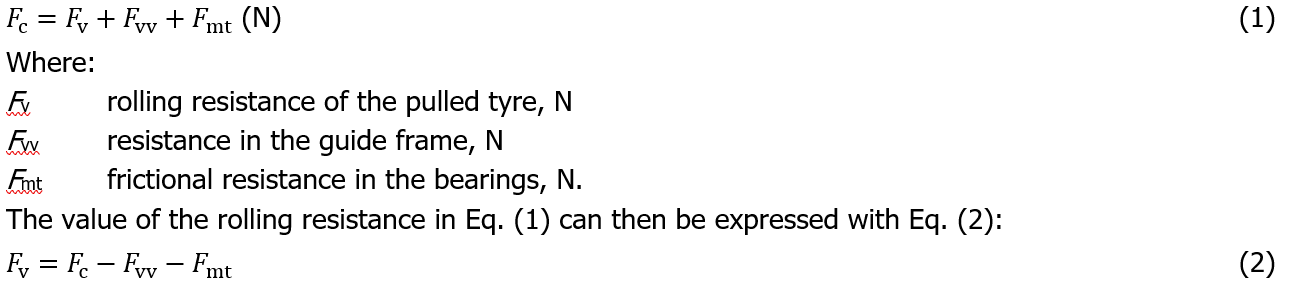
Fig. 2 Force exerted when pulling the test wheel
The friction resistance in the guide frame, Fvv, was determined by freely pulling the guide frame without the main frame and wheel attached. This was measured using the assembly described above, before the actual measurement of the tyre rolling resistance. The value was 79.82 newtons. Eq. (3) was then applied to determine the friction torque in the bearings supporting the wheel shaft:

The disadvantage of this relationship is that it only applies precisely to a bearing load of P = 0.1×C, where C is the basic dynamic load rating of the bearings. In many cases, this force was exceeded. The selected coefficient of friction for the bearings was μ = 0.001 (SKF General Catalogue 2007), corresponding to the type of bearing and lubrication method used (grease lubrication). The friction resistance force in the bearings was then calculated from Eq. (4):

The radial reactions of the bearings themselves were not measured. Only the force diagram and the dimensions of the shaft bearing were used. Based on the known value of the vertical wheel load, the bearing reaction forces were calculated, with the equivalent dynamic loads of the bearings subsequently determined.
These calculations showed the friction resistance in the wheel bearing arrangement to be very low, ranging from a maximum of 1.5 newtons for the vertical wheel load. To reduce the resistance, the arrangement was not fitted with contact seals. Therefore, only the friction of the bearings applies here. A mechanical height gauge measured the rolling radius of the tyres at each inflation pressure level and vertical load. Equation (5) was then used to calculate the corresponding coefficient of rolling resistance:

The dependence of tyre slip on load and inflation pressure was not ascertained when the tyre rolling resistance was measured.
The rolling resistance values obtained naturally reflect the total resistance of the test soil. As no measurements were made on rigid concrete, the internal component (tyre deformation) and the external component (soil deformation) could not be separately determined. Thus, all reported values represent the total combined rolling resistance only.
After the wheel had completed a pass, the soil was manually cultivated by digging and levelling with hand tools to maintain the initially measured average bulk density. An Eijkelkamp hand penetrometer with a rated capacity of 1000 newtons was then used to verify the soil mechanical parameters. During measurements, soil moisture was monitored using a handheld IMKO HD2 moisture meter with an IMKO Trime-Pico 64/32 sensor. The final soil moisture content in the test channel was determined by oven-drying samples and measured at approximately 30%.
A total of eight passes were conducted along the same track for each tyre inflation pressure. The passes were halted when the depth of the created track was found to be constant. When it ceased to deepen, the conclusion was drawn that the soil had compacted under the given conditions, and the measured traction forces (and thus rolling resistance) were now fluctuating around a stable value. Our findings indicated that it consistently occurred around the eighth pass along the same track for all the inflation pressures tested.
As mentioned earlier, an HBM S9M/10kN force transducer with a sampling frequency of five hertz recorded the tensile resistance of the pulled wheel. The selection of this frequency was based on a previous study by Bauer and Sedlák (2003), who had used it to measure the drawbar pull of tractors. The HBM Quantum X MX 840 data acquisition system transferred the measured data to a personal computer, where they were converted to MS Excel files via the HBM Catman Easy software and subsequently processed. As noted, the speed of the pulled wheel was ten centimetres per second. The measured rolling resistances at the monitored inflation pressures were then statistically processed in the Statistica 14 software product.
During the statistical processing of the calculated rolling resistance values, the following variables were quantified: arithmetic mean, median, mode, minimum value, maximum value, range, variance, standard deviation, coefficient of variation, skewness, and kurtosis. The data sets were then subjected to a normality test. Here, the Shapiro-Wilk test was used to assess the normality of the data distribution.
3. Results
Fig. 3 shows the rolling resistance curve over the fourth pass for a BKT 280/70 R18 Agrimax RT 765 radial tyre at an inflation pressure of 100 kilopascals and a vertical load of 450 kilograms.
Fig. 4 displays the statistical processing of the previously calculated rolling resistance data for the fourth pass, measured at an inflation pressure of 100 kilopascals and a vertical load of 450 kilograms. In this case, the Shapiro-Wilk test does not reject the hypothesis of normality for the distribution of the measured data at a significance level of 0.05, as the calculated p = 0.25829 is greater than the significance level adopted for the test. Similar results were obtained from the processing of the other measured rolling resistance values.
Fig. 5 illustrates the measured dependence of a tyre rolling resistance on the number of passes at inflation pressures of 100 and 240 kilopascals and a vertical load on the tyre of 450 kilograms. As can be seen from the plotted relationships, power functions can approximate the plotted points relatively well. Statistica 14 processed both graphical dependencies. At an inflation pressure of 240 kilopascals, rolling resistance during the first pass was 2170.22 newtons, while at 100 kPa it was 2011.39 N. During the second pass, the rolling resistance measured at an inflation pressure of 240 kPa was 1119.07 N, and at 100 kPa it attained 925.08 N. These figures represent a reduction of 48.44% and 54% at inflation pressure of 240 kPa and 100 kPa, respectively. The rolling resistance level stabilized at the 8th pass, where it reached 878.76 N at a pressure of 240 kPa and 689.37 kPa at a pressure of 100 kPa. The total percentage decrease in rolling resistance levels between the first and last eight passes is therefore 59.51% at an inflation pressure of 240 kPa and 65.73% at an inflation pressure of 100 kPa.
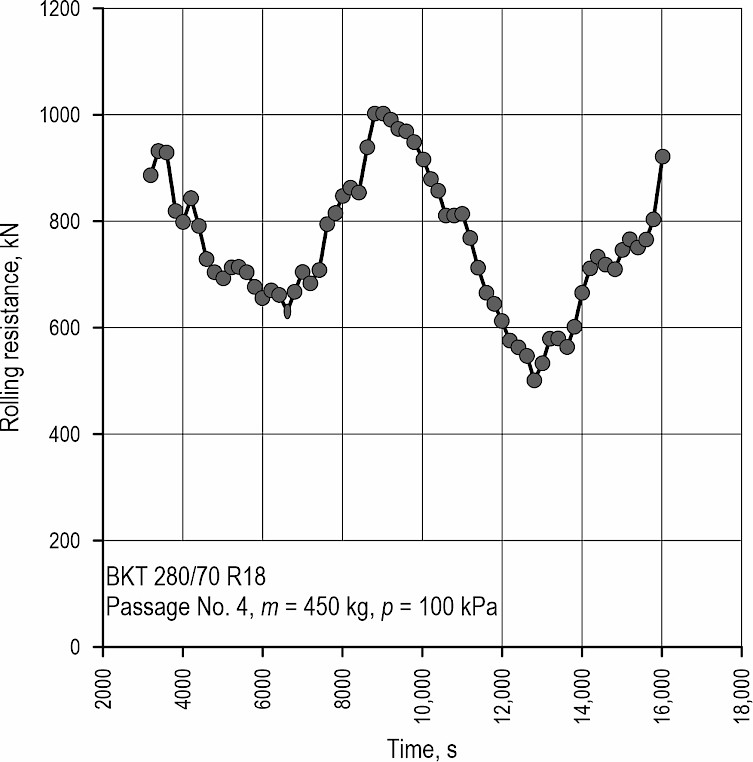
Fig. 3 Rolling resistance curve calculated at an inflation pressure of 100 kPa, vertical load of 450 kg, and over the fourth pass
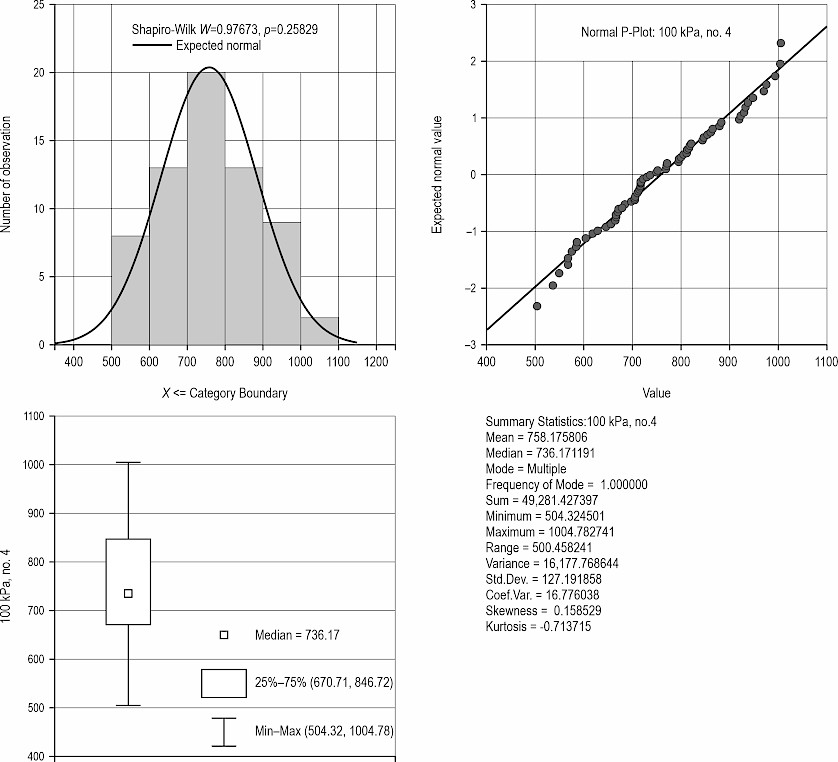
Fig. 4 Statistical processing of tyres rolling resistances at an inflation pressure of 100 kPa, vertical load of 450 kg, and over the fourth pass
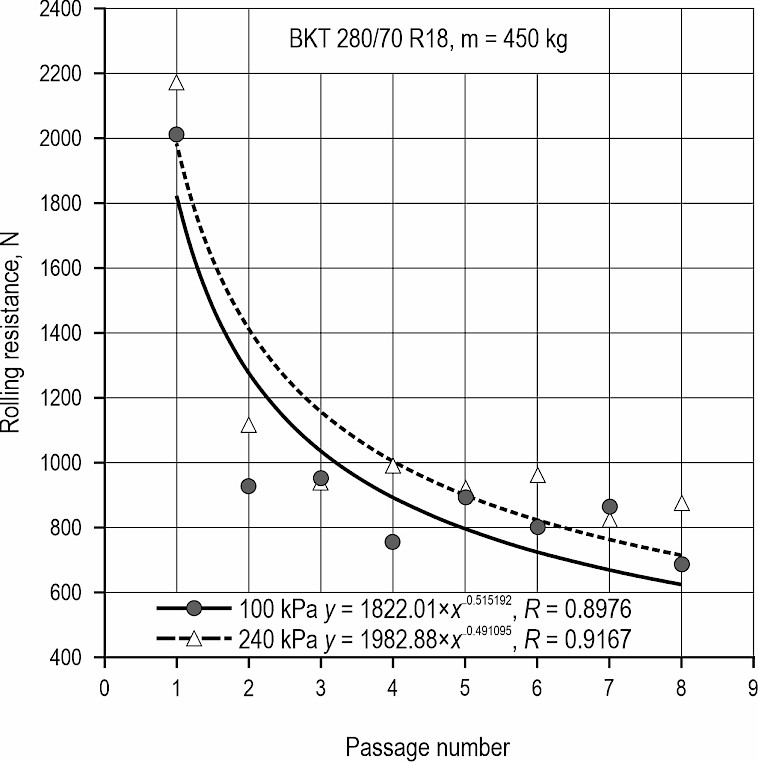
Fig. 5 Dependence of measured rolling resistance on the number of passes over the same track at tyre inflation pressure of 100 kPa and 240 kPa
Similarly, Fig. 6 shows the course of the calculated values of rolling resistance coefficients for individual passes and the monitored limit tyre inflation pressures of 100 kPa and 240 kPa and a vertical load of 450 kg. The above graphical dependence again shows a rapid decrease in the levels of rolling resistance coefficients over the number of passes made. The calculated values stabilized at 0.18 at an inflation pressure of 240 kPa and 0.14 at a pressure of 100 kPa. The maximum values of the achieved rolling resistance coefficients were at the level of 0.43 at an inflation pressure of 240 kPa and at the level of 0.40 at an inflation pressure of 100 kPa during the first run. In this case too, the rolling resistance coefficients are reduced by 58.14% at an inflation pressure of 240 kPa and by 65.00% at an inflation pressure of 100 kPa. As can be seen from the presented graphical dependencies, the curves of the achieved rolling resistance values and rolling resistance coefficients on the number of passes can be well approximated by power functions.
Table 4 shows individual power functions describing individual curves of the rolling resistance dependence on the number of passes and the corresponding tyre inflation pressure. Similarly, Table 5 shows individual power functions describing individual curves of the dependence of rolling resistance coefficients on the number of passes and the corresponding inflation pressure of the monitored tyre. As can be seen, the above dependencies are very well described by the given functions with very good values of correlation indices ranging from R = 0.8976 to R = 0.9469.
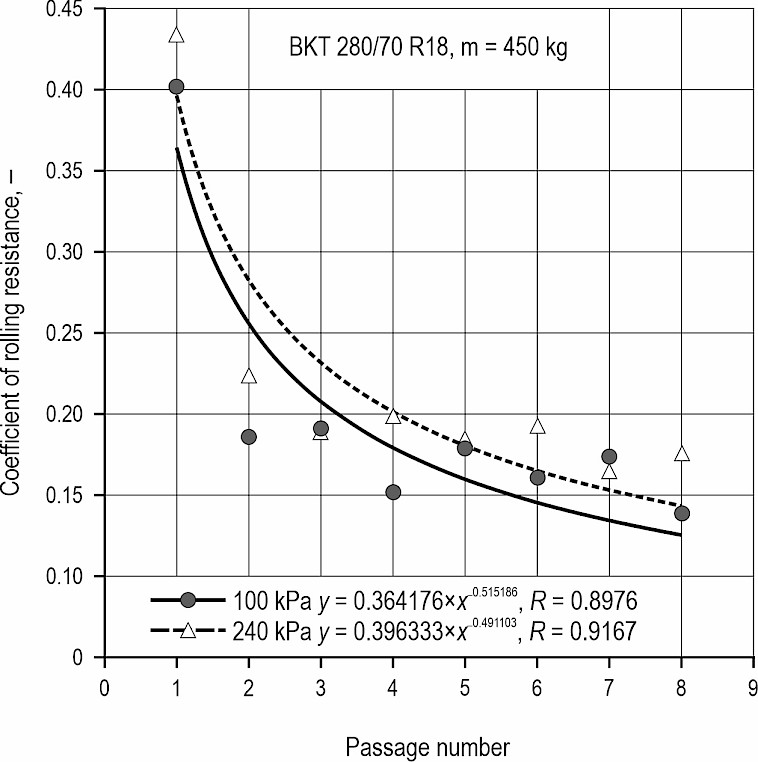
Fig. 6 Dependence of measured rolling resistance on the number of passes over the same track at tyre inflation pressures of 100 kPa and 240 kPa
Table 4 Results obtained from measurements and statistical processing of rolling resistance
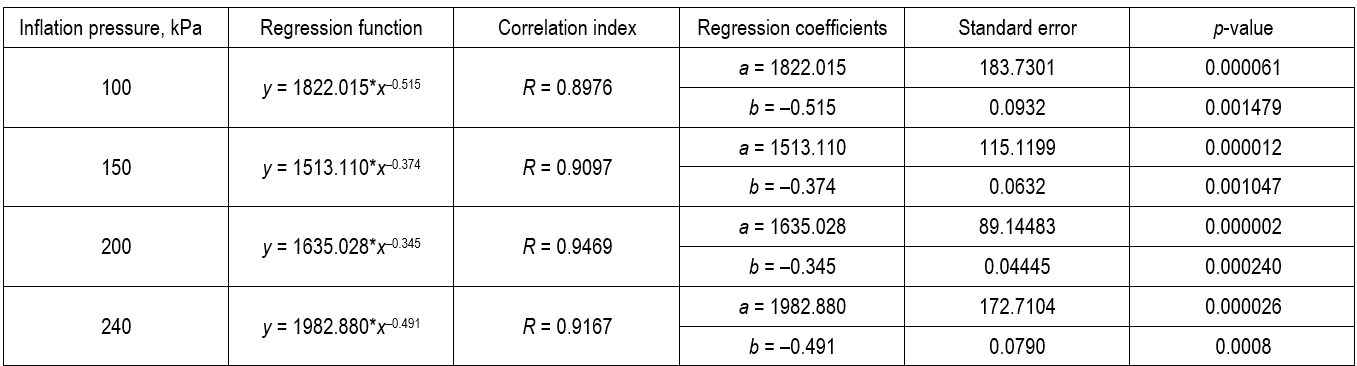
Table 5 Results obtained from measurements and statistical processing of rolling resistance coefficients
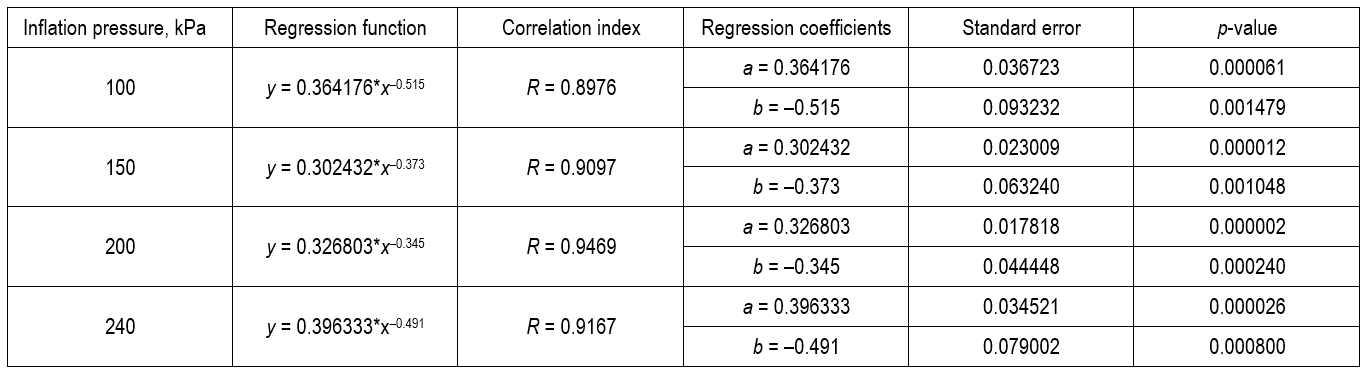
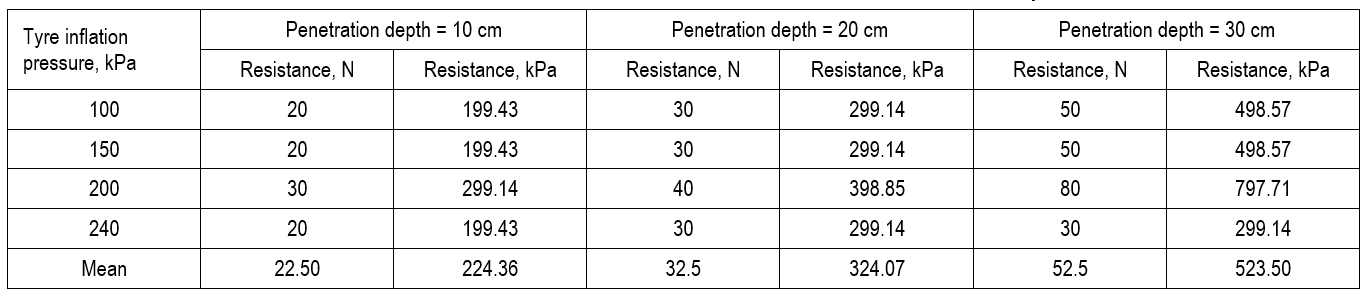
Table 6 below shows the initial penetration resistance values measured before the first pass of each tyre over the cultivated soil. The measurements were carried out using the Eijkelkamp hand penetrometer (rated capacity of 1000 N) fitted with a cone 11.30 millimetres in diameter. The corresponding penetration resistance value in kilopascals was subsequently calculated from the measured force and the cross-sectional area of the penetrating cone. The penetration resistance values were determined to a depth of 30 centimetres, and at all times in ten-centimetre increments. The maximum depth of a rut reached 50 centimetres. From the above results it is clear that, especially in the horizons of 0 to 10 cm and 10 to 20 cm, the soil parameters were maintained at approximately the same level before each measurement at the respective pressure level.
Table 6 Penetration resistance measured after soil cultivation and before the first pass
4. Discussion
The greatest reduction in rolling resistance and its coefficients was observed after the first pass of the tyre under the test conditions mentioned above, which Acquah and Chen (2021, 2023) and Reichert et al. (2016) had also confirmed.
The reason for this condition is the low bulk density of the initially prepared soil in the channel and its numerous macropores, which made it relatively easily compressible. When the bulk density increased after the first pass, the macropores were transformed into micropores, which offered greater resistance to compression, and were less susceptible to further compaction (Alkhalifa et al. 2024). The soil could then carry vertical loads more effectively and resist greater deformation.
During subsequent passes, the depth of the track increased more slowly, with a non-linear change in the deformation of the soil (Leanza et al. 2025), as evidenced by the rolling resistance curves and coefficients, until the soil reached its maximum deformation. Subsequent passes of the wheel caused only insignificant deformations in the soil, stabilising the measured rolling resistance values. Naderi-Bodaji et al. (2017) reported a linear progression of rut formation with successive passes of a pneumatic wheel over the same track. It can be argued from our results, even though the depth of the track was not directly measured, as well as from the results obtained by Farhadi et al. (2025), that depth will change nonlinearly with successive passes. This conclusion is drawn from the measured nonlinear dependence of the rolling resistance on the number of passes.
Vertical load is one of the most significant factors influencing rut formation caused by a wheel passing over the soil. With an increasing number of passes, changes in soil deformation and in the depth of rutting decrease with the vertical load. This also had a positive effect on measured rolling resistance values, which fell gradually during the seventh and eighth passes, stabilising at approximately 850 N at an inflation pressure of 240 kPa and approximately 675 N at an inflation pressure of 100 kPa. In terms of the rolling resistance coefficients for the tyre, the value stabilised around the seventh and eighth passes at 0.17 for an inflation pressure of 240 kPa and approximately 0.15 for 100 kPa. This reduction was caused by increased soil compaction from the previous passes. The cumulative effect of vertical load and multiple passes on rutting and rolling resistance becomes evident after several passes, so that as the number of passes increases, the depth of the ruts formed likewise increases and the rolling resistance of the tyre decreases until the soil reaches it maximum compaction value for its moisture content (Sadeghi et al. 2022, Calleja-Huerta et al. 2023). However, the rate of the increase in rut depth fell, and was accompanied by a decrease in rolling resistance values with each successive pass, as soil compaction increased and the soil became more resistant to deformation.
The effect of reduced tyre inflation pressure is also clear from the rolling resistance values and coefficients. Lower inflation pressure caused less soil deformation, thereby reducing the absolute measured values of rolling resistance and its coefficient. This effect results from an increase in the contact area between the tyre and the soil, which reduces the mean contact pressure (Shao et al. 2023). The load is thus distributed over a larger area, decreasing the level of vertical soil deformation (Marušiak et al. 2024). However, we were unable to prove that the lower pressure of a conventional radial tyre would require a greater number of passes to stabilise rolling resistance values. Even at the monitored inflation pressures of 240 kPa and 100 kPa, a stable rolling resistance value was essentially obtained only after a total of seven or eight passes.
Brennensthul et al. (2024) conducted traction tests on three types of tyres. Two diagonal and one radial. The forest soil on which the measurements were carried out was characterized as sandy with an average moisture content of 8.3%. The authors of this article varied tyre loads and inflation pressures during traction tests. They concluded that increasing load and decreasing tyre inflation pressure led to a gradual increase in the achieved rolling resistance values, with the differences decreasing with increasing load.
From our perspective, this situation can be explained by the fact that the measurements were carried out on relatively dry and compact solid soil, which was ultimately confirmed in the work. This resulted in poor traction of the tyres and they largely behaved as if they were moving on a solid surface. When the load increased and the inflation pressure decreased, it was primarily the structure of the tyres themselves that deformed, not the subsoil. This subsequently led to an increase in the internal component of rolling resistance of the tested tyres.
The authors further state that reducing the inflation pressure and increasing the load on the monitored tyres caused a reduction in wheel slip. However, they were unable to demonstrate a clear effect of reducing tyre inflation pressure on traction efficiency. This condition can again be explained by greater deformation of the tyre structure, a certain increase in the contact area and thus the adhesion of the tyres to the terrain surface, while this benefit is probably compensated by higher internal friction in the design of the tyres themselves.
Our measurements were carried out in laboratory conditions on soil with significantly higher moisture content (30%), while its consistency before the measurement was loose. Under such conditions, the tested tyre dug into the soil very intensively and caused greater compaction with each subsequent pass. Thus, during the first to third passes, the external component of rolling resistance related to track formation and soil deformation was significantly applied, and at a certain final compaction, the internal resistance component related more to the deformation of the tyre itself was applied.
Most published studies of a similar nature have either been conducted experimentally in the field or based on field measurements and various supporting computer simulations. We attempted to resolve the issue further under laboratory conditions and compare the results with those from the field, similar to Carman (2002) and Taghavifar et al. (2014). For this purpose, we employed a soil test channel. A comparison of our data with published results shows only partial success. Yet it indicates that the device is viable, despite certain shortcomings, and it can be used to research wheel-soil interactions.
5. Conclusions
The results presented here can contribute to the design and optimisation of power requirements for off-road agricultural and forestry machinery. They may also provide practical solutions for optimal vehicle control, reduced environmental impact, and soil compaction. These findings are relevant to mechanical, forestry, and agricultural engineering and can also be applied to the conservation of natural resources and environmental protection.
Operational planning should account for weather and soil conditions to reduce damage from heavy forestry vehicles such as forwarders and harvesters. To mitigate soil damage while maintaining acceptable rolling resistance, operations should utilise frozen or less saturated soils and wider tyres. Tyre inflation pressure should likewise be optimised, along with reduced vehicle loads. Logistical and organisational measures are equally important in forest harvesting and agriculture. Specifically, clearly defined pathways should be established and evenly distributed across work sites, with spacing between the paths equal to twice the reach of the work machine handling equipment. Taking such an approach will prevent uncoordinated vehicle movement across forests and fields, particularly in productive forests and agricultural soils.
We would like to continue this research in the future. Our goal is to compare the results obtained in the soil test channel with measurements obtained on real forest soil, while driving forestry machinery. We would also like to focus on bias ply tyres and compare them in terms of the number of passes with radial tyres. In this context, the issue of compaction of forest soils during individual passes and monitoring changes in their physical properties is not negligible (volumetric density, shear strength, or penetration resistance).
Acknowledgments
This work was made possible thanks to the support of the project of the Cultural and Educational Grand Agency of the Ministry of Education, Research, Development and Youth of the Slovak Republic, KEGA 12SPU-4/2025 – Implementation of modern methods in the Smart Farm 4.0 concept for sharing data in teaching for agricultural and forestry sciences.
Conflicts of Interest
The authors declare no conflict of interest. The founding sponsors had no role in the design of the study; in the collection, analyses, or interpretation of data; in the writing of the manuscript, and in the decision to publish the results.
The datasets generated and analysed during the current study are available from the corresponding author on reasonable request.
6. References
Acquah, K., Chen, Y., 2021: Discrete element modelling of soil compaction of a press-wheel. AgriEngineering 3(2): 278–293. https://doi.org/10.3390/agriengineering3020019
Acquah, K., Chen, Y., 2023: Discrete element modelling of soil pressure under varying number of tyre passes. J. Terramech. 107: 23–33. https://doi.org/10.1016/j.jterra.2023.02.003
Alkhalifa, N., Tekeste, M.Z., Jjagwe, P., Way, T.R., 2024: Effects of vertical load and inflation pressure on tyre-soil interaction on artificial soil. J. Terramech. 112: 19–34. https://doi.org/10.1016/j.jterra.2023.11.002
Ampoorter, E., De Schrijver, A., Van Nevel, L., Hermy, M., Verheyen, K., 2012: Impact of mechanized harvesting on compaction of sandy and clayey forest soils: Result of a meta-analysis. Ann. For. Sci. 69(5): 533–542. https://doi.org/10.1007/s13595-012-0199-y
Bauer, F., Sedlák, P., 2003: Attached Plow Linkage Influence on the Load of Tractor Driving Wheels. Acta Universitatis Agriculturae et Silviculturae Mendelianae Brunensis 51(3): 193–204.
Brennensthul, M., Czarnecki, J., Białczyk, W., 2024: Assessment of tractor tyres used in forest conditions in terms of traction performance and impact on ground. Croat. J. For. Eng. (45)1: 97–113. https://doi.org/10.5552/crojfe.2024.1171
Calleja-Huerta, A., Lamandé, M., Green, O., Munkholm, L.J., 2023: Impacts of load and repeated wheeling from a lightweight autonomous field robot on the physical properties of a loamy sand soil. Soil Tillage Res. 233: 105791. https://doi.org/10.1016/j.still.2023.105791
Çarman, K., 2002: Compaction characteristics of towed wheels on clay loam in a soil bin. Soil Tillage Res. 65: 37–43. https://doi.org/10.1016/S0167-1987(01)00281-1
Farhadi, N., Mardani, A., Hosainpour, A., Golanbar, B., Chamki, A.N., 2025: Impact of vertical load, multiple passes, and speed on rut depth in soil under pneumatic and track wheels. Sci Rep 15: 27890. https://doi.org/10.1038/s41598-025-13535-w
Feng, D., Fang, Y., 2015: Theoretical and experimental study on multi-scale mechanical properties of soil. Soil Mech. Found. Eng. 52(4): 189–197. https:/doi.org/10.1007/s11204-015-9327-7
Grečenko, A., 1995: Tyre Footprint Area on Hard Ground Computed from Catalogue Values. J. Terramech. 32(6): 325–333. https://doi.org/10.1016/0022-4898(96)00003-1
Hamza, M.A., Anderson, W.K., 2005: Soil compaction in cropping systems. Soil Tillage Res. 82(2): 121–145. https://doi.org/10.1016/j.still.2004.08.009
Helexa, M., Kováč, J., Krilek, J., Melicherčík, J., Kuvik, T., 2022: Comparison of achieved rolling resistance values of two selected tyres on a solid surface. Appl. Sci. 12(4): 2251. https://doi.org/10.3390/app12042251
SKF General Catalogue (Catalogue 6000 CS, January 2007), SKF Group, 1, 134 p.
Kane, M., Riahi, E., Tan Do, M., 2021: Tyre/Road Rolling Resistance Modeling: Discussing the Surface Macrotexture Effect. Coatings 11(5): 538. https://doi.org/10.3390/coatings 11050538
Keller, T., Lamande, M., 2019: Challenges in the development of analytical soil compaction models. Soil Tillage Res. 111(1): 54–64. https://doi.org/10.1016/j.still.2010.08.004
Leanza, A., Ugenti, A., Galati, R., Reina, G., 2025: Predicting the impact of wheel passage on terrain unevenness. J. Terramech. 117: 101015. https://doi.org/10.1016/j.jterra.2024.101015
Majdoubi, R., Masmoudi, L., Elharif, A., 2024: Analysis of soil compaction under different wheel applications using a dynamical cone penetrometer. Predicting the impact of wheel passage on terrain unevenness. J. Terramech 111: 21–30. https://doi.org/10.1016/jterra.2023.09.001
Marušiak, M., Zemánek, T., Neruda, J., Nevrkla, P., 2024: Calculation and operational assessment of tyre contact areas in the tractor-and-trailer unit. J. For. Sci. 70(3): 144–159. https://doi.org/10.17221/109/2023-JFS
Navaz, M.F., Bourrié, G., Trolard, F., 2013: Soil compaction impact and modelling. A review. Agron. Sustain. Dev. 33(2): 291–309. https://doi.org/10.1007/s13593-011-0071-8
Orzech, K., Załuski, D., 2020: Effect of soil compaction and different soil tillage systems on chemical properties of soil and presence of earthworms in winter oilseed rape fields. J. Elem. 25(2): 413–429. https://doi.org/10.5601/jelem.2019.24.2.1874
Ptak, W., Czarniecki, J., Brennesthul, M., Lejman, K., Małecka, A., 2023: Evaluation of Tyre Footprint in Soil Using an Innovative 3D Scanning Method. Agriculture 13(3): 514. https://doi.org/10.3390/agriculture13030514
Reichert, J.M., Brandt, A.A., Rodrigues, M.F., Reinert, D.J., Braida, J.A., 2016: Load dissipation by corn residue on tilled soil in laboratory and field-wheeling conditions: Lab and field load dissipation by soil surface mulch. J. Sci. Food Agric. 96(8): 2705–2714. https://doi.org/10.1002/jsfa.7389
Senatore, C., Sandu, C., 2011: Off-road tyre modeling and the multi-pass effect for vehicle dynamics simulation. J. Terramech. 48(4): 265–276. https://doi.org/10.1016/j.jterra.2011.06.006
Sadeghi, S., Solgi, A., Tsioras, P.A., 2022: Effects of traffic intensity and travel speed on forest soil disturbance at different soil moisture conditions. Int. J. Eng. 33(2): 146–154.
Shao, X., Yang, Z., Mowafy, S., Zheng, B., Song, Z., Luo, Z., Gou, W., 2023: Load Characteristic Analysis of Tractor Drivetrain Under Field Plowing Operation Considering Tyre-Soil Interaction. Soil Tillage Res. 227: 105620.
Šimečková, J., Polcar, A., Hammerová, A., Votava, J., Kumbár, V., 2021: Changes to the physical properties of the soil after the passage of an agricultural tractor. Int. Agrophysics 35(1): 97–105. https://doi.org/10.31545/intagr/133752
Taghavifar, H., Mardani, A., Karim-Maslak, H., 2014: Multi-criteria optimization model to investigate the energy waste of off-road vehicles utilizing soil bin facility. Energy 73: 762–770. https://doi.org/10.1016/j.energy.2014.06.081
Villa-Henriksen, A., Skou-Nielsen, N., Munkholm, L.J., Sørensen, C.A.G., Green, O., Edwards, G.T.C., 2021: Infield optimized route planning in harvesting operations for risk of soil compaction reduction. Soil Use Manag. 37(4): 810–821. https://doi.org/10.1111/sum.12654
Yu, C., Mawodza, T., Atkinson, B.S., Atkinson, J.A., Sturrock, C.J., Whalley, R., Hawkesford, M.J., Cooper, H., Zhang, X., Zhou, H., Mooney, S.J., 2024: The effect of soil compaction on wheat seedling root growth is specific to soil texture and soil moisture status. Rhizosphere 29: 100838. https://doi.org/10.1016/j.rhisph.2023.100838
Zemánek, T., Neruda, J., 2021: Impact on the operation of a forwarder with wheeled, tracked-wheel or tracked chassis on the soil surface. Forests 12(3): 336. https://doi.org/10.3390/f12030336
Zhang, B., Jia, Y., Fan, H., Guo, C., Fu, J., Li, S., Li, M., Liu, B., Ma, R., 2024: Soil compaction due to agricultural machinery impact: A systematic review. Land Degrad. Dev. 35(10): 3256–3273. https://doi.org/10.1002/ ldr.5144
© 2026 by the authors. Submitted for possible open access publication under the
terms and conditions of the Creative Commons Attribution (CC BY) license (http://creativecommons.org/licenses/by/4.0/).
Authors’ addresses:
Milan Helexa, PhD
e-mail: milan.helexa@tuzvo.sk
prof. Jozef Krilek, PhD
e-mail: jozef.krilek@tuzvo.sk
Assist. prof. Ján Kováč, PhD *
e-mail: jan.kovac@tuzvo.sk
Tomáš Kuvik, PhD
e-mail: xkuvikt@tuzvo.sk
Vladimír Mancel, PhD
e-mail: xmancel@is.tuzvo.sk
Technical University in Zvolen
Faculty of Technology
Department of Environmental and Forestry Machinery
Študentská 26
960 01, Zvolen
SLOVAKIA
Prof. Marijan Šušnjar, PhD
e-mail: msusnjar@sumfak.inuzg.hr
University of Zagreb
Faculty of Forestry and Wood Technology
Department of Forestry, Institute of Forest Engineering
Svetošimunska cesta 23
HR-10000, Zagreb
CROATIA
Prof. Pavol Findura, PhD
e-mail: pavol.findura@uniag.sk
Erik Lavrík, MSc
e-mail: erik.lavrik@gmail.com
Slovak University of Agriculture in Nitra
Faculty of Engineering
Institute of Agricultural Engineering, Transport and Bioenergetics
Trieda Andreja Hlinku 2
949 76, Nitra
SLOVAKIA
* Corresponding author
Received: December 12, 2025
Accepted: June 23, 2026
Original scientific paper